



Telescopic Oil Lamp
These telescopic oil lamps are adjustable floor standards built for bright lighting, offering flexible height adjustment and solid metal construction for any room.
Telescopic Oil Lamp
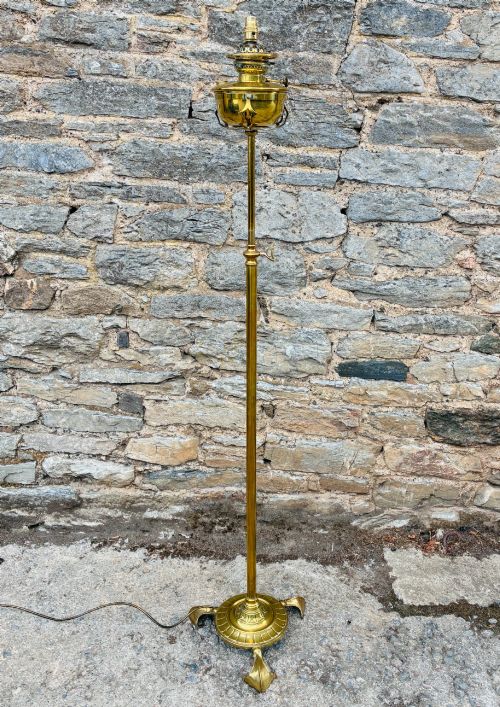
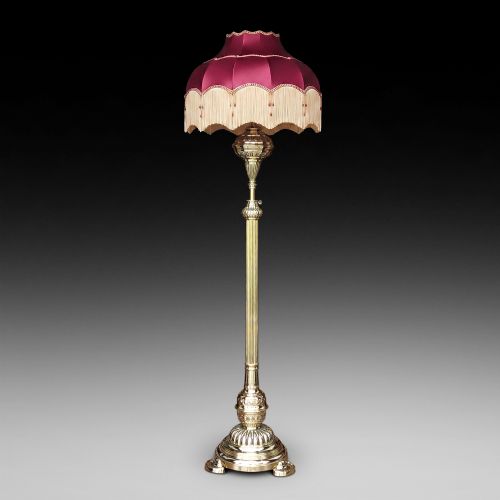
A telescopic oil lamp is a tall floor standing standard designed to hold a reservoir and burner at variable heights. When you search for a telescopic oil lamp, you encounter Victorian and Arts and Crafts examples created to illuminate large reception rooms with adjustable columns.
The most common versions on this page are Victorian brass and copper extending standards, alongside Arts and Crafts wrought iron and brass designs. These pieces often feature heavy bases to support the extended height and heavy metal reservoirs at the top.
Many of these lamps survive in modified states, having been converted from burning oil to electric power during the twentieth century. Standard lamps and floor lamps appear frequently, showing the tall proportions characteristic of the category.
How they were made
Makers utilised solid brass, copper, cast iron, and wrought iron to construct the heavy telescopic shafts and stable weighted bases. Metal spinning and casting formed the decorative columns, reservoirs, and collars found on Victorian and Arts and Crafts examples.
The extending mechanism relies on sliding inner tubes secured by thumbscrews or keys, allowing the upper shaft to rise smoothly from the heavy base. Fabric shades with felt undersides frequently top the assembled standards, completing the structure.
Telescopic Oil Lamp Retail Price Guide 2026
Typical asking prices for telescopic oil lamp among the pieces listed under this phrase on Sellingantiques today, from the lower quarter to the upper quarter. They describe what is for sale here now, not the wider market.
Some telescopic columns hide their wiring so cleverly that visitors try to light them with a match.
What varies in quality
The weight of the base and the gauge of the brass or copper determine the structural stability of an extending standard lamp. Thicker metal prevents wobbling when the telescopic column is raised to its maximum height.
Maker attribution separates standard production pieces from signed works by known manufacturers such as Hinks or Messenger. Refined chasing on the metalwork and robust sliding mechanisms indicate superior workshop execution.
Hinks of B'ham·Messenger
The Telescopic Oil Lamp Glossary
- Telescopic standard
- An adjustable floor lamp column that extends upwards using a sliding inner tube. This mechanism allows the user to alter the height of the light source.
- Standard lamp
- A tall floor standing lamp designed to illuminate a room from a raised position. These objects often incorporate heavy weighted bases for stability.
- Corinthian column
- A classical architectural column style featuring ornate acanthus leaf capitals. Makers applied this decorative order to the upper brass shafts of tall floor lamps.
- Oil lamp reservoir
- The metal or glass vessel mounted at the top of the standard to hold lamp oil. Many examples now house electrical fittings in place of the original burner.
Telescopic Oil Lamp: Frequently Asked Questions
How do you adjust the height?
The telescopic column uses an inner sliding tube controlled by a thumbscrew or tightening key near the top of the main shaft. Loosening this screw permits the lamp to extend upwards or lower downwards.
Tightening the mechanism secures the upper section firmly at the desired height. Heavy weighted bases prevent the tall standard from tipping when fully extended.
Were these lamps converted to electricity?
Many surviving telescopic standards have been adapted from oil burning to electric power. This conversion typically involves running a cord through the internal column to a fitting at the top.
Original oil reservoirs and burners are frequently replaced with lamp holders to suit modern domestic lighting. Some pieces retain their original burner assemblies alongside concealed wiring.
What metals are used?
Brass and copper form the primary construction materials for Victorian and Arts and Crafts examples on this page. Heavy cast iron and wrought iron also appear in the weighted floor bases and support legs.
Combined metal finishes create contrast between polished brass columns and darker copper reservoirs. Fabric and felt components occasionally appear on shades and protective base undersides.
How do you date a standard lamp?
Stylistic details such as Arts and Crafts hand-hammered surfaces or Victorian Corinthian column capitals help establish the period of manufacture. Materials like heavy cast brass and copper point directly to nineteenth-century production methods.
Maker stamps on the metalwork or adjustment keys provide precise attribution to firms active during the Victorian era. The presence of extending telescopic mechanisms further situates the piece within late nineteenth-century lighting design.