

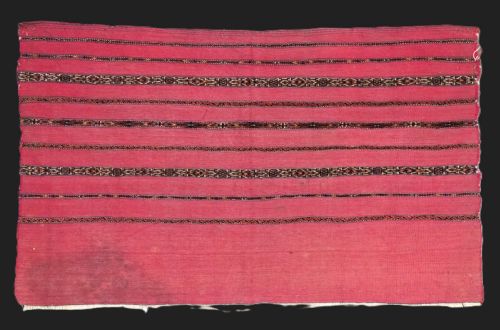


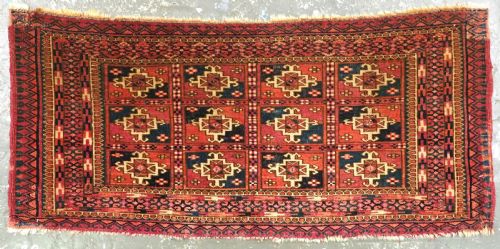
Tekke Turkoman Rug
A tekke turkoman rug brings the disciplined geometric artistry of Central Asian weaving directly into your home.
Tekke Turkoman Rug
A tekke turkoman rug forms part of a rich nomadic weaving tradition originating from the steppes of Central Asia. When you search for this phrase, you encounter textiles spanning from the mid-nineteenth century up to the early twentieth century, including room-sized carpets, runners, tent bands, and smaller dowry pieces.
The objects listed here take various specific forms such as chuval faces, mafrash faces, and large yurt bands. These pieces demonstrate the distinctive tribal motifs and disciplined layouts characteristic of Turkmen artistry.
Most examples you meet on this page date from the later nineteenth century through to the nineteen-twenties. They reflect the traditional aesthetic of the Emirate of Bukhara and surrounding tribal regions.
How they were made
Weavers constructed these textiles primarily using wool, often incorporating cotton for structural integrity and silk highlights to add subtle tonal contrast to the surface. The knotting technique produces a dense, durable pile designed to withstand the rigours of nomadic life inside tents and yurts.
Natural dye stuffs achieved the characteristic deep reds and madder tones seen across the pieces. Artisans employed complex symmetrical knotting alongside finely woven flatweave structures for utility items like tent bands and storage bags.
Tekke Turkoman Rug Retail Price Guide 2026
Typical asking prices for tekke turkoman rug among the pieces listed under this phrase on Sellingantiques today, from the lower quarter to the upper quarter. They describe what is for sale here now, not the wider market.
Object forms appearing in the inventory include runners, wall hangings, tent bands, dowry rugs, and storage bag faces.
What varies in quality
Quality in these textiles rests upon the density of the weave and the precision of the geometric repeat. Finer knots allow for sharper delineation of the guls and border systems, separating standard utility pieces from exceptional dowry examples.
The vibrancy and saturation of the original wool dyes dictate visual distinction at the upper end of the range. Furthermore, the presence of silk highlights and unusual structural variations elevate certain tent bags and carpets above standard tribal production.
The Tekke Turkoman Rug Glossary
- Gul
- Gul. A primary medallion motif repeated across the field of the textile, characteristic of Turkmen tribal weaving.
- Chuval
- Chuval. A large storage bag face produced by nomadic weavers, frequently featuring multiple rows of guls.
- Mafrash
- Mafrash. A smaller storage container face or panel used for bedding and household possessions within the yurt.
- Khali
- Khali. A term denoting a larger floor carpet rather than a smaller hanging or bag face.
- Dowry rug
- Dowry rug. A specially commissioned textile created as part of a bride's traditional marriage possessions, often displaying exceptional fineness.
Tekke Turkoman Rug: Frequently Asked Questions
What is a tekke turkoman rug?
A tekke turkoman rug is a traditional hand-knotted textile produced by the Tekke tribe of Turkmen nomads in Central Asia. These pieces are identified by their disciplined geometric layouts and deep red colour palettes.
They encompass a variety of functional forms, ranging from floor carpets and runners to storage bag faces and architectural yurt bands.
How were these rugs used originally?
Nomadic families utilised these textiles extensively inside traditional felt tents for flooring, bedding storage, and decorative wall hangings. Utility bags served to organise household goods during seasonal migrations across the steppes.
Larger carpets and dowry pieces marked important tribal ceremonies and provided warmth and prestige within the dwelling.
How do I live with a tribal rug?
Living with a historic tribal textile involves placing it in low-traffic areas or mounting it securely as a wall hanging to protect the pile. Natural wool textiles benefit from gentle vacuuming without rotary brushes and professional cleaning when necessary.
Keeping them out of direct sunlight preserves the saturated madder tones and natural dye variations over time.
How can I tell the age of these pieces?
Dating relies on examining the wool quality, the complexity of the natural dye palette, and structural indicators such as selvedges and foundation materials. Nineteenth-century examples typically display finer knotting and organic dye variations distinct from later production.
Comparing design elements like turreted guls and border structures helps place a textile within its nineteenth or early twentieth-century context.