
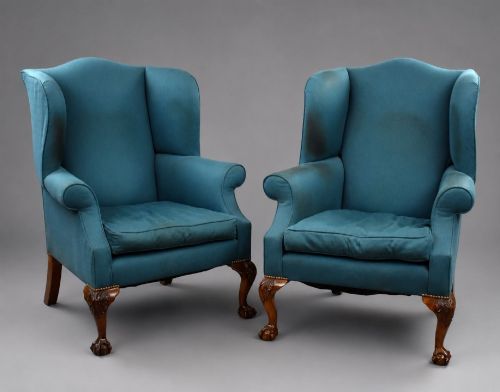
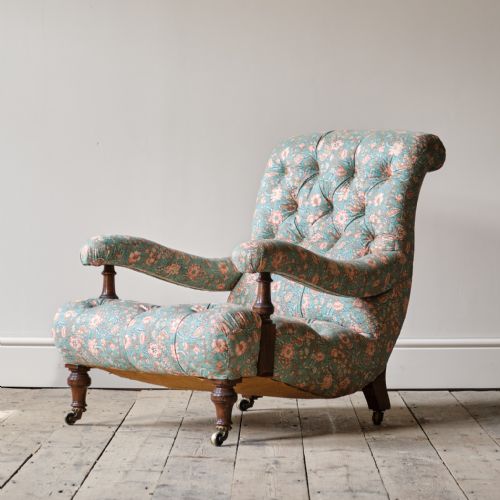


Teal Upholstered Chair
A teal upholstered chair brings rich colour and period form together, offering a striking focal point for a room.
Teal Upholstered Chair
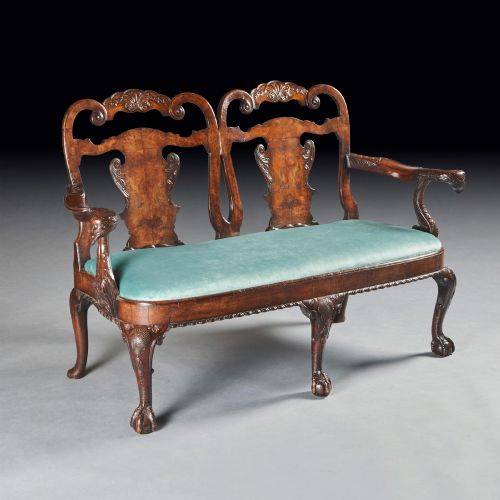
When you search for a teal upholstered chair, you encounter a range of historic seating spanning the nineteenth and early twentieth centuries. These pieces encompass armchairs, wingbacks, dining chairs, and salon chairs originating from English, French, and Swedish workshops.
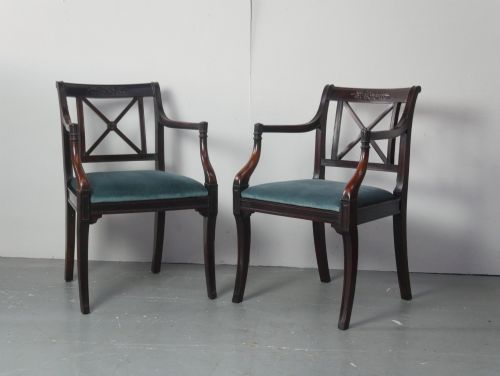
The selection on this page most frequently presents Victorian and Edwardian armchairs alongside revival styles such as Regency and Georgian. Upholstered seating from these eras adapts well to contemporary interiors while retaining traditional craftsmanship.
Makers such as Holland & Sons and Howard & Sons represent the higher tier of these offerings, alongside decorative armchairs in walnut, mahogany, and rosewood. Whether you seek a fireside wingback or a salon chair, the variety reflects diverse historical periods.
Materials and construction
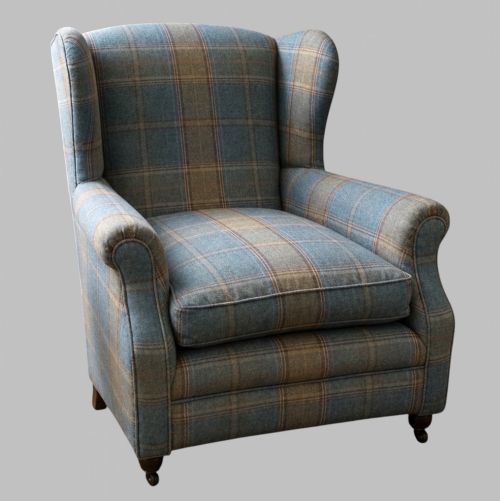
Upholstery techniques involve traditional textile applications, spanning plush velvet, patterned fabric, and woollen plaid such as Shetland cloth. Brass components occasionally appear on castors or decorative hardware, completing the construction.
Frame materials recorded across the selection include mahogany, walnut, rosewood, elm, birch, and brass.
Distinctions in quality
The calibre of a piece rests upon the integrity of its wooden frame and the precision of its period joinery. Chairs by documented workshops demonstrate superior hand-carved detailing and robust structural timber compared to standard commercial output.
Material selection further defines the standard, with finely figured mahogany, walnut, or rosewood elevating a piece. The execution of the upholstery and the fidelity of revival styles to their historical precedents also determine distinction.
Holland & Sons·Howard & Sons
The Teal Upholstered Chair Glossary
- Wingback armchair
- An upholstered seat featuring protective wings designed to shield the sitter from draughts near a fireplace. These chairs often date from the Victorian and Edwardian eras.
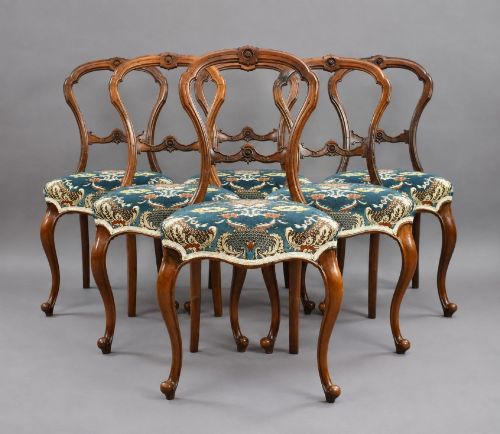
- Balloon back
- A dining chair design characterised by an oval, rounded backrest resembling a balloon. This form is frequently seen in nineteenth-century mahogany seating.
- Salon chair
- A light, decorative chair intended for formal reception rooms rather than heavy daily use. They often incorporate inlaid woods and delicate frames.
- Chaise longue
- An elongated upholstered seat designed for reclining, combining the characteristics of a chair and a daybed. These pieces date across the nineteenth century.
- Regency revival
- A stylistic movement looking back to the early nineteenth-century Regency period for design inspiration. Furniture in this style emerged around 1900.
Teal Upholstered Chair: Frequently Asked Questions
How do I date a Victorian armchair?
Dating a Victorian armchair involves examining the timber species, construction methods, and stylistic cues present in the frame. Victorian pieces often utilise solid mahogany or walnut alongside characteristic nineteenth-century upholstery foundations.
Comparing the carved details and overall silhouette to documented examples from the era helps narrow the manufacturing period between 1837 and 1901.
What is a wingback armchair used for?
A wingback armchair historically served as fireside seating designed to trap heat and block cold draughts. The characteristic wings also provided privacy and head support.
Today, these chairs function as prominent statement pieces in living rooms, studies, and bedrooms, offering deep-seated comfort.
Are Edwardian chairs different from Victorian ones?
Edwardian chairs generally display lighter proportions and brighter woods compared to heavier, darker Victorian furniture. The Edwardian period favoured refined inlays, satinwood, and rosewood alongside delicate forms.
Victorian seating tends to feature robust mahogany or walnut frames with heavier carving and more substantial padding.
How do I care for antique upholstery?
Caring for antique upholstery requires gentle maintenance, such as regular light vacuuming with a soft brush attachment to remove dust. Avoiding direct sunlight preserves the colour and integrity of historic textiles like velvet or wool.
Professional cleaning is recommended for deeper maintenance to protect both the fabric and the internal stuffing.