



Teak Military Campaign Chest
A teak military campaign chest offers modular travel storage built to withstand the rigours of nineteenth-century colonial transport.
Teak Military Campaign Chest
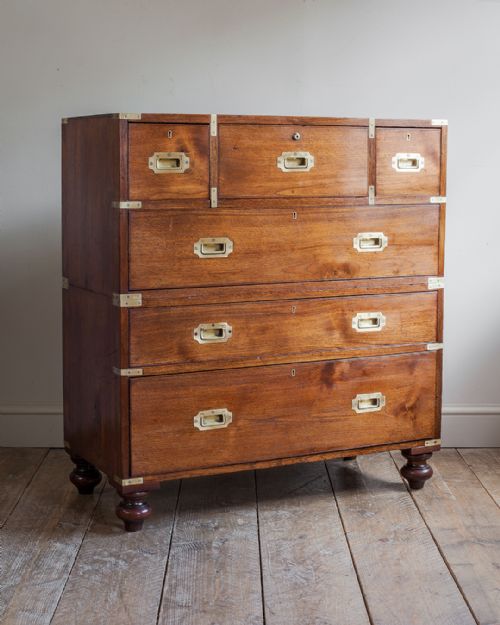
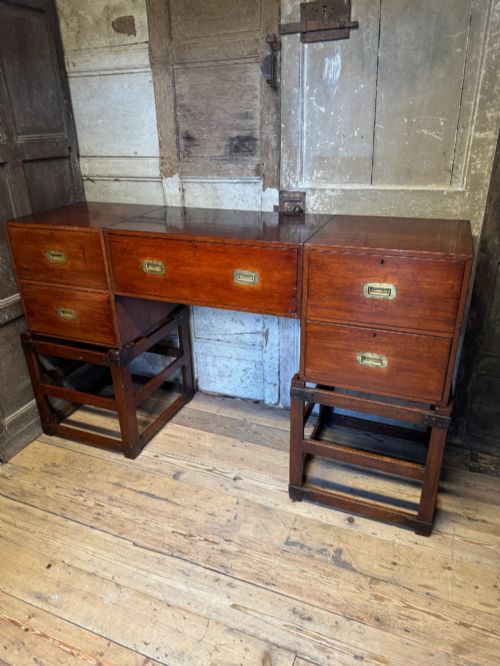
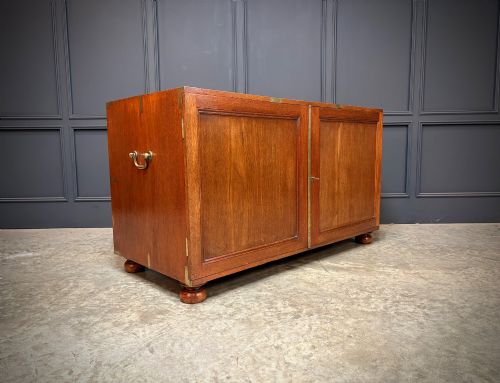
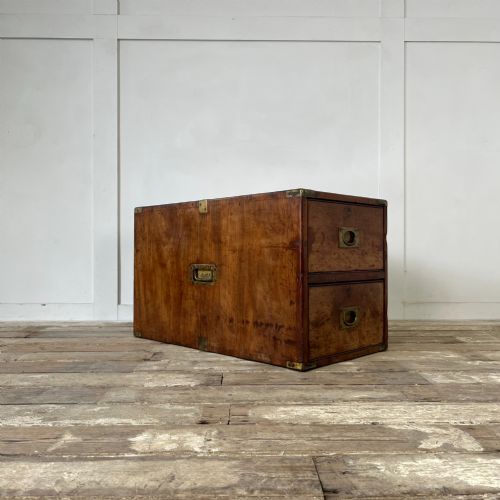
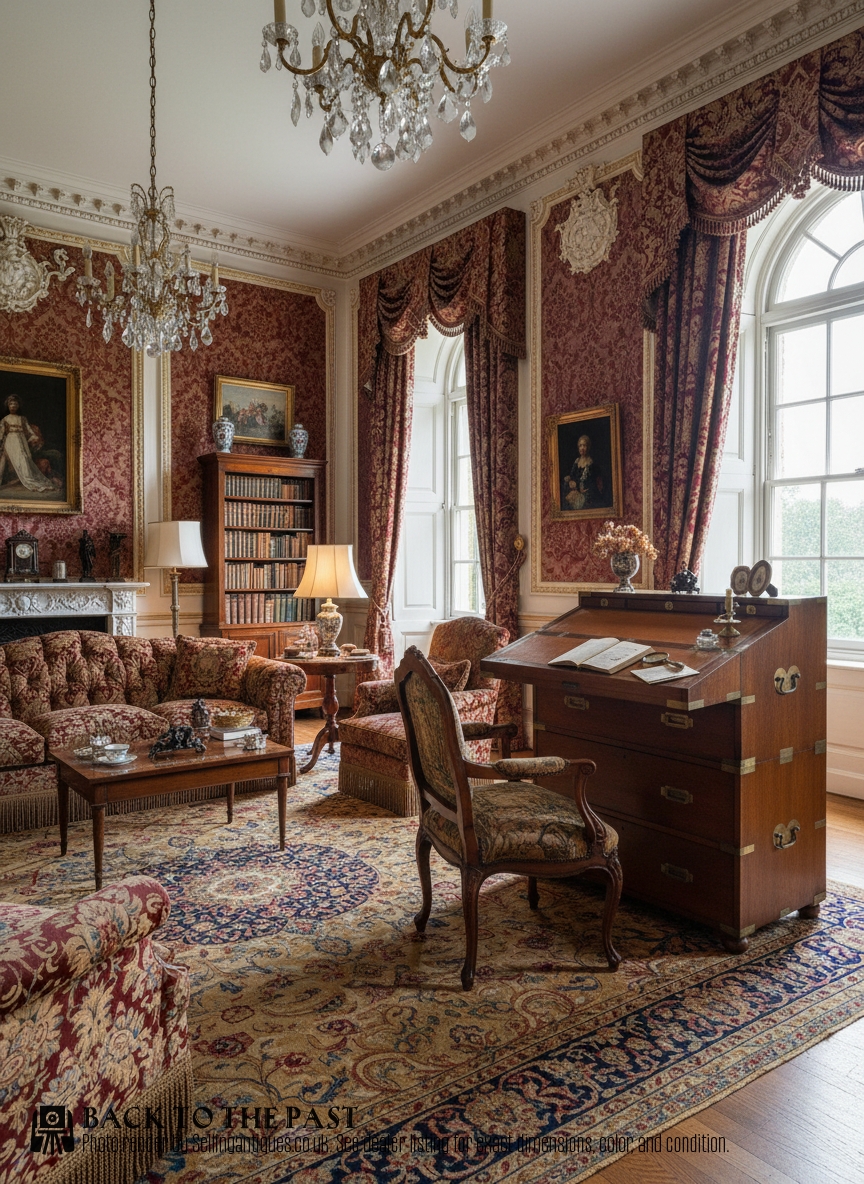
A teak military campaign chest takes the form of a modular two-part chest of drawers designed for dismantling during transit. Officers in the nineteenth century relied on these sturdy pieces, which also appear as secretaire bureaus, writing boxes, and side cabinets.
Most examples originate from the Victorian era and the Regency period, often displaying Anglo-Indian or colonial craftsmanship alongside British military specifications. Buyers frequently encounter standard drawer arrangements split into upper and lower sections for ease of handling.
Materials and Construction
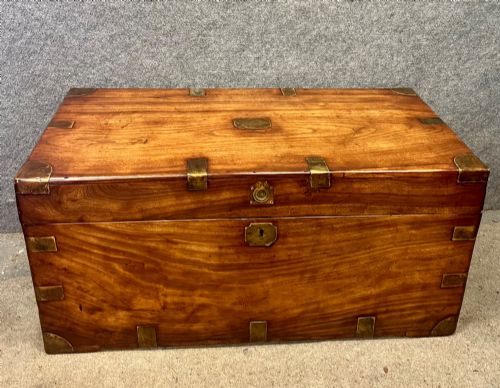
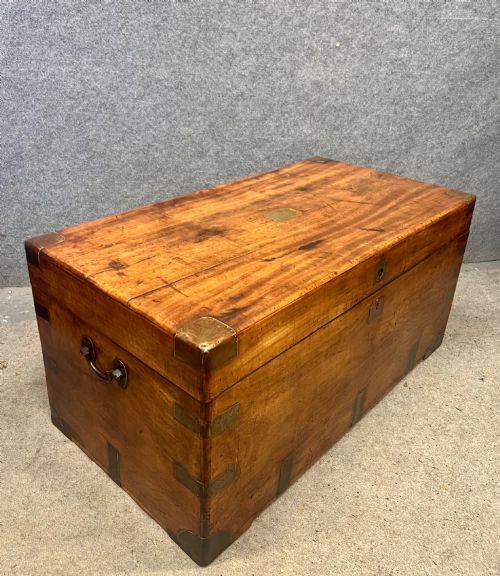
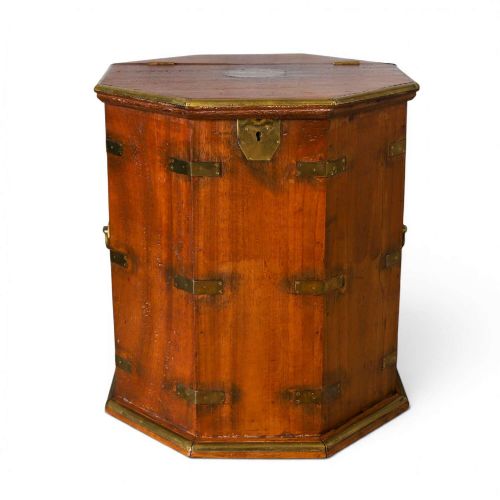
Makers utilised dense timbers such as teak, mahogany, and padouk, which resist warping in humid climates. Solid brass corners, strapwork, and flush inset handles protect the edges and prevent snagging during movement.
Carrying handles made of brass or cast iron are recessed into the sides to allow easy lifting. Secret compartments and fitted writing drawers appear frequently within the secretaire variants.
Listings feature nineteenth-century pieces constructed from teak, mahogany, padouk, and brass.
Assessing Quality
Quality rests upon the integrity of the original brass fittings and the crispness of the flush-mounted hardware. Pieces retaining their original locks, screw-in feet, and internal leather writing surfaces command greater regard.
The precision of the two-part joinery and the selection of figured timber distinguish standard utility pieces from finer officer-commissioned examples.
Army and Navy·Ross and Co Dublin
The Teak Military Campaign Chest Glossary
- Campaign chest
- A modular set of drawers built in two separate sections for easy transport on military expeditions. These items feature removable turned feet and side carrying handles.
- Secretaire drawer
- A top drawer fitted with a drop-front that conceals small pigeonholes and writing surfaces. This clever addition provided a portable desk space for officers on duty.
- Flush handle
- A metal pull inset level with the wood surface so it does not catch on packing crates or canvas covers. These fittings are typically cast in brass.
- Two-part chest
- A case furniture design constructed as two distinct boxes stacked one upon the other. Metal brackets on the sides lock the sections securely together.
- Anglo-Indian
- Furniture made in the Indian subcontinent using British forms combined with local carving traditions and dense tropical hardwoods.
Teak Military Campaign Chest: Frequently Asked Questions
How do I care for teak furniture?
Clean the wood surfaces regularly using a soft, dry cloth to remove dust. Avoid harsh chemical polishes and keep the piece away from direct heat sources to preserve the finish.
Condition the timber occasionally with appropriate natural oils if the surface appears dry. Check the brass hardware periodically to ensure fixings remain secure.
Were these chests actually used in battle?
Officers purchased these robust pieces for active service, long sea voyages, and colonial postings. The modular construction allowed servants to pack and transport belongings swiftly.
While some saw hard field use, others remained in permanent quarters or colonial administrative offices throughout their service lives.
Why are they made in two sections?
Dividing the case into an upper and lower half reduced weight and bulk for animal transport or loading onto ships. Each separate box was small enough for a single person to carry.
Removable wooden or brass bolts locked the two halves securely together once the destination was reached.
How can I tell the period?
Early nineteenth-century examples from the Regency era often display simpler lines and specific brass escutcheon shapes. Victorian pieces frequently incorporate secretaire drawers and heavier brass binding.
Examine the secondary woods inside the drawers and the style of the dovetail joints to confirm the manufacturing era.