

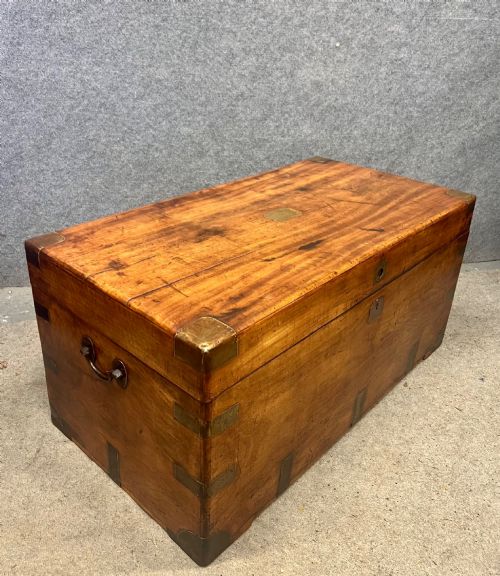
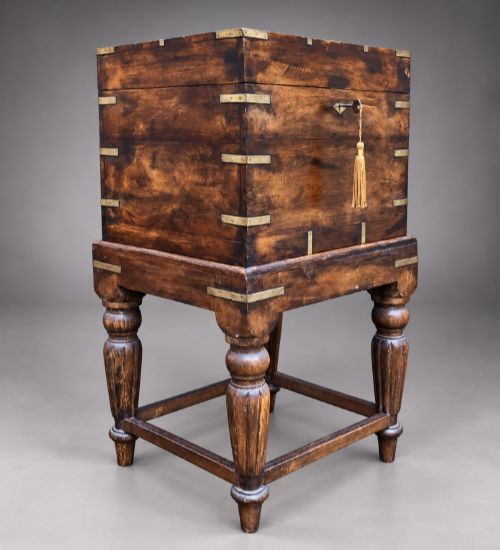
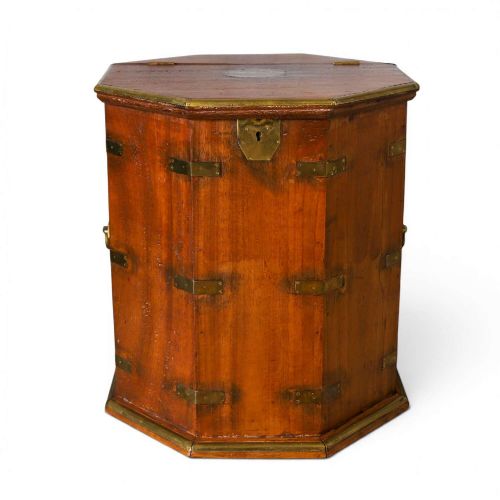
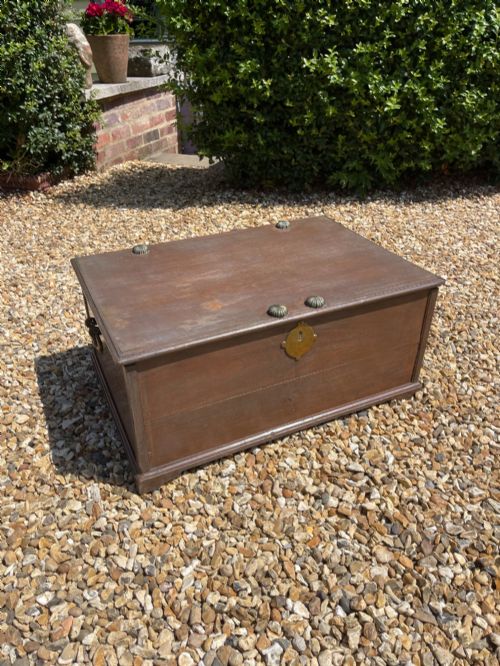
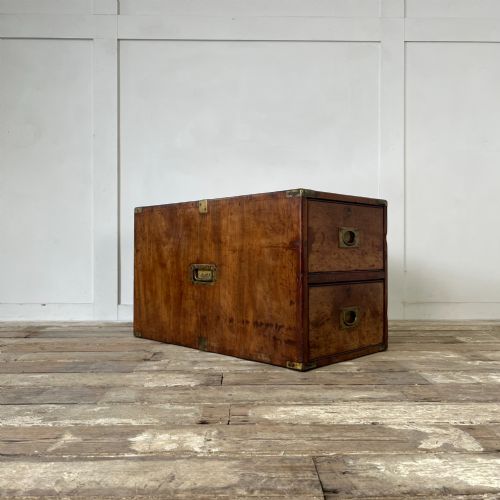


Teak Campaign Box
A teak campaign box offers portable strength built for colonial service, combining sturdy hardwood with heavy metal mounts.
Teak Campaign Box
A teak campaign box serves as durable transportable storage created for military officers and travellers during the eighteenth, nineteenth, and early twentieth centuries. These pieces encompass various forms including trunks, chests, cellarettes, correspondence boxes, and writing boxes designed to withstand arduous journeys.
The versions most commonly met on this page date from the nineteenth century, including Victorian examples alongside Anglo-Indian and Dutch Colonial pieces. Buyers frequently encounter solid teak trunks and brass bound chests alongside smaller desktop storage and miniature chest of drawers formats.
Construction and Materials
These items rely on dense teak selected for its resistance to tropical climates, often reinforced with brass corners, straps, and flush handles designed to prevent catching during transit. Iron and hardwood also appear across the construction, providing additional structural integrity to trunks and coffers.
Cabinetmakers utilised durable joinery methods to ensure stability, incorporating hinged lift-up tops and secure compartments suitable for travelling officers. Bone details occasionally feature on smaller writing boxes and correspondence containers.
Teak Campaign Box Retail Price Guide 2026
Typical asking prices for teak campaign box among the pieces listed under this phrase on Sellingantiques today, from the lower quarter to the upper quarter. They describe what is for sale here now, not the wider market.
Listings feature items from the 18th century, Victorian era, and Edwardian period, utilising teak, brass, iron, and bone.
Judging Quality
Quality rests in the precision of the brass binding and the integration of hardware into the teak surface, where flush mounting denotes superior execution. The choice of timber grain and the crispness of colonial carving or joinery distinguish finer trunks and cellarettes from standard utilitarian boxes.
Proportion and intact internal fittings elevate specific writing boxes and miniature chests above simpler utility trunks. The structural soundness of the original hinges and locking mechanisms also marks the division between standard field equipment and higher status items.
The Teak Campaign Box Glossary
- Campaign chest
- A modular chest built in sections with recessed brass handles for easy stacking and transport during military campaigns. These pieces typically feature heavy brass corners and binding.
- Cellarette
- A lockable container designed for holding bottles of wine or spirits during travel or dining. Examples frequently incorporate fitted internal compartments.
- Writing box
- A portable desk featuring a slanted writing surface and interior storage for stationery, inkwells, and correspondence. These often include secret compartments.
- Brass bound
- A descriptive term for boxes and trunks reinforced with brass strips and corners to protect the edges from impact. This method also accommodated wood shrinkage in warm climates.
- Travelling coffer
- A heavy-duty chest intended for moving personal belongings across long distances. These sturdy forms often feature robust carrying handles.
Teak Campaign Box: Frequently Asked Questions
What is a teak campaign box?
A teak campaign box is a portable storage item made for military officers and travellers during the eighteenth and nineteenth centuries. These pieces were built to endure long journeys while keeping contents secure.
They appear in forms ranging from large trunks and cellarettes to compact desktop writing boxes and miniature chests.
How were these boxes used?
Officers and administrators used them to transport clothing, documents, and provisions across distant colonies and campaigns. The robust construction protected valuables from rough handling and moisture.
Smaller variants stayed on desks or tables to hold correspondence and writing materials in temporary quarters.
How do I date a campaign piece?
Dating relies on stylistic clues, construction methods, and materials recorded across the eighteenth, nineteenth, and early twentieth centuries. Georgian and Victorian examples show distinct joinery habits and brasswork.
Labels, maker marks, and specific colonial styles like Anglo-Indian or Dutch Colonial also help narrow down the period.
Where were these items made?
Many pieces originated in workshops across Britain and its colonies, including Anglo-Indian and Dutch Colonial production centres. Local craftsmen utilised regional teak alongside imported brass and iron hardware.
This global exchange produced distinct regional characteristics within standard military formats.
How do I care for teak furniture?
Teak requires minimal maintenance due to its natural oils, benefiting from occasional gentle dusting and stable indoor humidity. Avoid harsh chemical cleaners that might strip the historic surface.
Keeping boxes away from direct heat sources prevents the wood and brass mounts from shifting.