






Tavern Scene Art
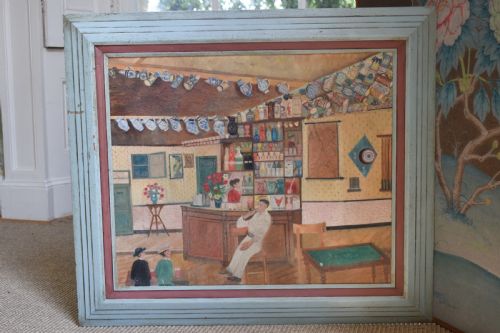
Tavern scene art captures the lively hum of historic drinking houses through centuries of oil paintings, watercolours, and detailed works on wood.
Tavern Scene Art
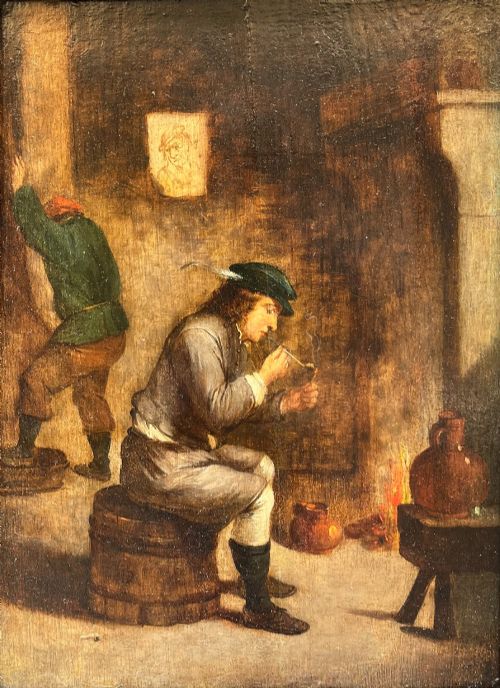
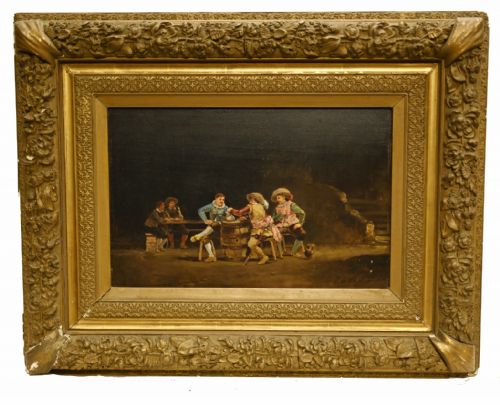
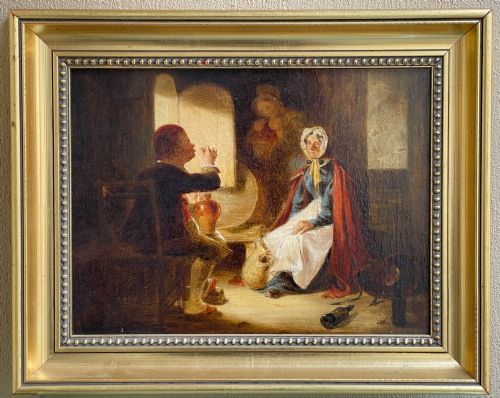
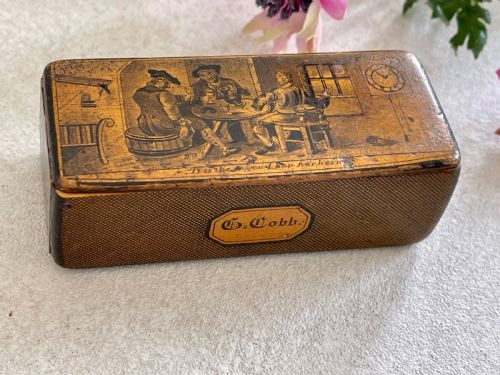
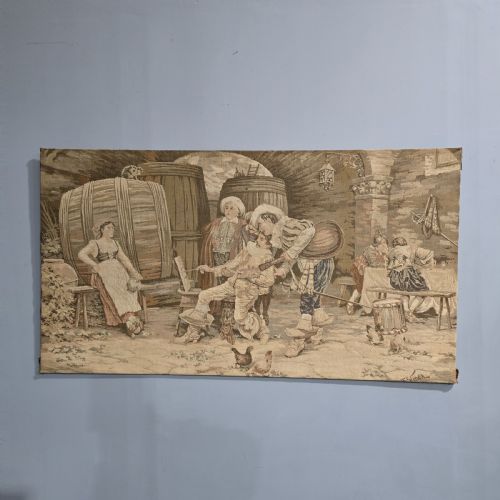
Tavern scene art gathers centuries of visual storytelling focused on public houses, rural inns, and lively gathering spaces. Buyers searching for tavern scene art encounter oil paintings on canvas and oak panel, watercolours, and occasionally decorative objects like pen work snuff boxes and brass coal buckets bearing similar imagery. The selection spans the seventeenth century up through the mid twentieth century, reflecting shifting artistic interpretations of social life.
The seventeenth century heritage appears through Dutch Golden Age and Flemish Baroque influences, often represented by followers or after-masters of David Teniers the Younger and Jan Steen. These early works set the tone with peasants merrymaking and figures smoking in shadowy interiors. Alongside these historical pieces, nineteenth century Victorian genre paintings and early twentieth century watercolours bring a more narrative or sporting character to the subject.
Materials and Construction
Artists typically applied oil paint to stretched canvas or seasoned wood panels, utilising the smooth grain of oak or the weave of fabric to build depth in dim interior settings. Watercolours on paper appear in paired formats, capturing lighter illustrative details through delicate washes. Subsidiary objects utilise brass for repoussé coal buckets and bone or boxwood for pen-worked snuff boxes, showing how the theme extended beyond flat walls.
Framing often involves period giltwood, which complements the dark, warm palettes typical of chiaroscuro lighting and Dutch school compositions. Painters layered translucent glazes over earthy pigments to achieve the smoky atmosphere characteristic of historic alehouse interiors.
A sixteenth century tavern patron likely spent more time arguing over the strength of small beer than the politics of the day.
Assessing Quality
Quality rests heavily on the confidence of the brushwork and the clarity of character expression within crowded interiors. Finer pieces manage complex lighting, such as chiaroscuro effects where single light sources illuminate faces and wooden kegs, whereas lesser works flatten the perspective and muddy the background details.
The distinction between primary seventeenth century execution, studio output, and later nineteenth century interpretations changes the standing of a piece. Original handling of paint and firm attribution to a recognised school or circle elevate the work above decorative student copies.
David Teniers·John Arthur Lomax·Robert Richard Scanlan·Ludolf de Jongh·George Morland·Francesco Bergamini·John Holland Snr·Jan Steen·Cornelis Dusart·Gilbert Scott Wright·Frank Dadd·G Cobb
The Tavern Scene Art Glossary
- Chiaroscuro
- Strong contrasts between light and dark, usually bold contrasts affecting a whole composition. This technique creates dramatic atmosphere in dim tavern interiors.
- Dutch Golden Age
- A period in Dutch history spanning the 17th century when Dutch trade, science, and art were among the most acclaimed in the world. Paintings from this era often depict everyday peasant life.
- Genre Painting
- The pictorial representation in art of scenes or events from everyday life. These works typically feature ordinary people in domestic or public settings.
- Flemish Baroque
- An artistic style associated with Flanders during the 17th century, known for its vitality, lush colour, and emotional intensity. Artists of this school frequently recorded village fetes and tavern gatherings.
- Mezzotint
- A printmaking process of the scrapings and burnishing kind, in which the printmaker works from dark to light. This method allows for subtle gradations of tone.
Tavern Scene Art: Frequently Asked Questions
What is tavern scene art?
Tavern scene art encompasses paintings and decorative objects depicting social gatherings, drinking, and daily life inside historic inns and alehouses. These works range from seventeenth century Dutch school compositions to nineteenth century Victorian watercolours.
Collectors prize these pieces for their atmospheric interiors and detailed character studies of peasants, cavaliers, and travellers.
How do I date an old oil painting?
Dating relies on examining the canvas weave, stretcher construction, pigment types, and framing style alongside any visible signatures or dates inscribed by the artist. Stylistic clues such as costume and interior furnishings also help narrow the period.
Comparative analysis with documented works from the same school provides further confirmation of the likely decade or century of creation.
Where should I hang a dark painting?
Dark oil paintings benefit from placement against neutral walls where natural light can catch the texture of the canvas without creating excessive glare. Accent lighting, such as a dedicated picture light, helps reveal details hidden in shadowed interior corners.
Avoiding direct, harsh sunlight prevents the pigments and vintage giltwood frames from fading over time.
What does after an artist mean?
The term after indicates that the work is a later copy or interpretation of a known original composition by a master painter. These pieces were often created by students or followers as part of their training.
While not primary works by the original hand, these pieces carry their own historical interest and artistic merit.