
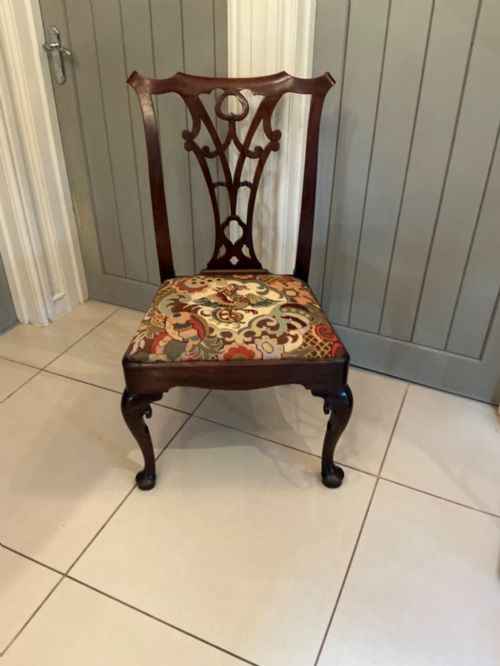
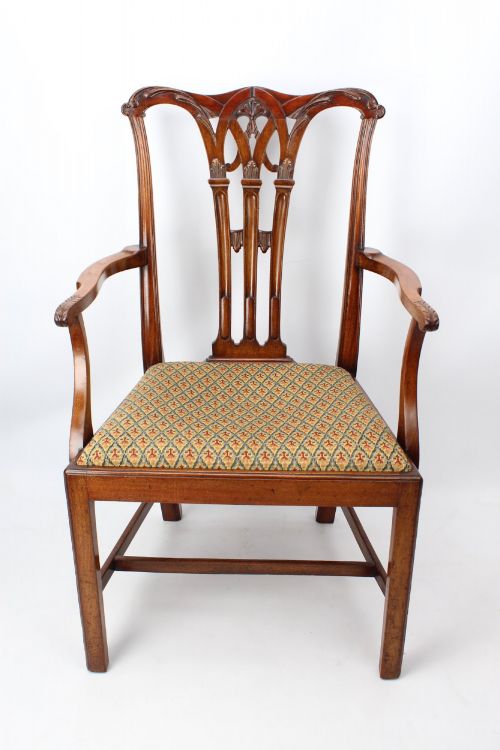


Tapestry Seat Desk Chair
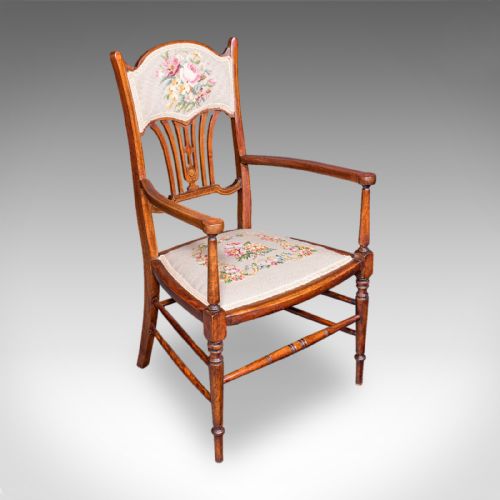
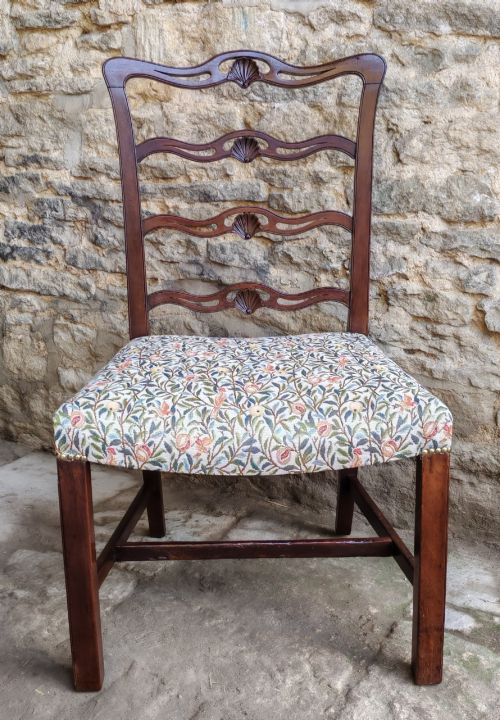
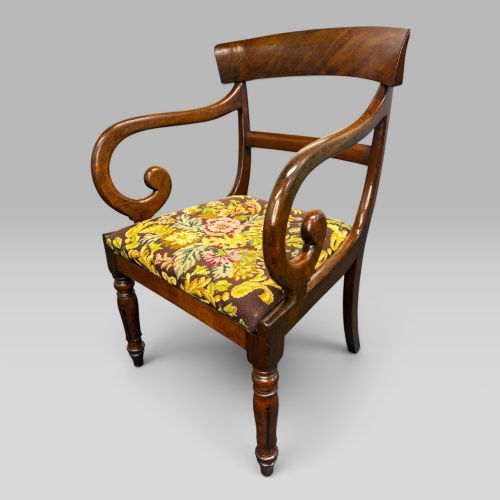
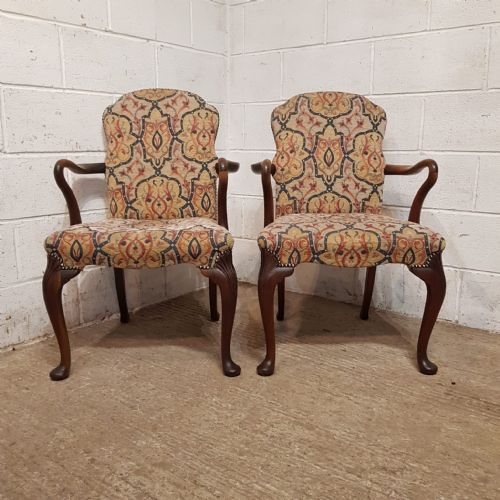
A tapestry seat desk chair brings together supportive timber frames and needleworked textile upholstery designed for the study or writing room.
Tapestry Seat Desk Chair
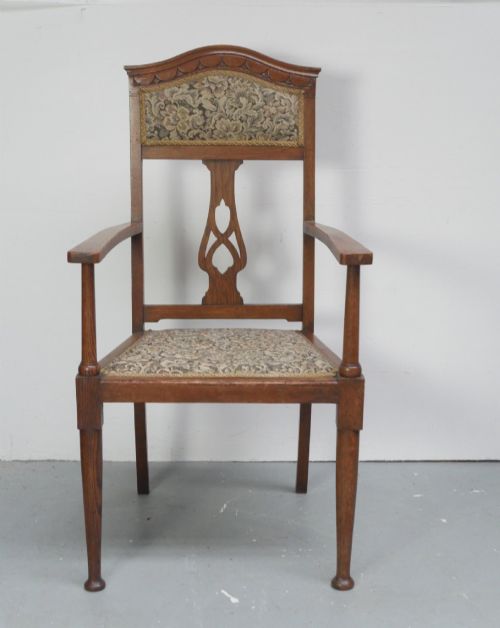
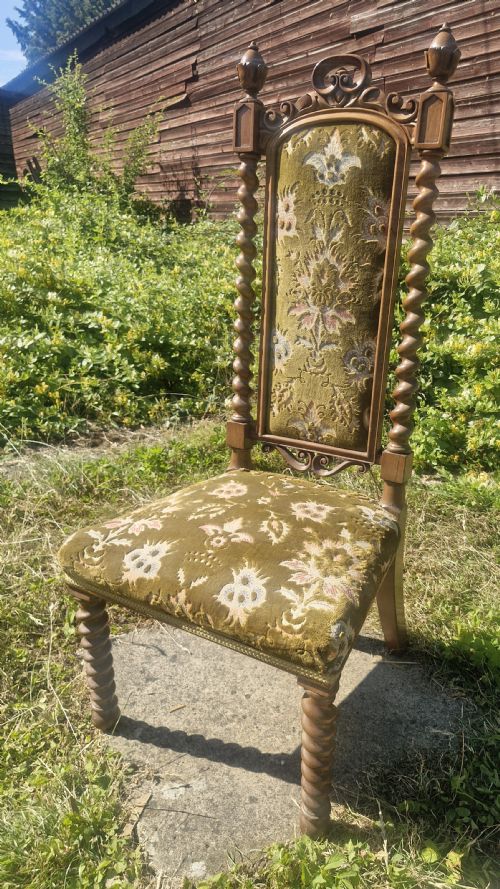
A tapestry seat desk chair is primarily found in Georgian, Regency, and Victorian forms, encompassing robust elbow chairs, carvers, and corner seats tailored for the writing desk or library. These pieces frequently appear in mahogany, walnut, and oak timber, anchoring a workspace with traditional British craftsmanship.
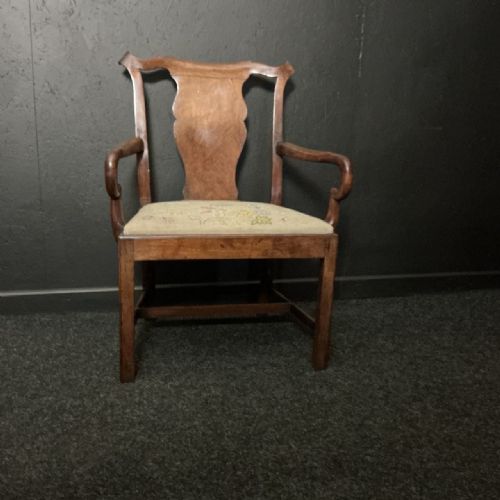
The version most commonly met on this page is the mahogany or walnut elbow chair from the Georgian and Victorian eras, often featuring open arms and a drop-in or fixed needlepoint pad. These selections reflect domestic working habits across the eighteenth and nineteenth centuries, combining structural timber frames with decorative textile seating.
Assessing Quality
Quality rests heavily on the crispness of the timber carving and the structural integrity of the frame joints, where superior pieces retain tight assembly without excessive reinforcement. The density and selection of the primary hardwood dictate the longevity and weight of the seat.
The execution and survival of the tapestry or needlepoint upholstery further distinguish finer examples, as densely worked wool and silk threads retain their pattern and tension. Superior proportion and refined stretcher arrangements separate standard utilitarian seating from pieces designed for formal reception and study spaces.
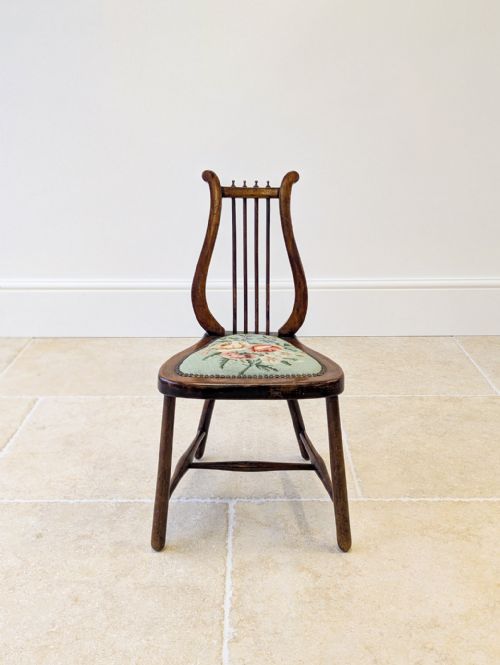
Several examples incorporate sturdy children's proportions and corner designs, proving that even historical scholars occasionally needed miniature seating.
The Tapestry Seat Desk Chair Glossary
- Elbow chair
- An armchair designed with low arms specifically to fit beneath a writing table or desk. This form allows the user to sit close to the working surface while resting the arms.
- Needlepoint
- A form of counted thread embroidery stitched over canvas to create durable pictorial or geometric patterns. It provides the heavy texture characteristic of traditional seat covers.
- Drop-in seat
- A removable wooden frame upholstered separately and dropped into a recess within the chair rails. This design simplifies reupholstering and maintenance.
- Carver chair
- A sturdy wooden armchair, often featuring open arms and a high back, historically used at the head of a table or within a study. These pieces offer substantial timber frames.
- Corner chair
- A square-form seat designed to fit into the angle of a room, featuring a diagonal orientation with a backrest wrapping around two adjacent sides.
Tapestry Seat Desk Chair: Frequently Asked Questions
What is a tapestry seat desk chair?
A tapestry seat desk chair is a traditional timber armchair or elbow seat featuring needlepoint or textile upholstery tailored for use at a writing table or in a library.
These pieces combine sturdy hardwood frames in mahogany or walnut with decorative fabric covers that offer both comfort and period character.
How were these chairs used historically?
They served primarily in studies, morning rooms, and libraries where writing and reading demanded a supportive timber seat with arms.
The low elbow design allowed the user to pull close to a desk while the upholstered textile provided insulation and cushioning during long hours of work.
How do I care for needlepoint upholstery?
Protect the textile seat from direct sunlight to prevent fading of the wool and silk threads, and vacuum gently using a low suction brush attachment.
Avoid harsh chemical cleaners and consult a textile conservator if deeper cleaning becomes necessary to preserve the historic stitching.
How can I tell a Georgian chair from a Victorian one?
Georgian pieces typically display lighter, more restrained carved details and elegant proportions in mahogany or walnut, reflecting eighteenth-century design canons.
Victorian equivalents often feature heavier timber sections, darker finishes, and more robustly padded frames characteristic of mid-nineteenth-century manufacturing.