



Tapestry Hearth Guard
A tapestry hearth guard blocks radiant room heat while displaying skilled needlework, making it a functional centrepiece for a period fireplace.
Tapestry Hearth Guard
A tapestry hearth guard takes the form of a standing screen placed before a fireplace to shield occupants from excessive heat. These pieces appear in various configurations, including pole screens that adjust vertically and fixed cheval screens mounted on frames.
The evidence shows examples spanning the Georgian, Regency, and Victorian periods, alongside items from around nineteen hundred. Walnut, rosewood, mahogany, oak, and giltwood form the structural framework for these textile panels.
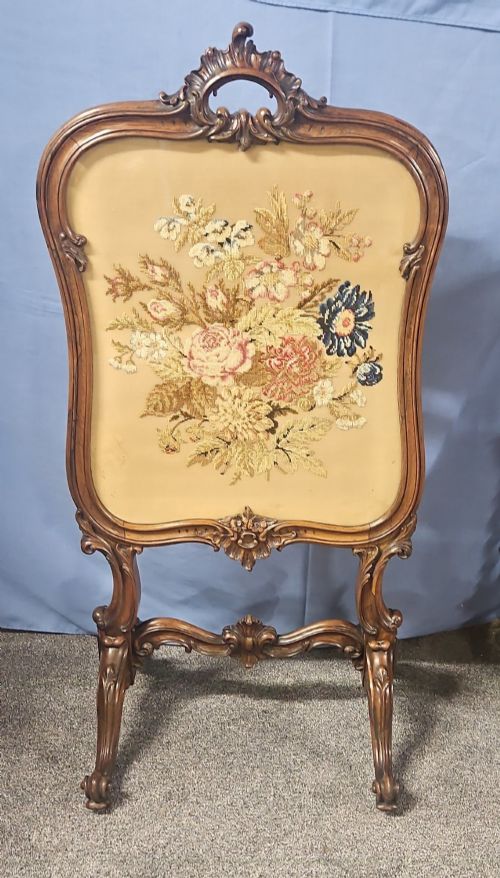
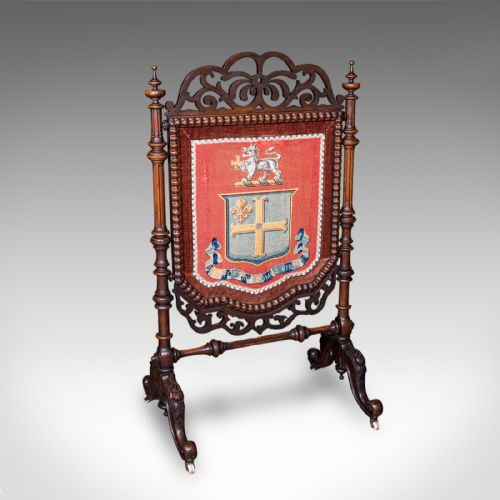
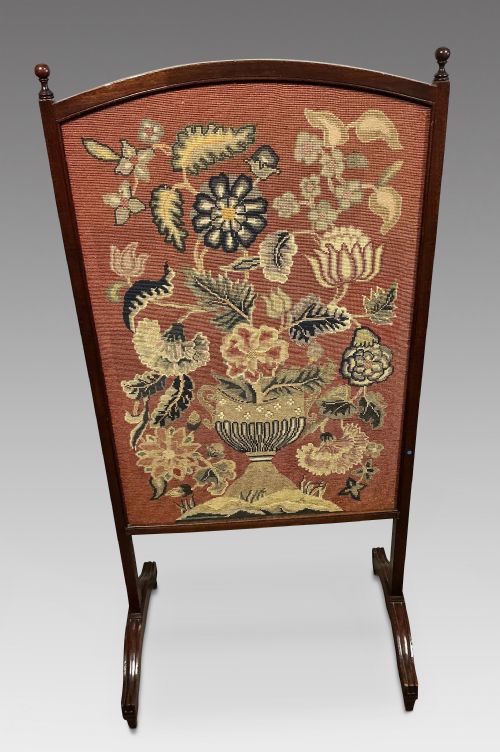
Victorian and nineteenth-century examples dominate the selection, often featuring needlepoint, embroidery, or wool panels. Buyers frequently encounter carved wooden frames housing figural, armorial, or botanical textile artwork.
Materials and Construction
Cabinetmakers utilised hardwoods such as walnut, mahogany, rosewood, and oak to construct stable, substantial frames. Turning, carving, and giltwood application created ornamental details around the perimeter of the screen.
Needlework panels incorporate materials like wool, silk, and general textiles to depict coats of arms, figural scenes, and botanical motifs. These stitched panels are secured within wooden frames or suspended on adjustable pole mechanisms.
Listings feature woods like walnut, rosewood, mahogany, and oak paired with wool, silk, and textile needlework panels.
Distinctions in Quality
Quality rests in the execution of the woodwork and the density of the needlework panel. Finely carved details, such as bobbin turning or elaborate Rococo Revival motifs, distinguish superior frames from simpler designs.
The complexity and condition of the textile panel determine the overall standard of the piece. Well-preserved wool and silk needlepoint with detailed armorial or figural depictions elevates the execution of the hearth guard.
The Tapestry Hearth Guard Glossary
- Pole screen
- A standing fire screen with an adjustable panel that slides vertically along a central wooden shaft. This mechanism allowed occupants to control the height of the shield against the hearth.
- Cheval screen
- A self-standing frame supported by two vertical pillars and feet, holding a fixed tapestry panel. This form provides a broader barrier than a standard pole screen.
- Needlepoint
- Canvas work embroidery executed with yarn using a tent stitch to create pictorial or heraldic designs. It serves as the primary decorative medium for these fire screens.
- Armorial
- A design displaying a coat of arms or heraldic insignia. Such panels often depict specific family lineages and crests.
- Giltwood
- Timber treated with gold leaf or metallic gilding to create a brilliant decorative surface. This finish appears on high-status Georgian and revival frames.
Tapestry Hearth Guard: Frequently Asked Questions
What is a tapestry hearth guard?
A tapestry hearth guard is a standing screen designed to block radiant heat from an active fireplace. They combine wooden support frames with embroidered textile panels.
Historically placed before the hearth, these pieces served both a practical temperature-control function and a decorative purpose in period reception rooms.
How do pole screens work?
Pole screens feature a vertical wooden shaft with a sliding textile panel mounted on a collar. Users adjust the height of the needlework to block heat precisely where needed.
This movable design allows the panel to be positioned at eye level while seated near the fireplace.
What woods were used for frames?
Cabinetmakers employed dense hardwoods such as mahogany, walnut, rosewood, and oak for stability near heat sources. Giltwood also appears on more formal Georgian pieces.
These timbers were frequently carved, turned, or polished to match other domestic furniture of the era.
How should I place one at home?
These screens sit directly on the floor between seating arrangements and the fireplace opening. They function well in rooms with traditional hearths to soften direct radiant heat.
Positioning them away from excessive moisture preserves both the wooden frame and the textile panel.