

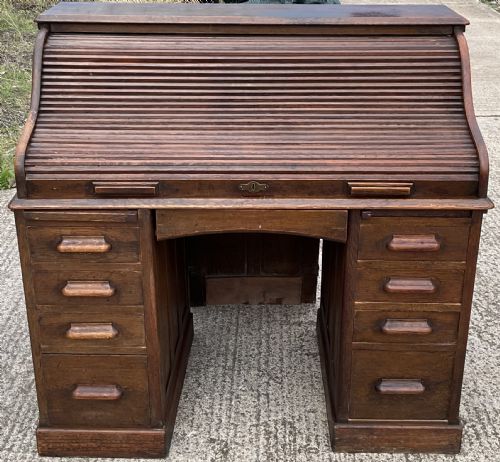
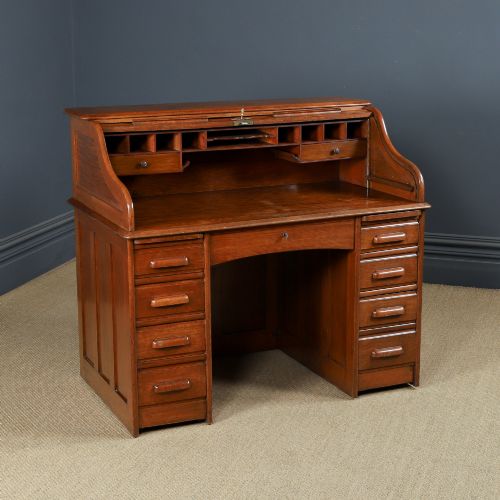
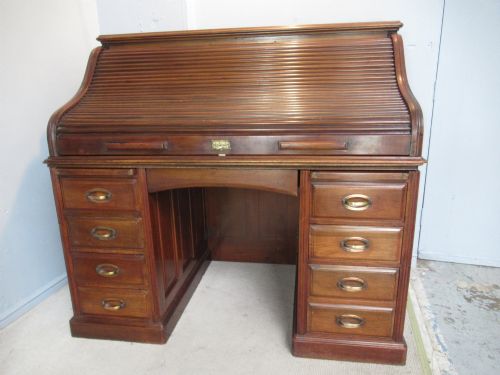
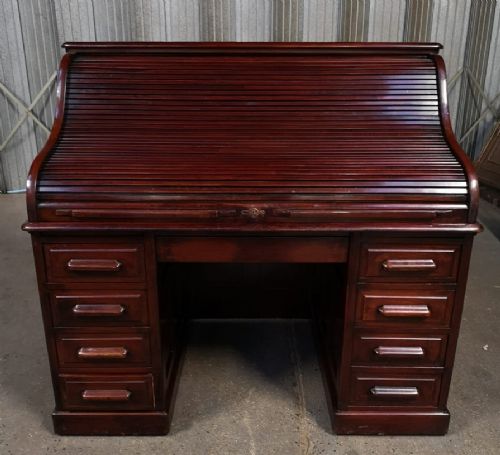
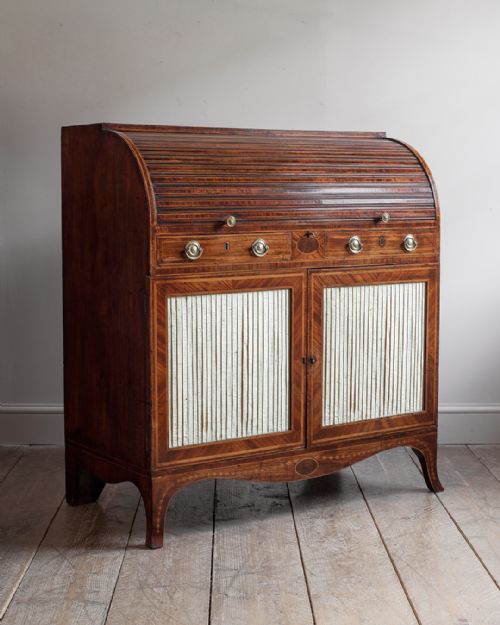
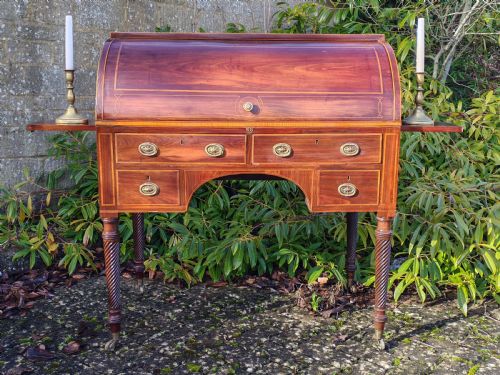
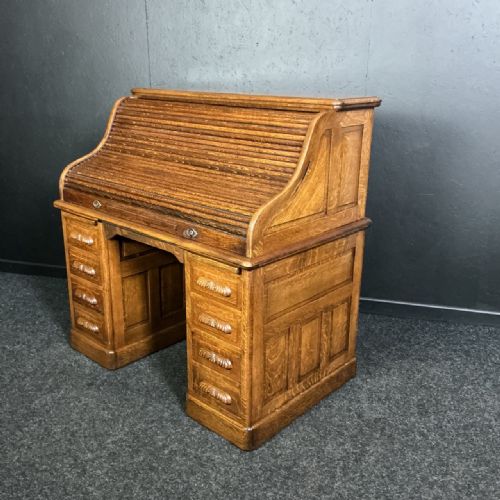
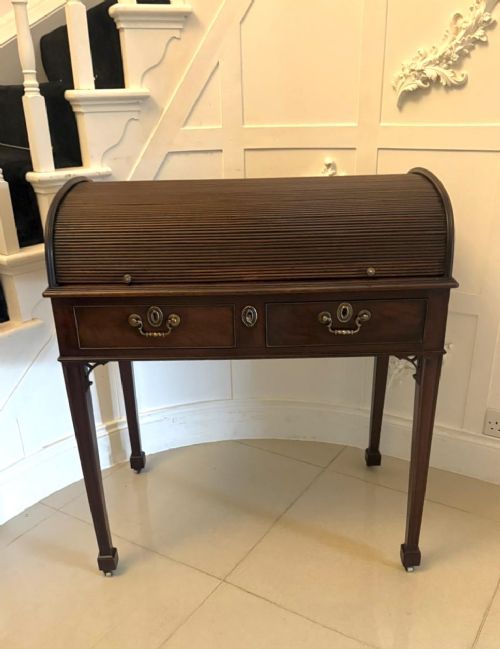

Tambour Top Desk
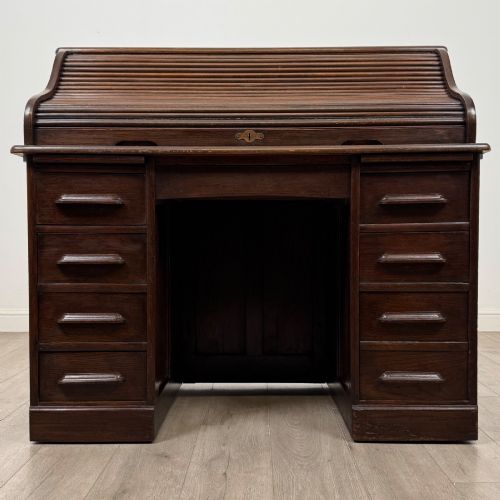
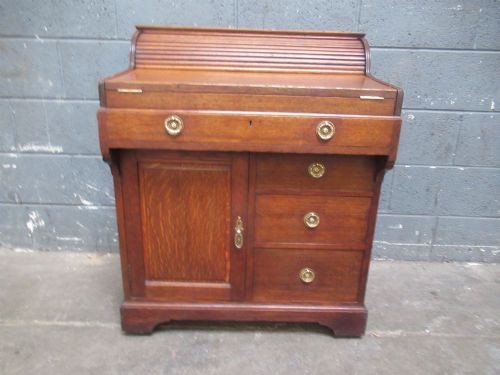
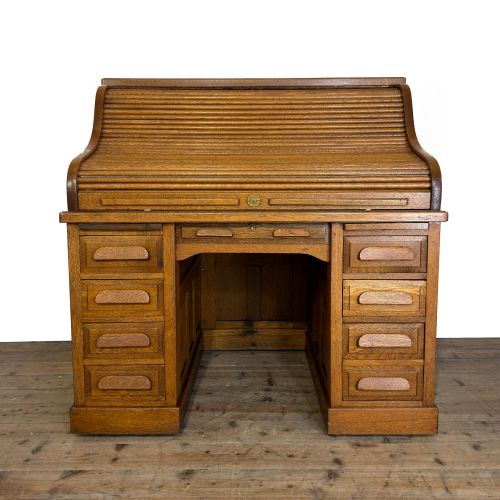
A tambour top desk uses slatted wooden panels to conceal a working surface, offering a clever way to secure private correspondence and papers.
Tambour Top Desk
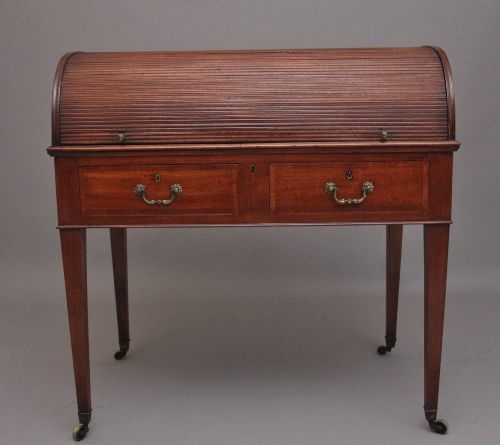
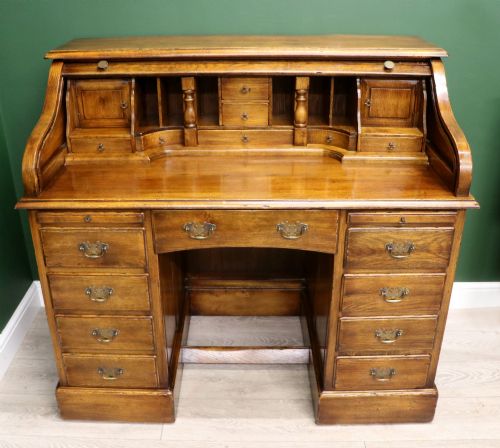
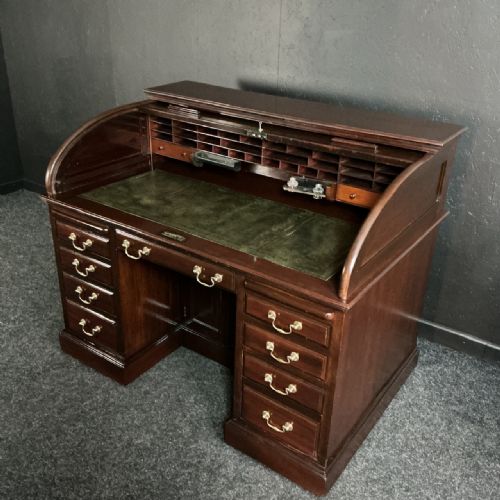
The materials span oak, mahogany, walnut, and satinwood, often complemented by leather writing surfaces and brass hardware. Most examples date from the Victorian, Edwardian, and Georgian periods, reflecting shifts in domestic and commercial stationery storage.
Pedestal formats dominate the later eras, while earlier Georgian and Regency versions lean toward refined writing tables and cylinder cabinets. This variety ensures a suitable scale for domestic studies, home offices, and formal libraries.
How they were made
Makers constructed the flexible tambour shutter by gluing narrow strips of timber onto canvas or linen backing, allowing the curtain to curve smoothly around wooden tracks. Solid oak and mahogany formed the primary carcases, whilst finer pieces incorporated satinwood or walnut veneers.
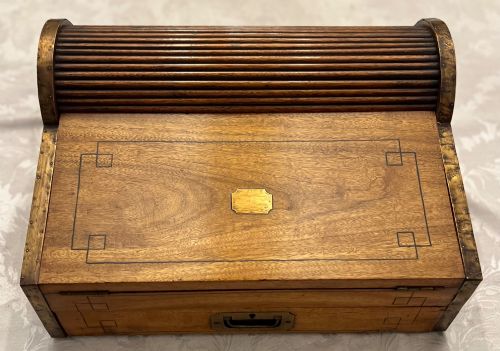
Internal compartments required precise joinery, with small drawers and pigeonholes fitted tightly to endure daily use. Brass pulls, hinges, and occasional campaign mounts secured the writing boxes and slope lids.
Tambour Top Desk Retail Price Guide 2026
Typical asking prices for tambour top desk among the pieces listed under this phrase on Sellingantiques today, from the lower quarter to the upper quarter. They describe what is for sale here now, not the wider market.
What varies in quality
The smoothness of the sliding tambour action dictates much of the standard, relying on warp-free tracks and intact textile backings. Superior pieces show precise timber selection, matching grain patterns across the rolling shutter and carcase.
Secondary woods, internal drawer linings, and the crispness of brass fittings separate standard commercial office furniture from bespoke cabinet work. The retention of original leather inserts and working locks further distinguishes better survivals.
Boston Chair Company·Maples of London and Paris
The Tambour Top Desk Glossary
- Tambour
- A flexible shutter made from narrow strips of wood glued to fabric, allowing it to slide around a curved track. This mechanism conceals the desk interior when closed.
- Cylinder top
- A solid quarter-cylinder of wood that rotates backward into the desk body to reveal the writing surface. It differs from the slatted tambour construction.
- Pedestal desk
- A heavy freestanding desk supported by two banks of small drawers reaching to the floor. Many Edwardian roll top desks follow this robust format.
- Writing slope
- A portable or table-top box with a slanted writing lid that folds open to store papers and ink. Campaign versions often feature brass corner binding.
- Pigeonhole
- A small open compartment built into the upper interior of a desk for sorting letters. They sit neatly behind the sliding shutter.
Tambour Top Desk: Frequently Asked Questions
How do I maintain the tambour track?
Keep the wooden tracks clean from dust and debris to ensure the slatted shutter glides smoothly without catching.
Avoid heavy liquid polishes inside the grooves, applying a small amount of paste wax only if friction develops over time.
Were these desks used at home?
Georgian and Regency cylinders generally served in private libraries or drawing rooms for personal correspondence and accounts.
By the Edwardian era, robust oak roll top versions filled busy offices and home studies to conceal paperwork at the end of the day.
How do I tell Georgian from Edwardian examples?
Georgian and Regency tambour desks typically feature lighter proportions, fine mahogany or satinwood veneers, and tapered legs. They rely on refined cabinet-making traditions.
Edwardian and late Victorian pieces tend to be heavier, often built from solid oak in large pedestal formats designed for commercial filing.
Can I replace the leather writing insert?
Many working surfaces use fitted leather inserts that can be replaced by a professional restorer if worn. Preserving the surrounding timber border remains essential during any conservation work.