

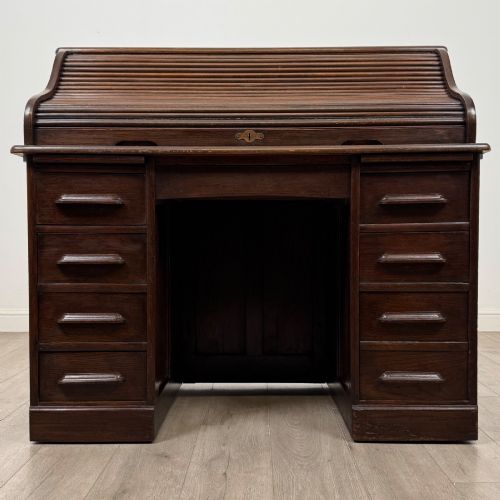
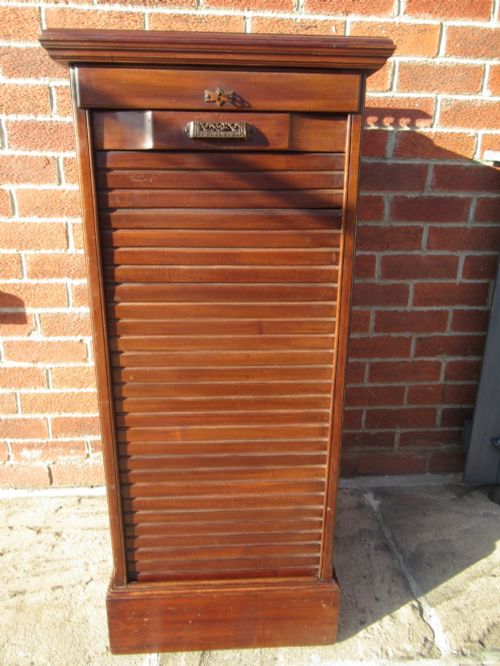
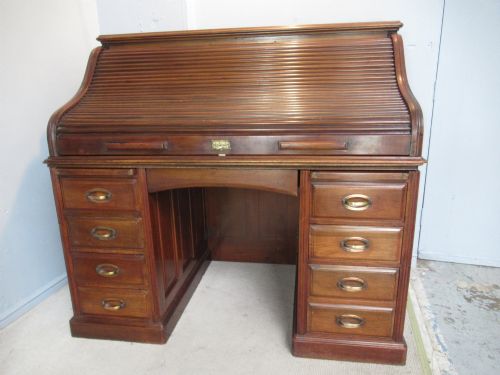
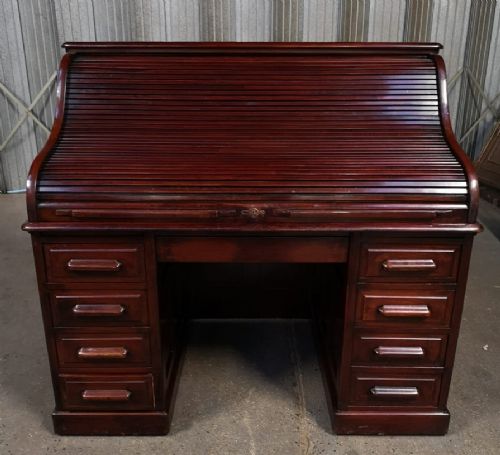

Tambour Roll Front
A tambour roll front piece offers clever slatted closure for desks and cabinets, hiding paperwork behind smooth-running wooden tracks.
Tambour Roll Front
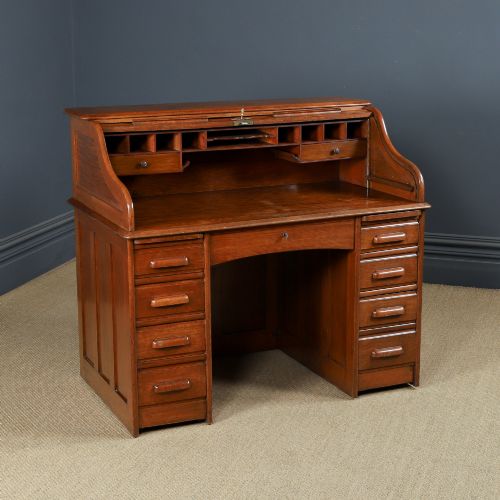
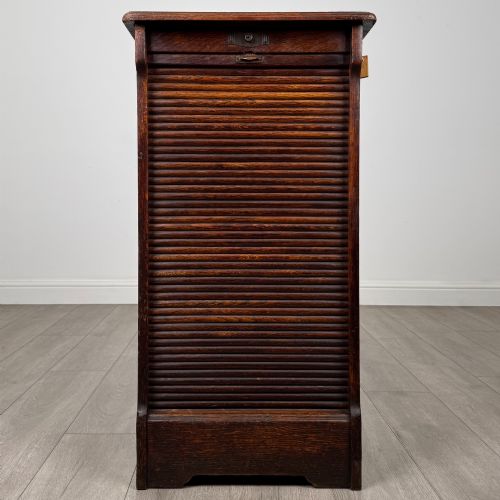
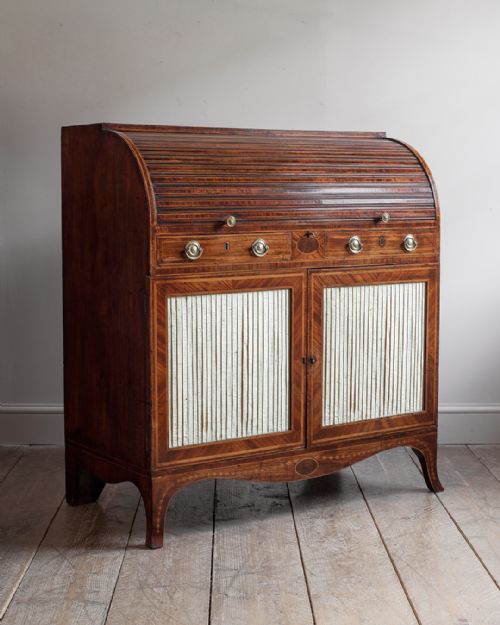
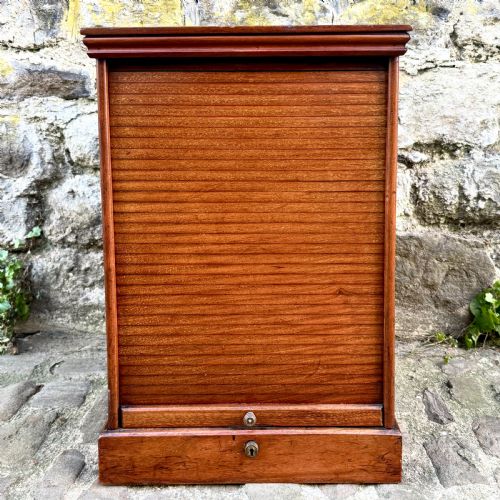
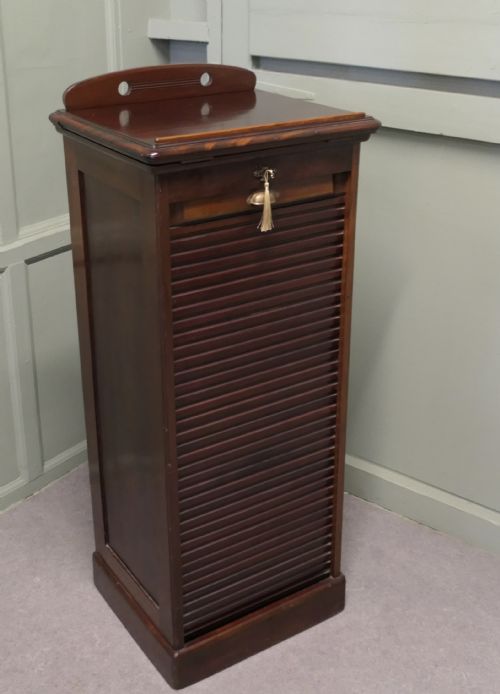
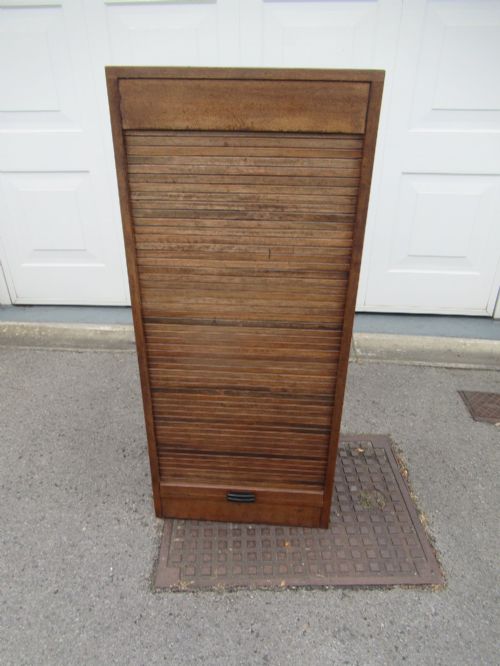
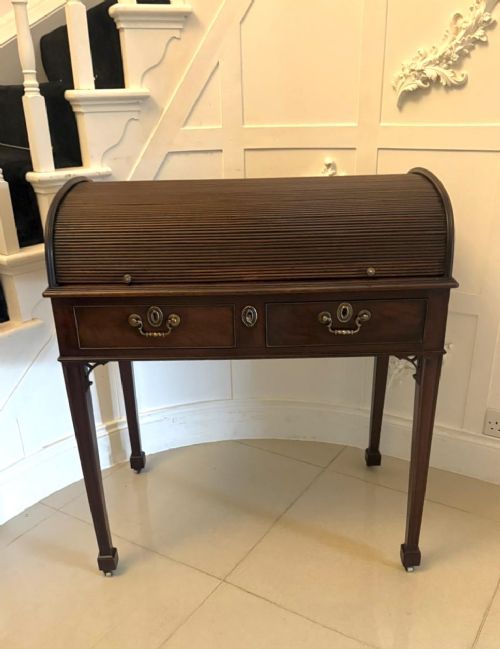
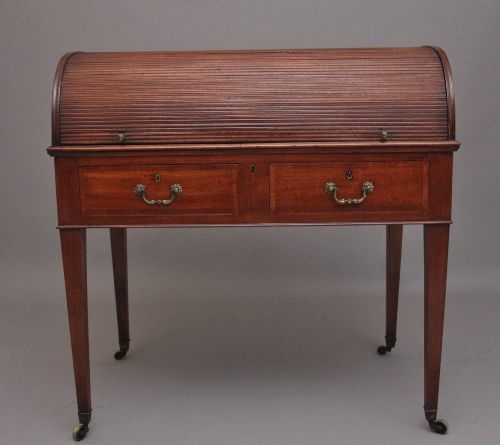
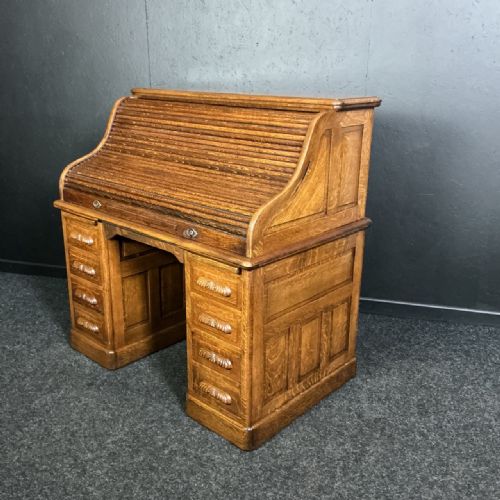
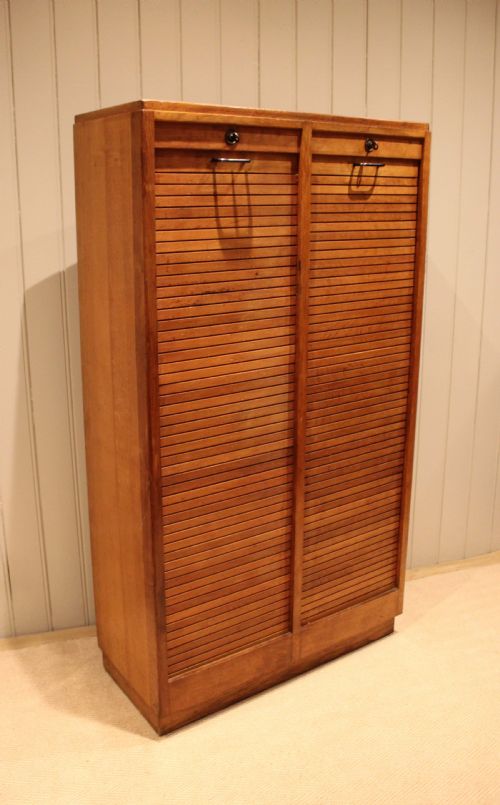
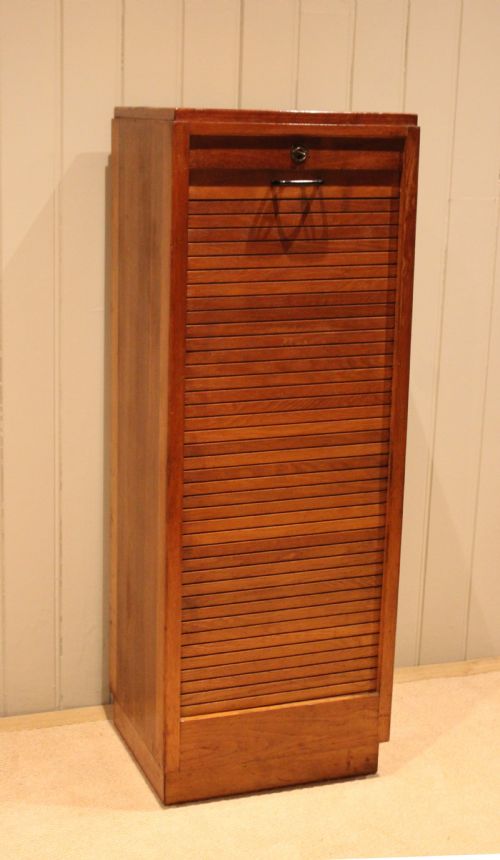
A tambour roll front describes items built with flexible slatted shutters, most commonly found on desks, writing tables, and office filing cabinets. You will frequently encounter Edwardian and Victorian examples alongside earlier Georgian bureau designs.
The form spans large pedestal office desks in oak and walnut, alongside smaller writing slopes, cabinets, and French utility pieces. These items served functional working environments from the eighteenth century through to the mid twentieth century.
How they were made
Makers constructed the rolling shutters by gluing narrow wooden strips onto sturdy canvas backing, allowing the rigid timber slats to curve smoothly around tracks. Woods such as oak, mahogany, walnut, and satinwood provided the primary structure for both cabinets and desks.
Brass fittings and leather writing inserts frequently complemented the timber construction, while metal internal mechanisms supported adjustable shelving within filing cabinets and office units.
Tambour Roll Front Retail Price Guide 2026
Typical asking prices for tambour roll front among the pieces listed under this phrase on Sellingantiques today, from the lower quarter to the upper quarter. They describe what is for sale here now, not the wider market.
Listings feature woods including oak, mahogany, walnut, satinwood, partridgewood, and camphor wood.
What varies in quality
The precision of the slatted mechanism dictates the operational smoothness of the shutter, separating well-engineered pieces from those that bind along their tracks. Superior joinery aligns the timber slats tightly when closed.
The choice of cabinet timbers and secondary woods influences the overall substance, with figured mahogany, satinwood, and panelled oak representing finer craftsmanship than utilitarian office variants.
Boston Chair Company·Maples of London and Paris
The Tambour Roll Front Glossary
- Tambour
- A flexible shutter made from narrow strips of wood glued to a fabric backing. This allows the front of a desk or cabinet to slide open along a curved groove.
- Roll Top Desk
- A large working desk featuring a tambour shutter that pulls down to enclose the writing surface and pigeonholes. These items became staples of Edwardian and Victorian offices.
- Pedestal Desk
- A heavy writing desk supported by two banks of small drawers beneath the main working surface. They frequently incorporate panelled oak construction and roll top tambour mechanisms.
- Writing Slope
- A portable or table-standing box with an angled writing surface. They often open to reveal storage compartments for ink and stationery.
Tambour Roll Front: Frequently Asked Questions
How do tambour roll front desks work?
The slatted wooden shutter runs inside a curved groove cut into the sides of the desk or cabinet. When pushed upward or sideways, the flexible slats wrap around the interior framework to leave the workspace open.
This clever mechanism conceals messy papers without requiring the outward swing clearance of traditional cabinet doors.
What periods do these desks come from?
The listings span from the late eighteenth century through the Georgian and Victorian eras, with a strong concentration of Edwardian and early twentieth century office furniture.
Earlier examples often take the form of cylinder bureaux in mahogany and satinwood, while later versions are predominantly robust oak office desks and filing cabinets.
Where were tambour cabinets used originally?
These items were primarily designed for professional offices, studies, and administrative spaces where paperwork needed secure and tidy concealment at the end of the working day.
Filing cabinets and typewriter desks provided practical storage for ledgers and correspondence in commercial environments before moving into domestic home offices.
How should I care for a tambour shutter?
Keep the running tracks clean of dust and debris to ensure the canvas-backed slats glide smoothly without catching. Periodic application of suitable furniture wax maintains the timber without building up inside the grooves.
Avoid forcing the shutter if it sticks, as the canvas backing relies on alignment within the side tracks to operate correctly.