

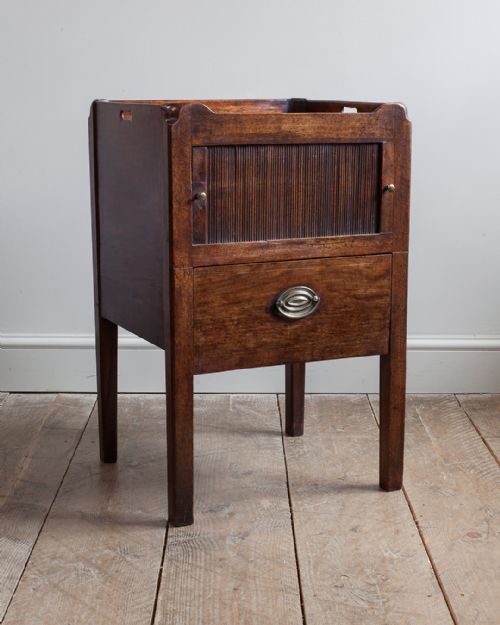

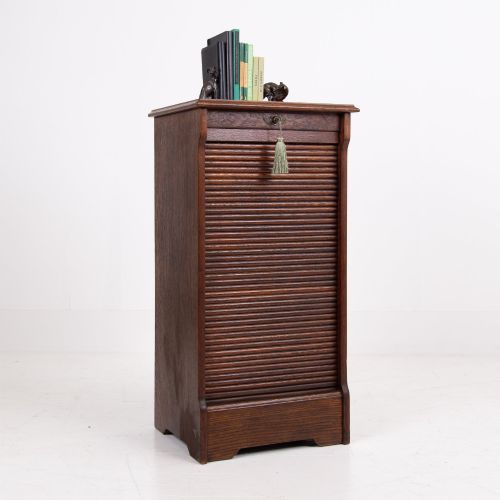

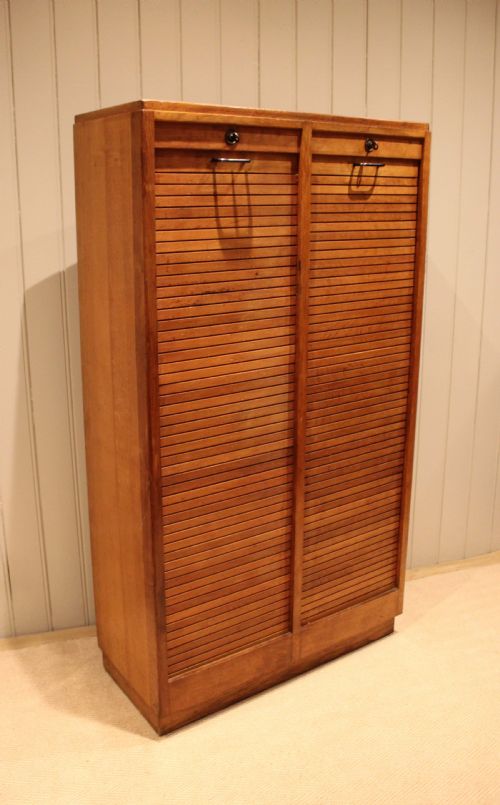
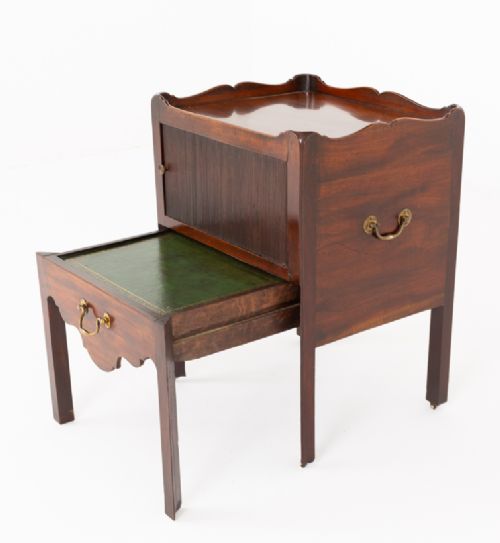
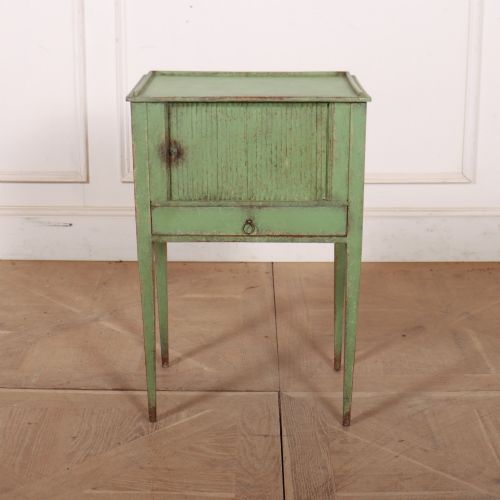

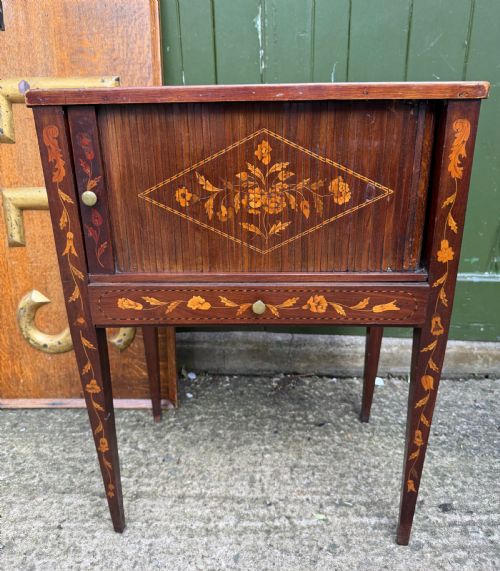


Tambour Door Cupboard
A tambour door cupboard offers clever sliding slatted storage, combining neat mechanics with timber elegance.
Tambour Door Cupboard
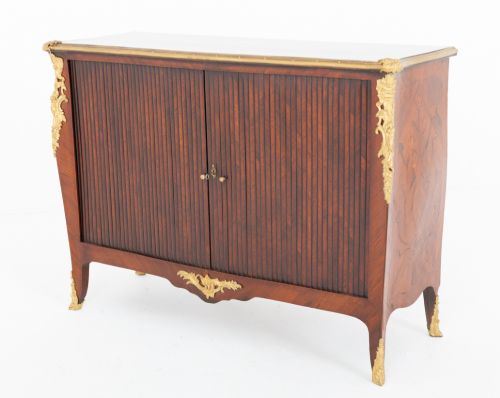
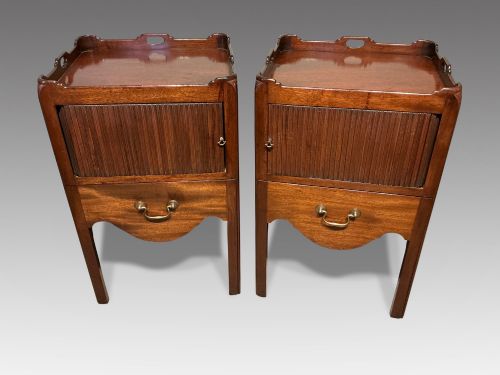
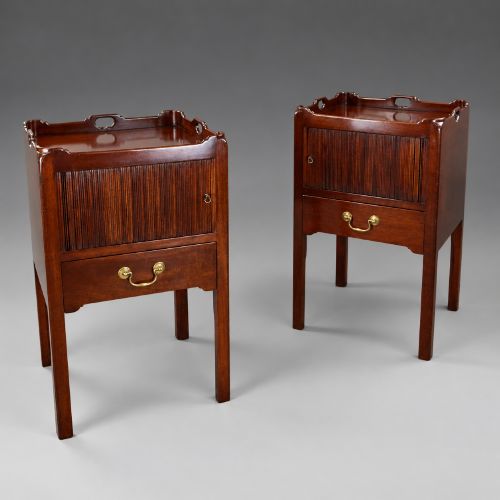
A tambour door cupboard brings together flexible slatted closures and enclosed storage across forms like bedside cabinets, nightstands, and office filing units. When you search for tambour door cupboard, you find practical storage pieces designed to slide open smoothly without swinging doors taking up room.
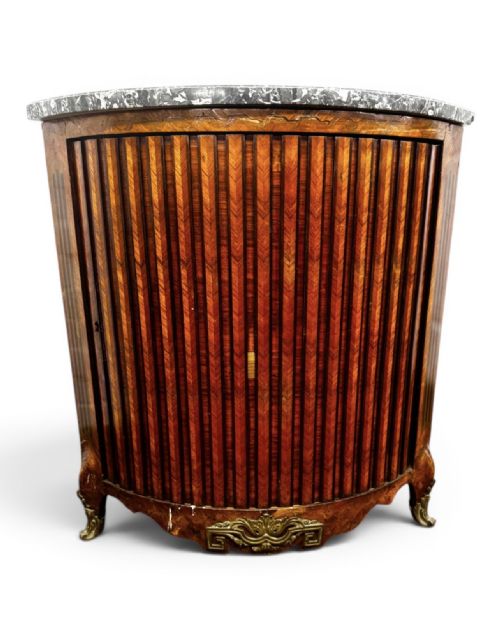
The versions most common here span Georgian styles, nineteenth century interpretations, and later twentieth century office pieces. Makers shaped these cabinets in forms ranging from corner cupboards and writing cabinets to bedside tables and double front filing units.
How they were made
Cabinet makers constructed these pieces using primary timbers such as mahogany, oak, walnut, and satinwood, often enhanced with marquetry inlay using woods like boxwood, tulipwood, and purple wood. Slats for the sliding doors were glued to fabric backings or interlocking tracks to bend around curves.
Detailing frequently incorporates brass fittings, marble tops, or ormolu mounts, depending on the provincial or neoclassical origin. Interiors often integrate pull-out drawers or fitted compartments behind the flexible slatted fronts.
Tambour Door Cupboard Retail Price Guide 2026
Typical asking prices for tambour door cupboard among the pieces listed under this phrase on Sellingantiques today, from the lower quarter to the upper quarter. They describe what is for sale here now, not the wider market.
Materials span mahogany, oak, walnut, satinwood, and pine, complemented by brass feet and marble tops.
What varies in quality
Quality rests in the smoothness of the sliding action and the precision with which the individual timber slats align along their tracks. Superior examples exhibit tight joinery, carefully selected grain patterns, and intact backing materials that permit effortless movement.
The Tambour Door Cupboard Glossary
- Tambour
- A flexible door constructed from narrow vertical strips of wood glued to canvas or leather, allowing it to slide smoothly around a curved track or corner.
- Commode
- A decorative low cabinet or chest of drawers, frequently utilised as a bedside table in Georgian and continental rooms.
- Marquetry
- Decorative patterns formed by inserting thin veneers of different coloured woods into a wooden background.
- Tray top
- A raised rim surrounding the upper surface of a small table or cabinet designed to prevent items from rolling off.
Tambour Door Cupboard: Frequently Asked Questions
What is a tambour door?
A tambour door is made from thin wooden strips joined side by side on a flexible backing. This allows the door to slide around a curved corner rather than swinging outward.
Such construction saves space and creates a streamlined exterior on small cabinets and desks.
Where were these cabinets used?
These pieces served primarily in bedrooms as nightstands and pot cupboards, or in studies and offices as filing and writing cabinets.
Their compact footprints made them suitable for corners and tight spaces where traditional doors would obstruct movement.
How do I identify a Georgian piece?
Georgian and George III examples typically feature solid mahogany construction, restrained classical proportions, and fine details like brass pull handles or tray tops.
Many of these earlier pieces rely on hand-cut dovetails and traditional timber framing methods.
Are these cabinets difficult to maintain?
The sliding slats require gentle handling and occasional cleaning within the tracks to prevent dust accumulation.
Keeping timber polished with suitable wax preserves the finish and ensures the flexible mechanism continues to run freely.