

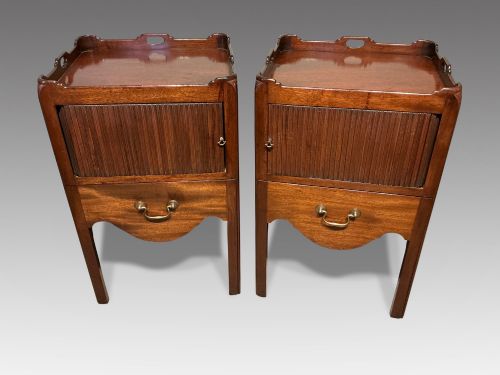
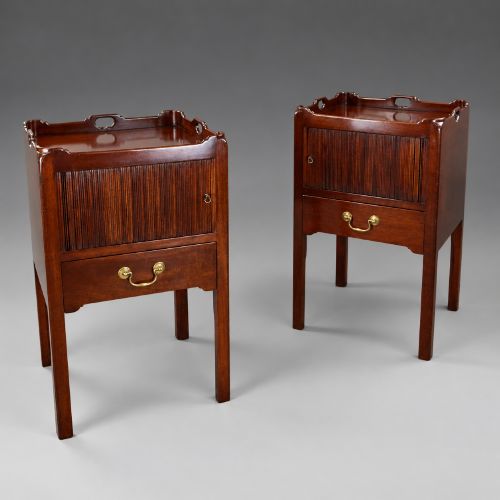
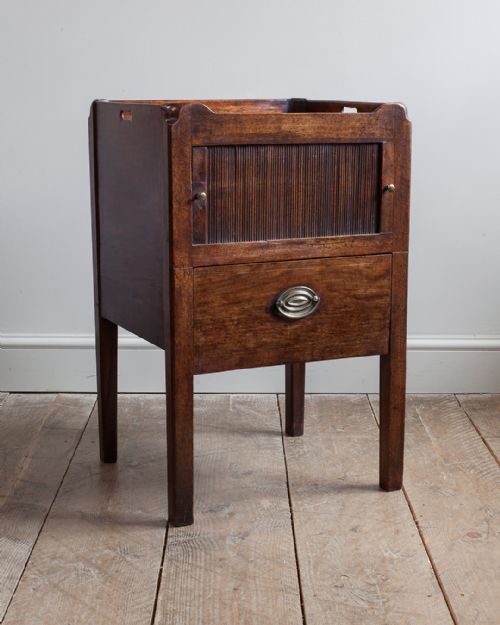

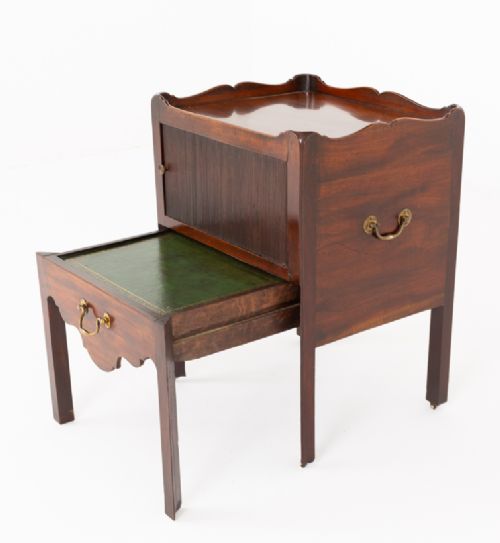
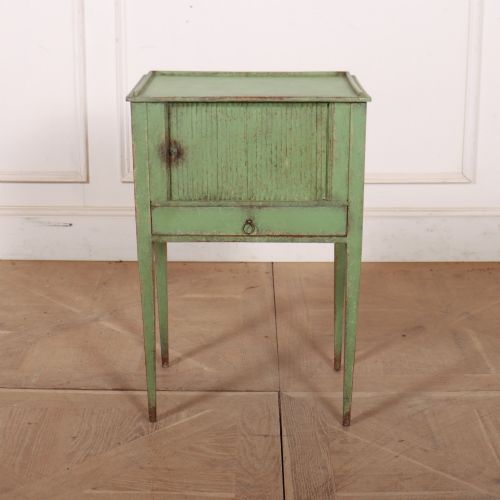

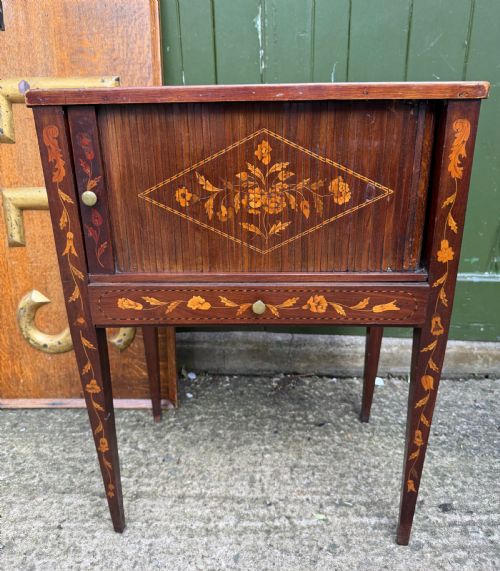


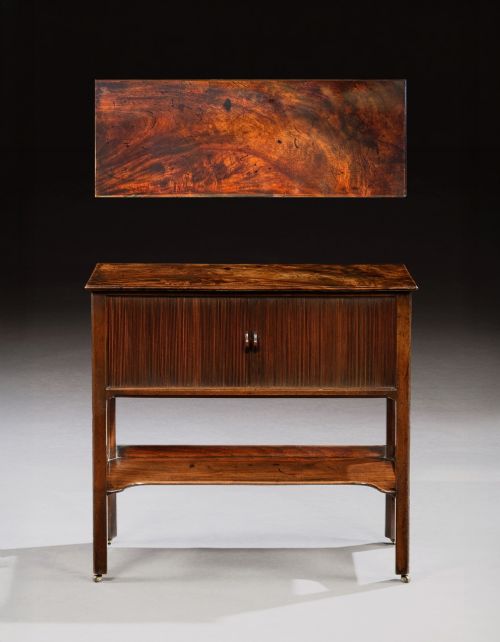


Tambour Door Bedside
A tambour door bedside is a clever piece of bedroom storage, hiding its interior behind slatted sliding panels.
Tambour Door Bedside
A tambour door bedside cabinet conceals storage behind flexible wooden slats, combining compact bedside utility with neat mechanical design. When you search for tambour door bedside options on this page, you encounter small cupboards and nightstands designed to keep bedside essentials tucked safely out of sight.
The pieces appearing here span Georgian, Regency and Victorian periods, reaching into later 1930 interpretations. Mahogany forms the backbone of these selections, alongside walnut and painted surfaces originating from Dutch and French provincial workshops.
Forms range from simple tray-top nightstands and bow fronts to corner cabinets and serpentine commodes. The Georgian and George III examples dominate the selection, bringing disciplined proportions and timber figures to the bedroom.
How they were made
Cabinetmakers constructed the slatted tambour fronts by gluing thin strips of mahogany or walnut to a textile or canvas backing, allowing the panel to slide smoothly along routed tracks within the frame. This intricate joinery required precise hand-fitting so the mechanism operated without catching.
Solid mahogany and walnut timbers provide the structural integrity for the bodies, often enhanced by boxwood stringing, brass hardware, and painted floral marquetry. Secondary softwoods typically form internal drawer linings and hidden backing components.
Tambour Door Bedside Retail Price Guide 2026
Typical asking prices for tambour door bedside among the pieces listed under this phrase on Sellingantiques today, from the lower quarter to the upper quarter. They describe what is for sale here now, not the wider market.
Mahogany and walnut dominate the listed materials, supplemented by painted wood, brass, and boxwood across Georgian and Victorian periods.
What varies in quality
The smoothness of the tambour action dictates the primary tier of craftsmanship, separating tight, well-aligned slat tracks from warped panels that stick in their grooves. Superior examples maintain effortless glide alongside crisp exterior carving and undisturbed timber grain.
Proportion and material selection mark the distinction between provincial utility items and high-status urban commissions. Fine brass handles, intricate marquetry inlay, and carefully matched mahogany veneers elevate certain pieces far beyond standard domestic furniture.
The Tambour Door Bedside Glossary
- Tambour
- A flexible shutter made of narrow wooden slats glued to canvas, allowing a door to slide around a curved corner. It keeps bedside items concealed without requiring clearance for a swinging hinge.
- Commode
- A low cabinet or chest of drawers designed for the bedroom. In earlier periods, these frequently incorporated enclosed spaces for chamber pots or night accessories.
- Tray top
- A raised rim around the upper surface of a bedside table designed to prevent small objects from rolling off. This feature appears frequently on Georgian nightstands.
- Marquetry
- Decorative patterns formed by fitting together thin veneers of various coloured woods. Dutch provincial examples on this page utilise floral marquetry to create elaborate surface designs.
Tambour Door Bedside: Frequently Asked Questions
How do tambour doors work?
Tambour doors consist of narrow wooden slats attached to a flexible backing fabric that slides along a grooved track. This lets the door curve around the side of the cabinet without swinging outward into the room.
Over time, dust or slight wood movement can affect the slide, but regular gentle waxing keeps the slats moving smoothly along their channel.
Where should I place a bedside cabinet?
These compact cabinets fit neatly beside a standard bed frame, offering enclosed surface storage for books and personal items. Their small footprints make them adaptable to tight spaces where a traditional swinging door would block access.
Keep them away from direct heat sources and strong sunlight to protect the aged mahogany and walnut polishes from drying out.
How do I identify a Georgian bedside table?
Georgian and George III pieces generally feature solid mahogany timber, restrained brass pulls, and classical proportions such as straight or slightly tapered legs. Look for traditional joinery methods and subtle design details like tray tops or panelled sides.
Later Victorian and 1930s interpretations often borrow these Georgian silhouettes while employing slightly heavier construction methods or different internal secondary woods.
What is the difference between a nightstand and a commode?
In historical terminology, a bedside commode often enclosed a chamber pot behind its lower doors or sliding slats, whereas a nightstand functioned primarily as a small open or closed table for a bedside candle and glass. Today, both terms describe compact bedroom storage units of similar scale.
Many pieces listed here bridge these definitions, offering multi-purpose storage with drawers beneath the main tambour enclosure.