

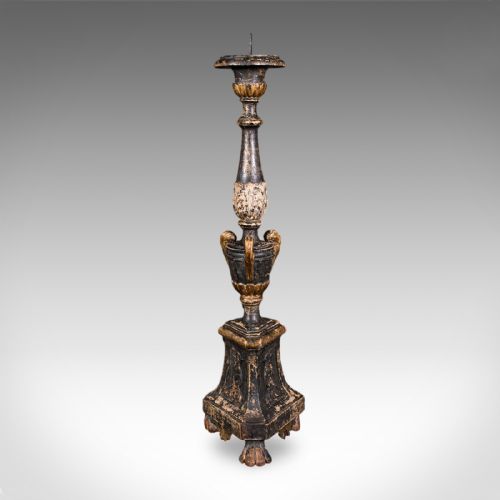


Tall Wooden Table Lights
Tall wooden table lights are upright illumination pieces that bring sculptural presence and warmth to a room.
Tall Wooden Table Lights
Tall wooden table lights combine height with timber construction to anchor a scheme on sideboards and larger surfaces. When you search for tall wooden table lights, you encounter pieces that range from converted pricket sticks to dedicated lamp bases.
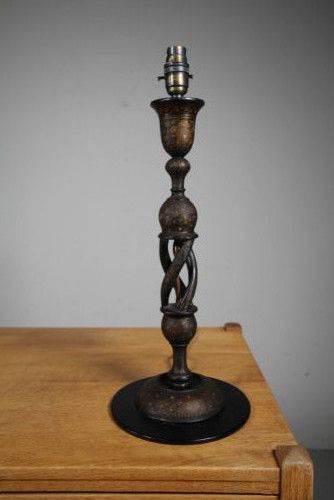
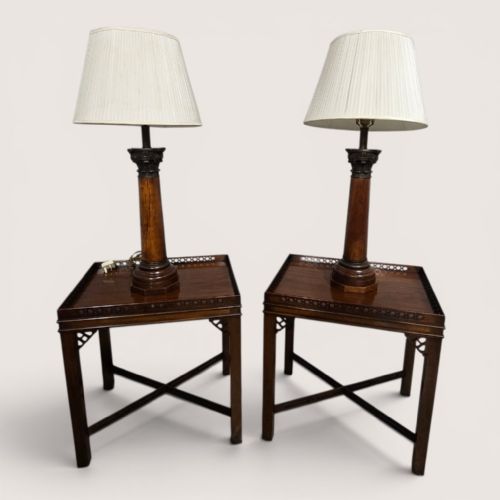
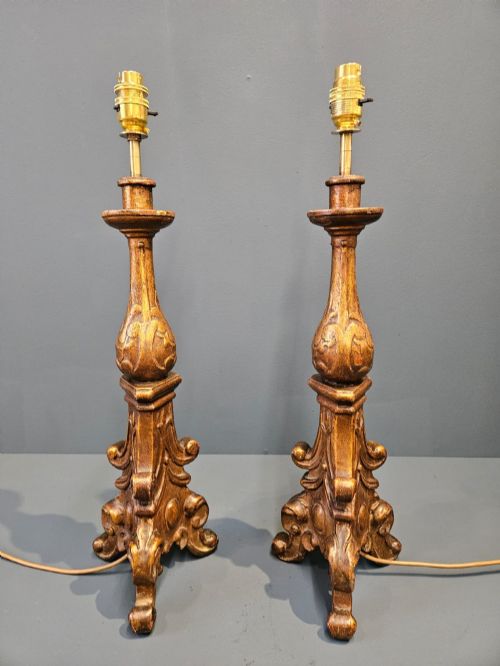
The selections span several centuries and aesthetic traditions, including Italian Baroque, Neoclassical, and English Country styles. Oak, ash, carved wood, and giltwood appear frequently across these vertical forms.
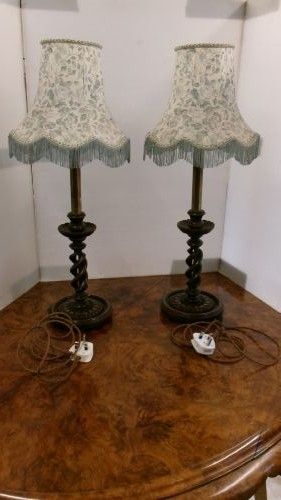
Many examples originate as converted candle holders or prickets, while others date from the nineteen-twenties onwards as purpose-built electric fittings. Pairs feature prominently, offering symmetrical height and presence for interior spaces.
How they were made
Maker's workshops utilised solid timbers such as oak and ash, alongside carved wood blanks built up with gesso. Artisans shaped these materials using traditional turning lathes and hand-chiselling techniques to achieve slender, upright silhouettes.
Surface decoration involved gilding with gold leaf, silver leaf application, ebonising, and marbleising. These finishes enhanced the tactile grain of the wood and provided opulent light reflection for domestic interiors.
Tall Wooden Table Lights Retail Price Guide 2026
Typical asking prices for tall wooden table lights among the pieces listed under this phrase on Sellingantiques today, from the lower quarter to the upper quarter. They describe what is for sale here now, not the wider market.
What varies in quality
The depth and crispness of the hand-carving distinguish finer pieces from simpler turned examples. Sculptural details like cherubs or acanthus leaves demonstrate the hand of a skilled artisan rather than mechanical production.
The integrity of the original giltwood, gesso, and leaf finishes governs the visual weight of an object. Patina accumulated through age on oak, ash, and ebonised surfaces adds depth that modern replicas lack.
The Tall Wooden Table Lights Glossary
- Pricket
- A sharp metal spike on a candlestick designed to impale a wax candle. Antique prickets are frequently converted into table lights.
- Giltwood
- Timber coated with gold leaf or metal leaf over a prepared gesso ground. This technique creates a rich, reflective surface found on baroque pieces.
- Gesso
- A plaster mixture applied to wood surfaces to provide a smooth base for gilding and painting. It allows for intricate relief ornamentation.
- Corinthian
- An architectural order featuring ornate capitals decorated with acanthus leaves. This motif appears frequently on wooden column lamps.
- Ebonised
- Wood stained or finished to imitate ebony. This dark, formal treatment was popular in various nineteenth-century periods.
Tall Wooden Table Lights: Frequently Asked Questions
How do I style tall wooden table lights?
Place them on large sideboards, consoles, or deep side tables where their height can balance architectural proportions. They provide effective ambient illumination in corners or on surfaces that require vertical emphasis.
Pair matching candlesticks together for symmetry on a mantel or buffet, or use single sculptural forms to break up linear arrangements of books and objects.
Were these always electric lamps?
Many examples began life as candle holders, prickets, or decorative candlesticks before receiving modern wiring. Conversions allow antique turned wood and gilt bases to function safely in contemporary interiors.
Makers adapted various historical lighting fixtures over the decades, integrating flex and lamp holders while preserving the original timber structure and finish.
What woods should I expect to find?
Oak and ash appear regularly in English and French pieces, offering robust grain and structural stability. Carved wood and giltwood utilise softer timbers beneath gesso and leaf layers to facilitate detailed ornamentation.
Exotic materials or specific regional variations occasionally emerge, reflecting international trade and colonial influences such as Anglo-Indian designs.
How do I tell nineteenth-century pieces apart from earlier ones?
Eighteenth-century examples often display deep Italian or French baroque carving with authentic gesso shrinkage and wear to the underlying giltwood. Nineteenth-century revivals incorporate heavier Victorian proportions and machine assistance alongside hand work.
Examine the tool marks, the composition of the gesso ground, and the natural oxidation of the timber to gauge the age of a specific base.