



Tall Wooden Clock
A tall wooden clock commands a room with its upright presence and measured tick, marking the passing hours in mahogany, oak or walnut.
Tall Wooden Clock
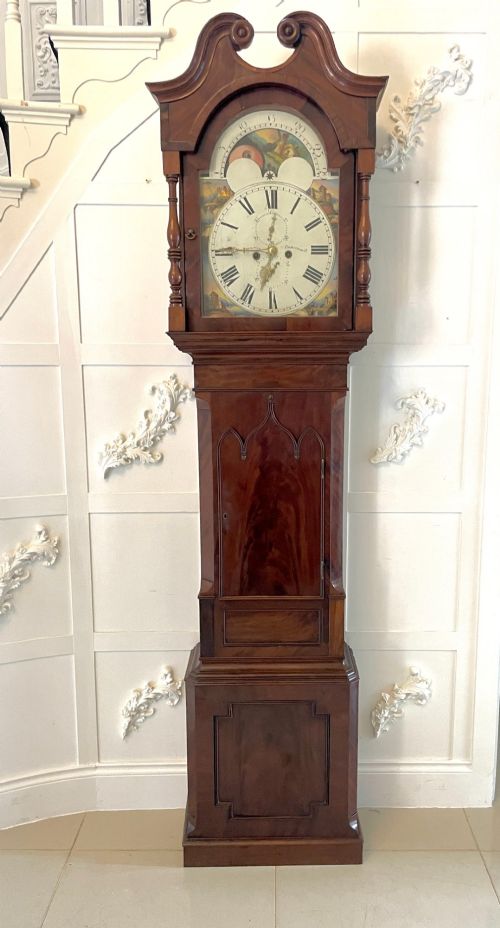
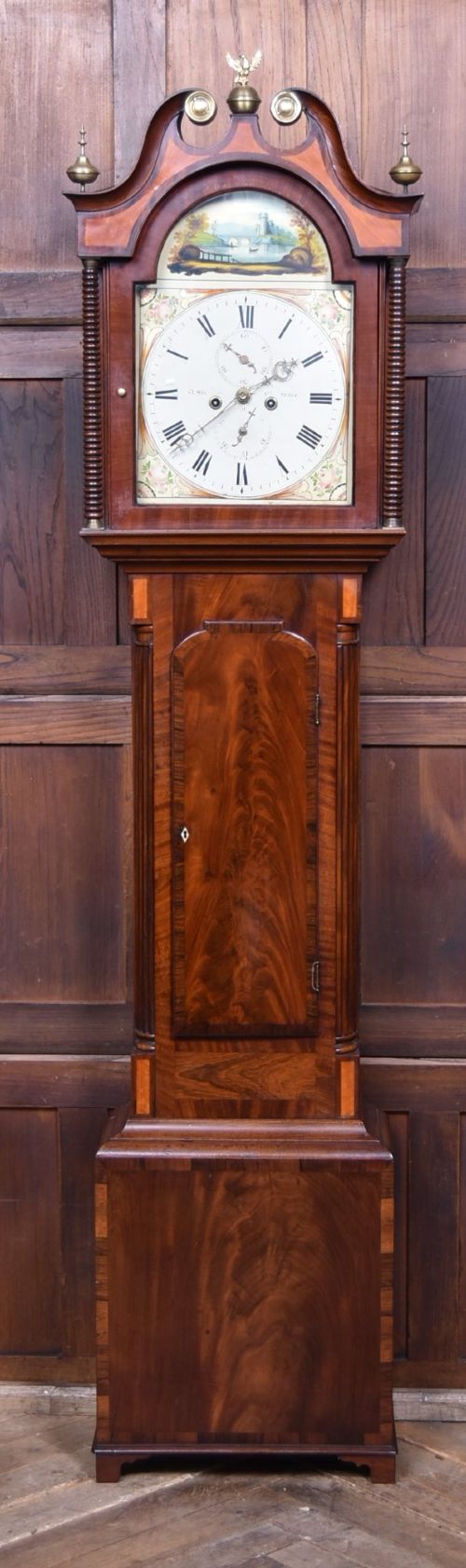
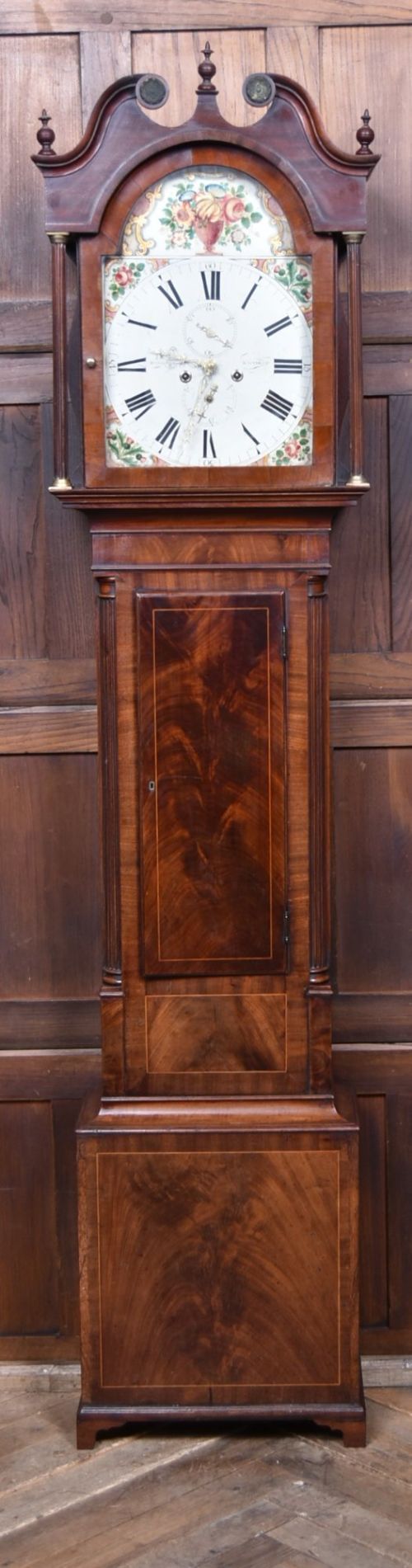
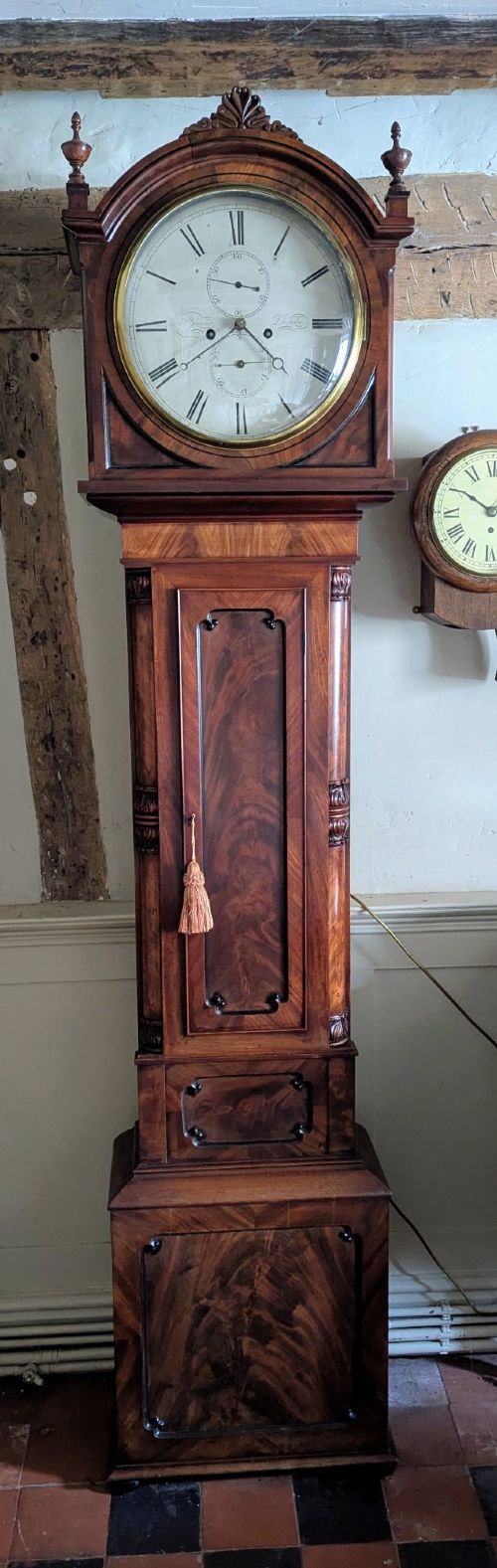
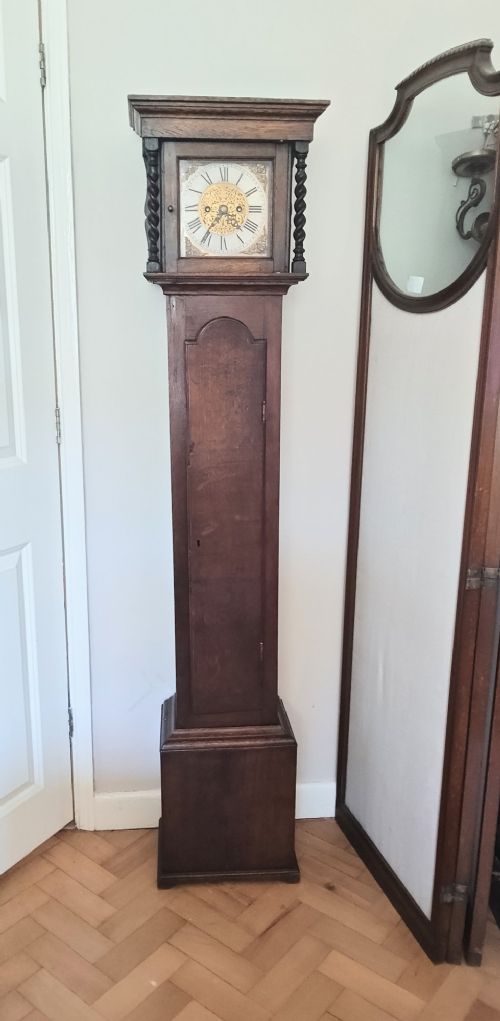
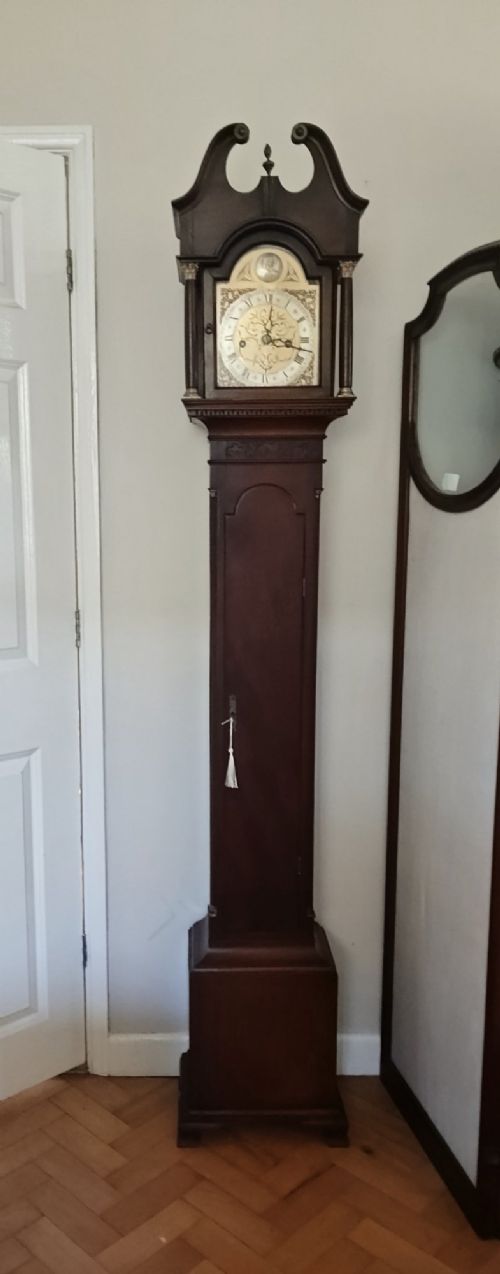
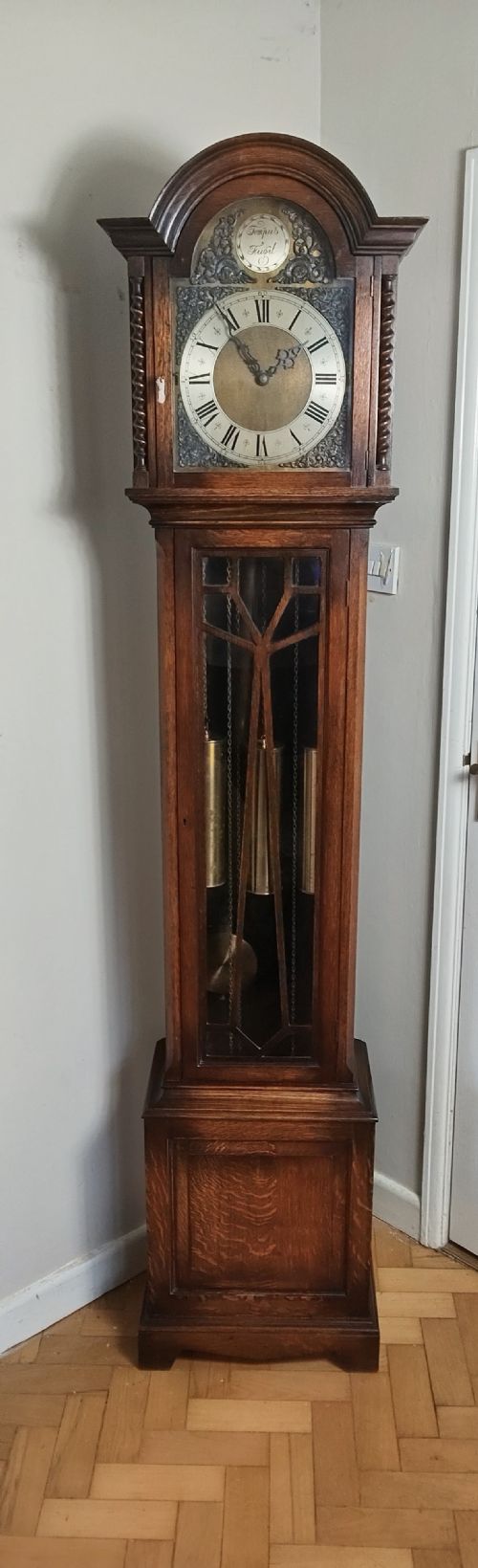
A tall wooden clock, commonly known as a longcase or grandfather clock, stands as a major architectural feature of domestic interior furniture. These floor-standing timepieces house weights and pendulums within a protective wooden trunk, topped by a dial face protected by glass.
The pieces on this page span from the seventeenth century through the Georgian and Victorian eras up to the early twentieth century. Examples range from early walnut works to regional oak and mahogany pieces from English and Scottish makers.
Materials and Construction
Cabinetmakers constructed the tall cases primarily using dense hardwoods such as mahogany, oak and walnut, often applying crossbanding or figural veneers for visual depth. The timber protected the internal brass and iron movements while providing a stable cabinet for the suspended weights.
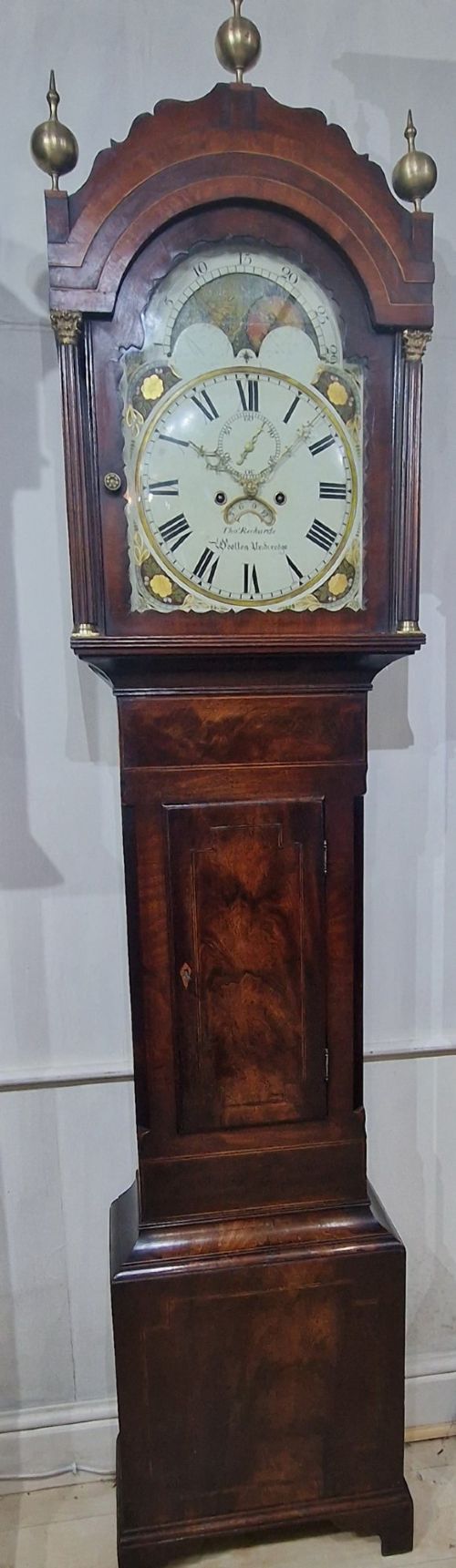
Dial faces combined engraved brass, painted iron and white enamel, frequently featuring subsidiary seconds dials or calendar apertures. Glass doors and display domes shielded delicate hands and painted chapter rings from dust and atmospheric changes.
The listings span multiple centuries, uniting seventeen-century walnut works with Georgian mahogany and later Victorian timepieces.
Standards of Execution
Quality rests in the harmony between the cabinet proportions and the sophistication of the internal movement. Finer examples display crisp dial engraving, substantial brass movements and well-figured timber cabinets that retain their original patination.
Regional variations and maker signatures distinguish standard production from exceptional horology. Cases with secondary decorative elements like rolling moon phases or intricate woodwork reflect higher tiers of period craftsmanship.
Edward East·Joseph Knibb·Hendrie Ogg·D Straiton·John Banks·Samuel Young·James Coster
The Tall Wooden Clock Glossary
- Longcase clock
- A tall pendulum clock enclosed in a wooden case that stands directly on the floor. These pieces are frequently referred to as grandfather clocks.
- Movement
- The internal mechanical workings of a clock driven by weights or springs. This assembly turns the hands and powers any striking mechanisms.
- Chapter ring
- The circular ring on the dial face that displays the numerals for the hours. It is commonly fashioned from engraved brass or painted iron.
- Crossbanding
- A decorative border technique where thin strips of veneer are laid so the grain runs perpendicular to the surrounding wood. This method frames the primary wood panels on the trunk door.
- Rolling moon
- A mechanical display on the dial that tracks the phases of the lunar cycle. The painted disc rotates behind an arched aperture as the days progress.
Tall Wooden Clock: Frequently Asked Questions
How do I wind a tall wooden clock?
Winding involves using a crank key to draw the hanging weights back up to the top of the trunk. Care must be taken not to overwind the mechanism.
Most eight-day movements require this action once a week, while thirty-hour versions need daily attention.
Where should I place a longcase clock?
Select an interior wall away from direct sunlight, heating vents and damp areas to protect the wood and movement. The floor surface must be firm and level to ensure the pendulum swings evenly.
Securing the tall case to the wall using a bracket prevents accidental tipping.
How do I tell an oak clock from a mahogany one?
Oak exhibits a visible open grain with distinctive flecked medullary rays, presenting a lighter, golden-brown tone on earlier pieces. Mahogany displays a tighter, smoother grain that deepens to a rich reddish-brown patina over time.
Walnut sits between these with a darker, highly figured grain pattern.
What is a grandfather clock versus a grandmother clock?
A grandfather clock is the standard full-sized tall clock, typically measuring over six feet in height. A grandmother clock is a smaller, scaled-down version produced in the nineteenth and twentieth centuries.
Both utilise the same weight-driven pendulum mechanics housed in a wooden trunk.