
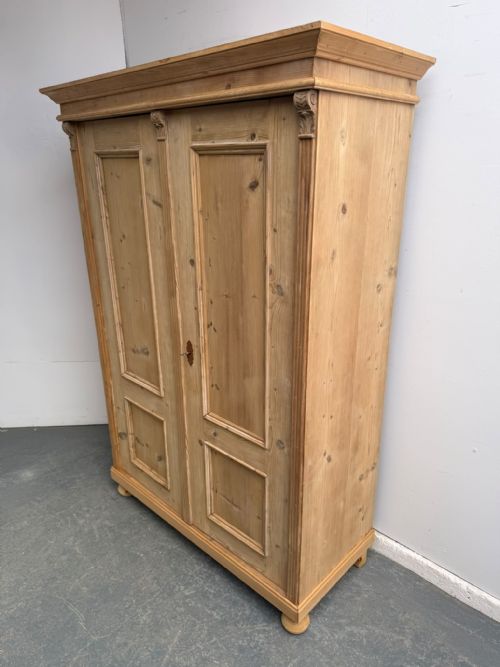

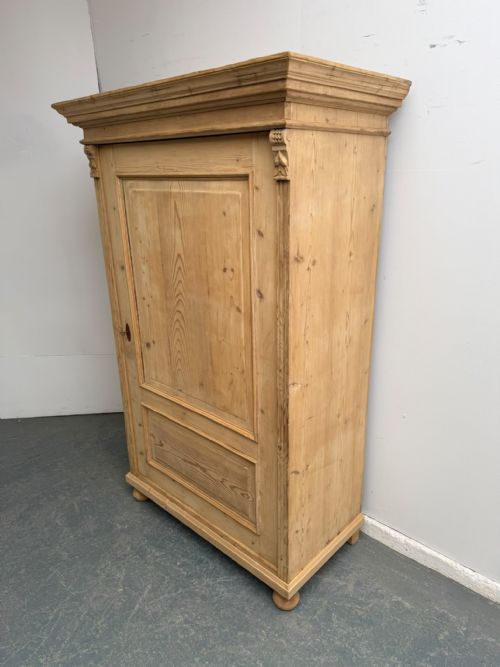
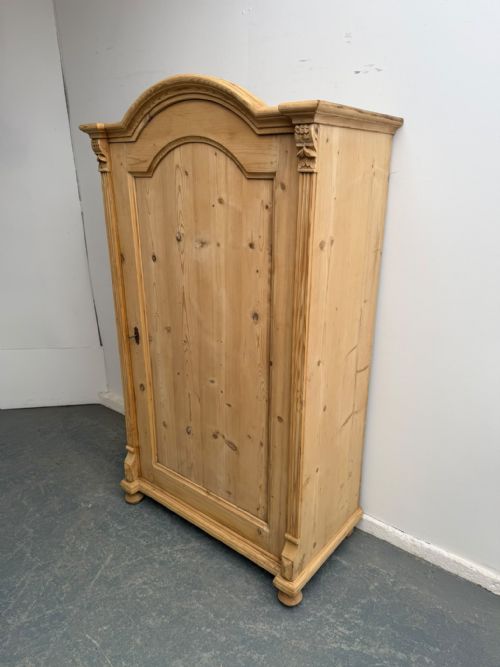


Tall Pine Storage Unit
A tall pine storage unit provides practical utility with honest character, spanning Victorian cupboards, Georgian corner cabinets, and industrial banks of drawers.
Tall Pine Storage Unit
When you search for a tall pine storage unit, you encounter practical timber furniture built to organise domestic or commercial spaces. The pieces listed here span the Georgian period, the Victorian era, and early twentieth-century workshops.
You are most likely to meet two-door or single-door storage cupboards alongside banks of drawers and corner cabinets. These items originate from vernacular domestic settings and commercial environments, fashioned from solid pine or pitch pine.
How they were made
Construction relies on solid pine and pitch pine timbers, sometimes finished with historic paint or left as bare waxed wood. Iron and brass hardware such as hinges and drawer pulls provide the functional mechanics.
Joinery methods include fielded panels and beaded details on doors, while larger items like the nineteenth-century units are designed to partially dismantle for transport.
Listings feature periods from Georgian through Victorian to the early twentieth century, utilising pine, pitch pine, iron, and brass.
What varies in quality
The distinction between standard utility furniture and superior examples lies in the integrity of the timber and the complexity of the form. Multi-door cupboards with architectural cornices or banks with numerous small drawers demand greater skill from the joiner.
Original hardware, untouched surfaces, and structural cleverness such as sectional dismantling elevate a piece above simpler vernacular boxes.
The Tall Pine Storage Unit Glossary
- Pitch pine
- A dense, resinous variety of pine timber often used in nineteenth-century cabinetry for its durability and strong grain pattern.
- Fielded panel
- A central wooden panel with bevelled edges set into a frame, adding depth and structural stability to a cupboard door.
- Bank of drawers
- A modular cabinet comprising many small organisational drawers, frequently originating from commercial or institutional use.
- Corner cabinet
- A specialised storage unit designed to fit snugly into a room angle, utilising otherwise neglected domestic space.
Tall Pine Storage Unit: Frequently Asked Questions
What periods do these storage units cover?
The pieces span from the Georgian era through the Victorian period and into the early twentieth century. Each era brings distinct proportions and hardware choices.
Industrial workshop pieces from around nineteen hundred sit alongside domestic linen cupboards and corner units from the nineteenth century.
Are these units difficult to move?
Many of these tall pieces are surprisingly manageable because older furniture was often constructed to be dismantled. Certain larger cupboards separate into sections for easier transport.
Checking the listing details reveals whether a specific cabinet breaks down into smaller components before moving it into your home.
How do I care for waxed pine surfaces?
Waxed pine benefits from occasional application of traditional beeswax to nourish the timber and maintain a soft lustre. Avoid placing these pieces in direct sunlight or damp environments.
Regular dusting with a dry cloth keeps the surface clean without stripping the historic wax or paint finish.
What is the difference between pine and pitch pine?
Standard pine is a softer softwood widely utilised for everyday vernacular furniture, whereas pitch pine contains higher resin content. This resin makes pitch pine heavier, harder, and visually distinct with a pronounced grain.
Cabinets built from pitch pine often date to the nineteenth century when the timber was favoured for robust commercial and domestic joinery.