
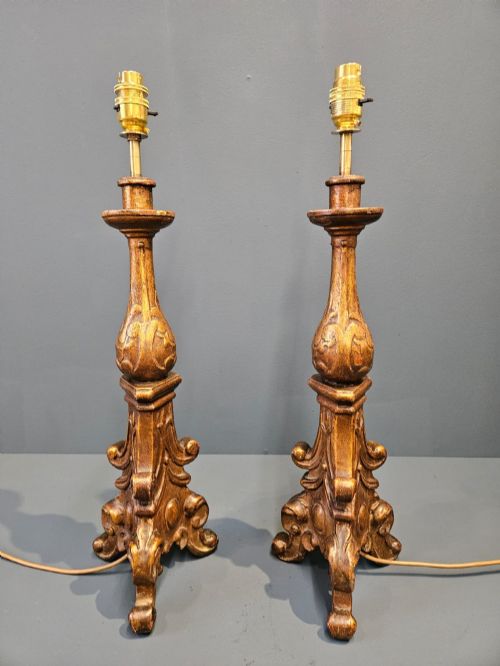


Tall Gilt Candlestick Lamp
These tall gilt candlestick lamps bring carved wooden presence and metallic warmth to a room, turning old altar sticks and church pieces into functional lighting.
Tall Gilt Candlestick Lamp
When you search for a tall gilt candlestick lamp, you encounter items adapted from older altar sticks, church pricket sticks, and domestic candleholders. The selections span from the eighteenth century through the Victorian era and into the nineteen-twenties, incorporating Spanish, Italian, and English origins.
You meet various formats ranging from modest table lamps to substantial standard lamps designed to stand upon the floor. Many examples derive from Baroque traditions, displaying the sculptural forms of Florentine, Italianate, and Spanish Baroque styles.
The most frequent items on this page are carved wooden structures coated in gilt, gesso, or silver leaf, often presented as pairs. These pieces combine centuries-old craftsmanship with modern electrical wiring to serve as commanding vertical lighting.
How they were made
Makers shaped these tall gilt candlestick lamps from timber, carving the wood by hand into fluted columns, barley twists, and acanthus-leaf motifs. Artisans applied layers of gesso to the carved wooden foundation to create a smooth, responsive ground for subsequent surface decoration.
Gilders then applied thin sheets of gold leaf or silver leaf over the prepared gesso, burnishing the metal to achieve a deep, reflective sheen. Some workshops utilised lacquer or marbleising techniques alongside the gilding to add visual texture and depth to the surface.
Church altar pieces moonlighting as reading lamps.
What varies in quality
The distinction between ordinary and exceptional examples rests upon the depth and vigour of the original carving. Hand-carved wooden details executed with crisp relief and anatomical precision signal superior workshop output compared to softer, more mechanical shaping.
Quality also shows in the handling of the gilt surface over time. Superior pieces retain the subtle interplay of burnished and matt areas on the gold or silver leaf, whereas lesser examples suffer from heavy, flat repainting that obscures the underlying gesso work.
The Tall Gilt Candlestick Lamp Glossary
- Giltwood
- Wood that has been covered with a thin layer of gold leaf. This material forms the primary body of many antique Italian and Spanish standard lamps.
- Gesso
- A plaster-like mixture applied to wood as a base for gilding. It allows carvers to achieve sharp details before applying gold leaf.
- Pricket stick
- A candlestick featuring an upward-facing metal spike designed to hold a candle in place. Several table lamps on this page derive from these church altar fittings.
- Baroque
- An ornate artistic style from the seventeenth and eighteenth centuries characterised by dramatic movement and deep carving. Many pieces adopt Spanish and Italian variants of this aesthetic.
- Standard lamp
- A tall floor-standing lamp designed to illuminate a room from a vertical shaft. The evidence includes several nineteenth-century and Victorian examples in this tall format.
Tall Gilt Candlestick Lamp: Frequently Asked Questions
Are these lamps converted from old candlesticks?
Many examples originate as antique church candlesticks, altar sticks, or pricket sticks that workshops later adapted for electrical wiring. The conversions retain the original turned and carved wooden bodies while integrating modern lamp holders.
Other pieces were constructed as tall lamps from the outset, drawing inspiration from traditional Baroque candlestick forms. Both converted altar pieces and purpose-built lamps share the same heavy vertical presence.
How do I place a tall standard lamp in a room?
Standard lamps work effectively in corners or beside substantial furniture where their height can fill vertical space. Their gilt surfaces catch ambient light, adding warmth even when the bulb is switched off.
Pairing these tall fixtures with appropriate fabric shades helps balance the visual weight of the carved wooden bases. They anchor traditional interiors and provide a focal point in larger reception rooms.
How do I distinguish eighteenth-century pieces from later revivals?
Eighteenth-century examples display the tool marks, heavier timber shrinkage, and wear patterns characteristic of genuine age. The application of gesso and gold leaf on older pieces often shows a softer, more integrated patination.
Revival pieces from the Victorian era or the nineteen-twenties frequently employ older stylistic vocabularies but reveal different wood densities and cleaner construction joints. Comparing the substrate and the wear on the gilding helps clarify the period.
What is the difference between Italian and Spanish styles here?
Italian pieces on this page lean heavily towards Florentine and Italianate Baroque designs, featuring elaborate scrollwork and rich giltwood finishes. They often display a theatricality typical of regional ecclesiastical workshops.
Spanish pieces tend to utilise heavy carved wood with darker, more austere gilt or lacquer surfaces. These variations reflect distinct regional interpretations of religious and domestic furnishing traditions.