


Tall Brass Column Lamps
Tall brass column lamps bring vertical weight and classical proportion to a room, offering an imposing source of light built to last.
Tall Brass Column Lamps
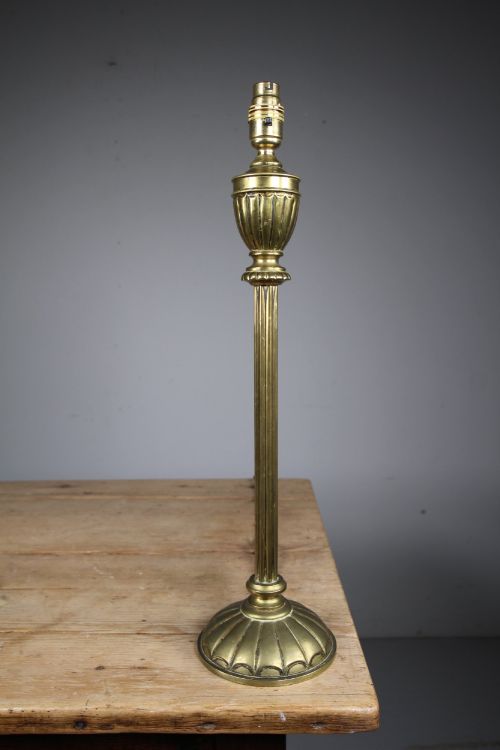
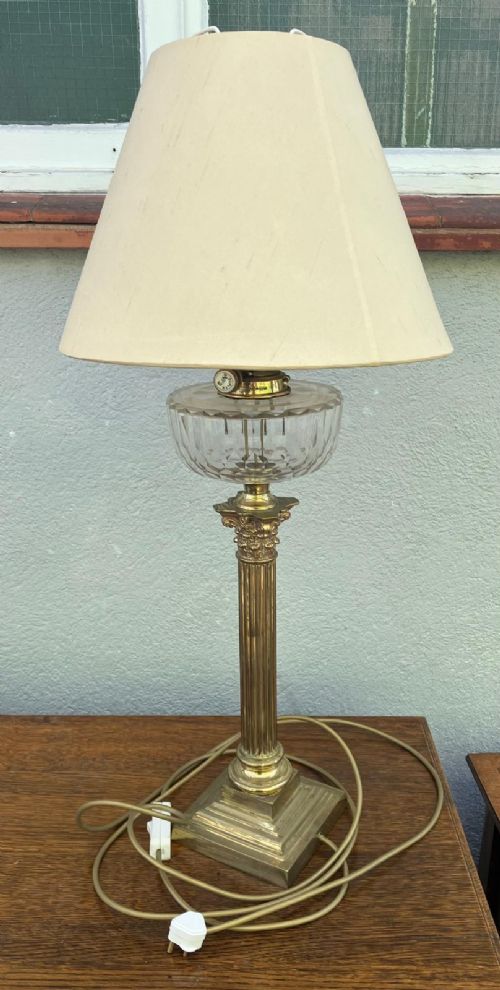
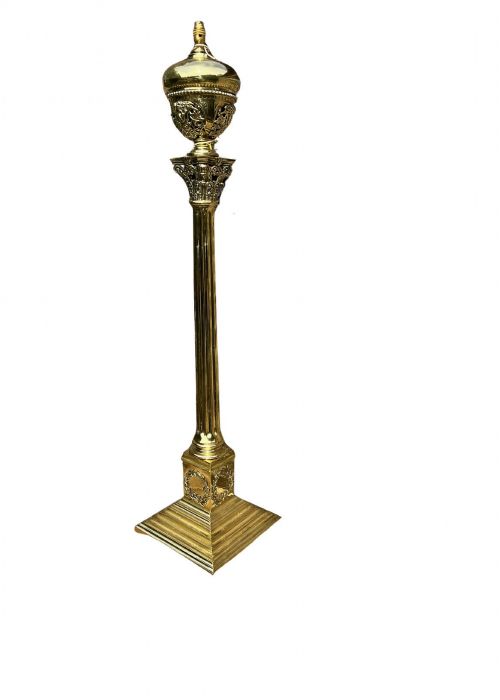
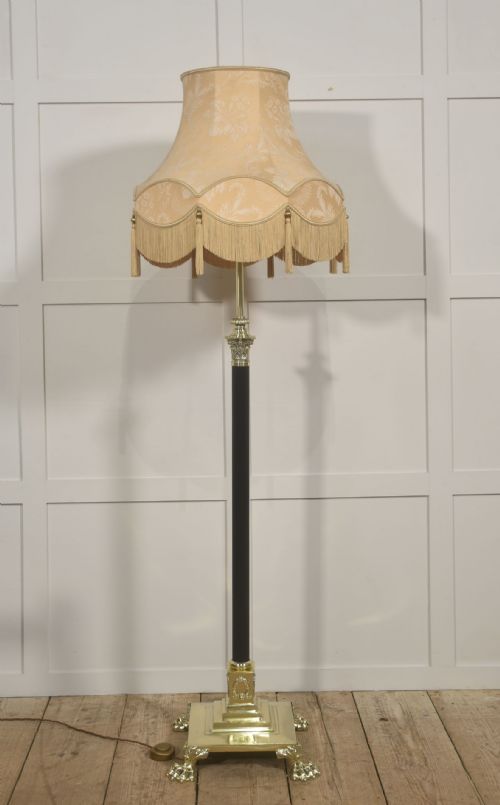
Tall brass column lamps are vertical lighting fixtures that adopt architectural forms, frequently taking inspiration from classical orders such as the Corinthian style. When searching for tall brass column lamps, a buyer encounters everything from grand floor-standing standard lamps to substantial table-height pieces derived from earlier oil lamps and church candlesticks.
The selection on this page spans the nineteenth century, the Victorian era, the Edwardian period, and into the nineteen-twenties and nineteen-thirty. Forms vary from simple telescopic brass stands and twisted columns to complex designs incorporating black toleware, marble, and patinated bronze.
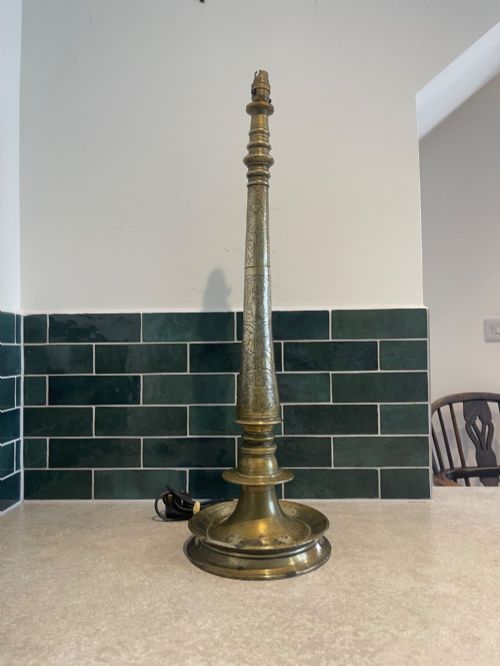
Origins stretch across English, French, Swedish, and Anglo-Indian workshops, yielding both single statement pieces and matched pairs. Buyers primarily select these items to anchor a room scheme with substantial metalwork and traditional height.
Materials and construction
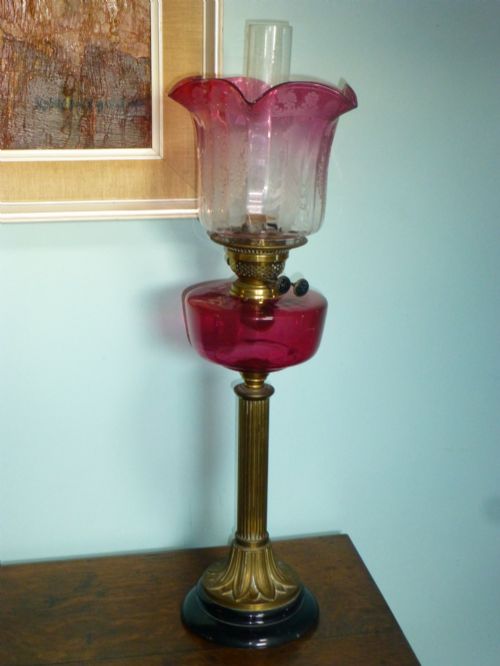
Construction relies heavily on cast and turned brass, often paired with heavy metal bases to stabilise the vertical height of the column. Many examples integrate secondary materials such as cut glass, opaline glass, and cranberry glass reservoirs or stems, alongside structural elements of bronze, ormolu, and marble.
Makers utilised mechanical adjustments such as telescopic stems and double burners on oil-burning predecessors, which were later adapted for electrical wiring. Surface finishes range from polished brass to patinated bronze and painted black columns.
Several columns disguise their utility as church candlesticks, ready to bring an ecclesiastical glow to your reading corner.
Assessing quality and proportion
Quality in these columns rests on the crispness of the casting, particularly in the acanthus leaves and volutes of Corinthian capitals, where finer examples display sharp, hand-finished detail. Weight and gauge of the metal also dictate standard, with superior pieces offering heavy, solid metal construction that prevents tipping over the extended height.
The integrity of assembly marks the difference between standard production and superior manufacture, visible in the tight alignment of stepped plinths and the precise fit of collars and stems. Matching pairs demonstrate a higher level of original intent than individual pieces assembled later.
Hinks
The Tall Brass Column Lamps Glossary
- Corinthian column
- A classical architectural column style featuring ornate capitals decorated with carved acanthus leaves, frequently replicated in brass lamp stems. This order provides the decorative focal point for many traditional floor and table standards.
- Standard lamp
- A British term for a tall floor-standing lamp designed to sit directly on the floor. These pieces elevate the light source above typical table height to illuminate a wider area.
- Ormolu
- Gilded bronze applied as an ornamental mount or decorative accent on luxury items. It brings a bright golden contrast to darker brass and bronze columns.
- Opaline glass
- An opaque, pale glass variant used for bodies and reservoirs on nineteenth-century lighting. It diffuses light with a soft, milky appearance.
- Telescopic
- A stem construction allowing the vertical height of the lamp to be adjusted via sliding inner tubing. This mechanical feature enabled users to alter the height of the light source.
- Pricket lamp
- A form adapted from church candlesticks featuring a sharp metal spike designed to hold a candle, later converted for electrical fittings. These pieces retain medieval ecclesiastical proportions.
Tall Brass Column Lamps: Frequently Asked Questions
What is a standard lamp?
A standard lamp is a tall floor lamp designed to stand directly on the floor rather than on a piece of furniture. These fixtures provide ambient illumination and act as significant vertical furniture pieces in a room.
Most examples in this category utilise heavy metal bases to support their extended height safely.
How do I date a brass column lamp?
Dating relies on examining the manufacturing techniques, wiring access points, and stylistic details such as capital design and base construction. Nineteenth-century and Victorian examples often show heavier castings and evidence of conversion from oil burning.
Later pieces from the nineteen-twenties and nineteen-thirty introduce cleaner lines and different secondary materials like marble or contrasting black finishes.
Were these always electric lamps?
Many tall brass columns began as oil lamps or church candlesticks before being converted to electricity during later rewiring projects. Oil lamp versions often retain burners, glass fonts, or reservoirs made of cranberry and cut glass.
This history of adaptation is standard for nineteenth-century lighting.