



Tall Boy Chest of Drawers
A tall boy chest of drawers is a towering storage piece that commands a room while holding immense presence and practicality.
Tall Boy Chest of Drawers
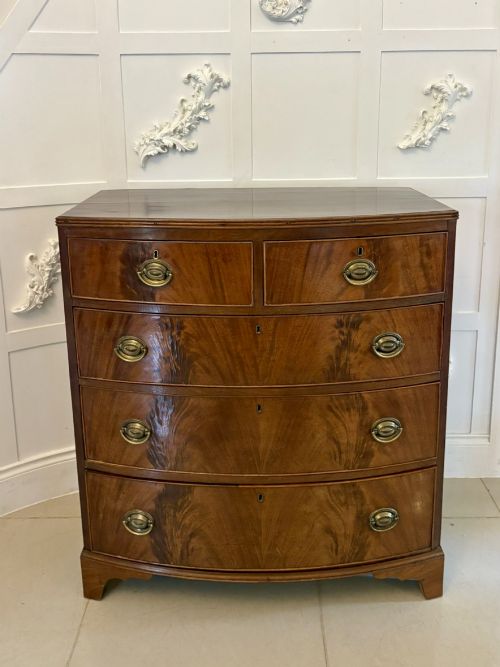
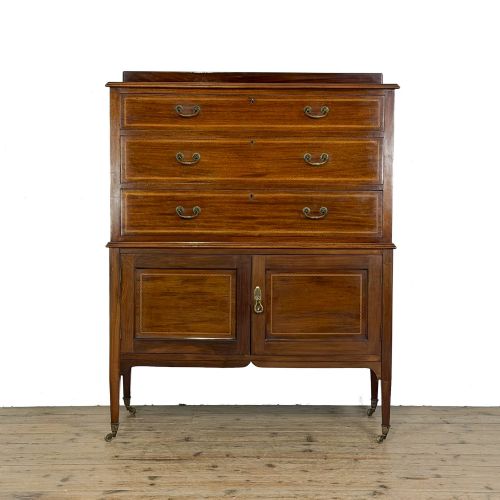
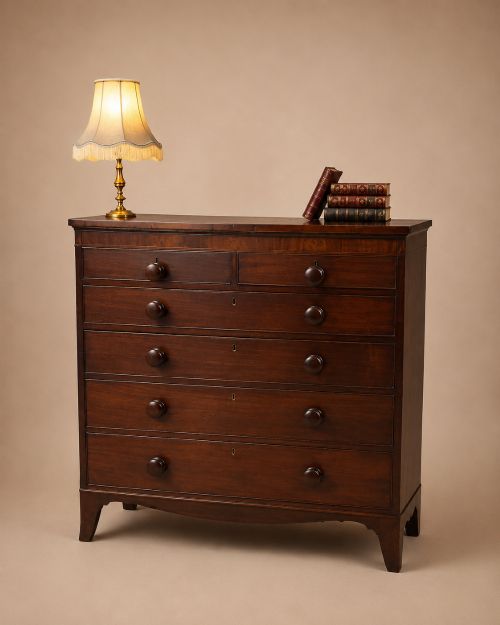
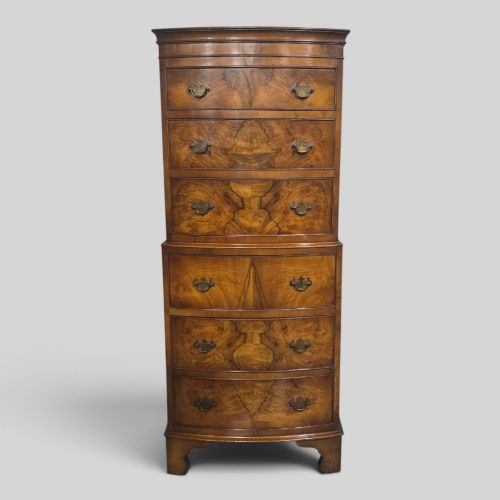
A tall boy chest of drawers provides vertical storage by stacking one chest upon another or rising in a single elevated carcass. When you search for this phrase, you encounter pieces that range from imposing Georgian mahogany chest-on-chest designs to later Edwardian and 1920s walnut interpretations.
The dominant forms on this page include traditional two-part chest-on-chest structures, tall seven-drawer configurations, and specialised variants featuring secretaire drawers. These items originate predominantly from the Georgian period through to the early twentieth century, offering substantial capacity without expanding floor footprints.
How They Were Made
Cabinet makers utilised dense primary timbers such as mahogany, red walnut, burr walnut, and oak to construct the robust carcasses required for multi-tiered storage. Drawer linings and secondary elements frequently incorporated pine, reflecting standard period workshop practices.
Surface decoration relied on figured grain patterns, crossbanding, and carving rather than applied ornament, complemented by fitted brass hardware such as drop handles and backplates.
Tall Boy Chest of Drawers Retail Price Guide 2026
Typical asking prices for tall boy chest of drawers among the pieces listed under this phrase on Sellingantiques today, from the lower quarter to the upper quarter. They describe what is for sale here now, not the wider market.
What Varies in Quality
The distinction between ordinary and exceptional examples rests in the selection of timbers and the crispness of proportion. Finer pieces display carefully matched figured mahogany or burr walnut veneers across the drawer fronts, maintaining harmonious grain flow from top to bottom.
Construction integrity defines the upper tier, visible in the snugness of dovetail joints, the smooth action of deep drawers, and the retention of original brass handles and feet. Alterations to cornices or replaced bases shift a piece away from premier status.
Waring S Gillows
The Tall Boy Chest of Drawers Glossary
- Chest-on-chest
- A tall storage unit formed by placing a smaller chest directly on top of a larger base chest. This two-part construction made heavy furniture easier to transport up staircases.
- Secretaire
- A drawer fitted with a drop-front writing surface and internal pigeonholes or small drawers. It combines a writing desk with standard vertical storage.
- Bow front
- A cabinet front that curves outward in a convex shape. This style gained popularity during the Georgian period to soften rigid room angles.
- Chippendale style
- Furniture designs inspired by the aesthetic of Thomas Chippendale and his pattern books. It frequently incorporates classical carving motifs and sturdy proportions.
- Crossbanding
- A narrow strip of veneer laid around the border of a drawer front or tabletop so the grain runs perpendicular to the surrounding wood. This technique creates a distinct visual frame.
Tall Boy Chest of Drawers: Frequently Asked Questions
How do I clean mahogany?
Clean mahogany surfaces with a soft, dry cloth to remove dust and daily accumulation. Avoid modern silicone polishes that build up residue.
Feed the timber periodically with traditional beeswax to nourish the grain and maintain a natural, deep lustre.
Where should I place it?
Position a tall boy against a sturdy wall in a bedroom or hallway where its height can be appreciated safely. Ensure the location avoids direct sunlight and damp conditions.
Because these chests rise high, anchoring them securely to the wall prevents tipping and protects the antique structure.
Are these pieces original?
The listings include period antiques dating back to the eighteenth century alongside revival pieces from the early twentieth century. Each item reflects the construction methods of its specific era.
Examining internal timber and drawer construction helps determine the exact age and history of alteration.