


Tall Bookshelf Units
Tall bookshelf units provide practical vertical storage, spanning oak, mahogany, and pine across Victorian, Edwardian, and later periods.
Tall Bookshelf Units
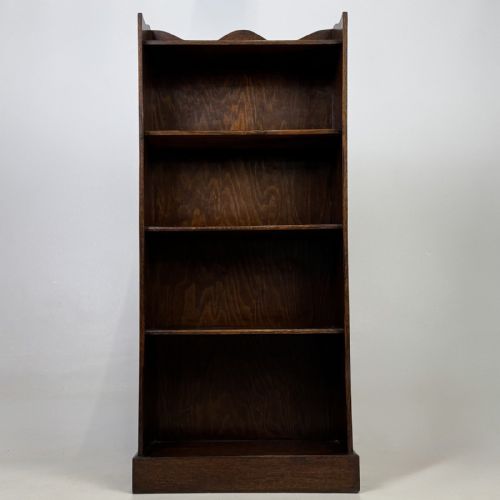
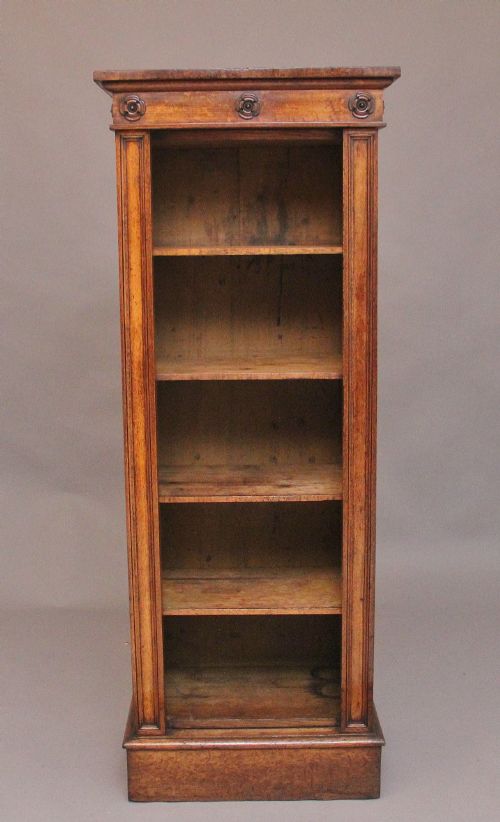
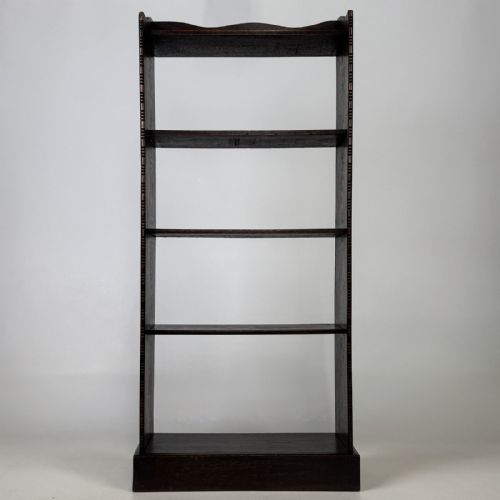
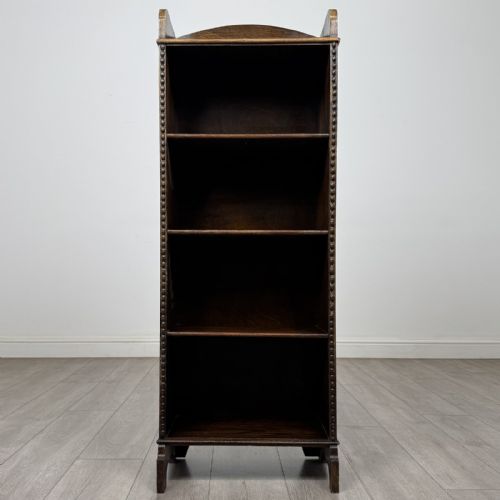
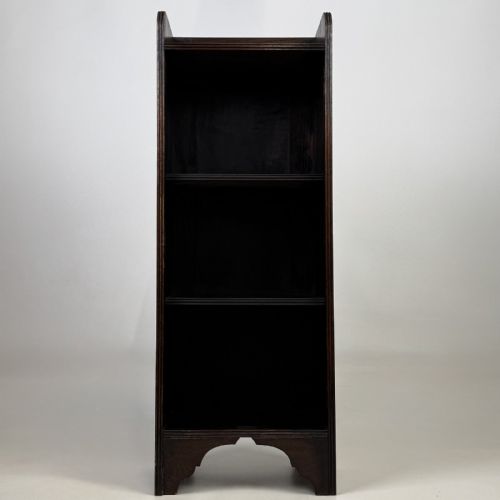
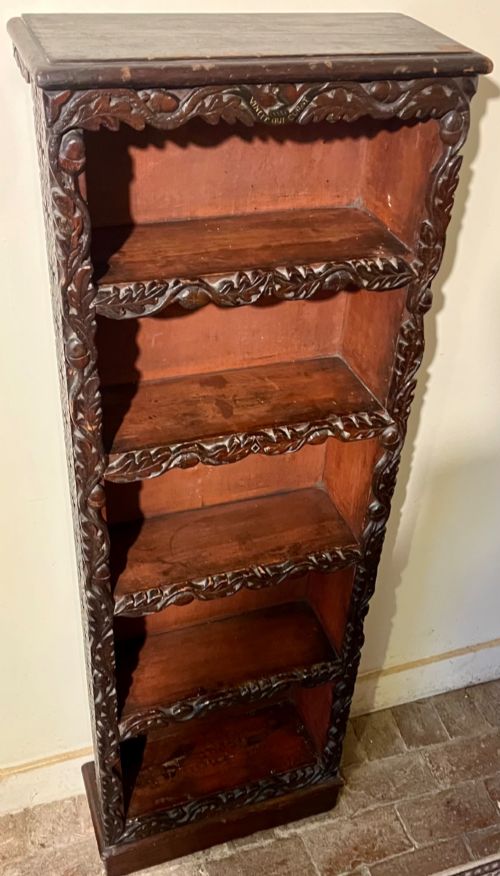
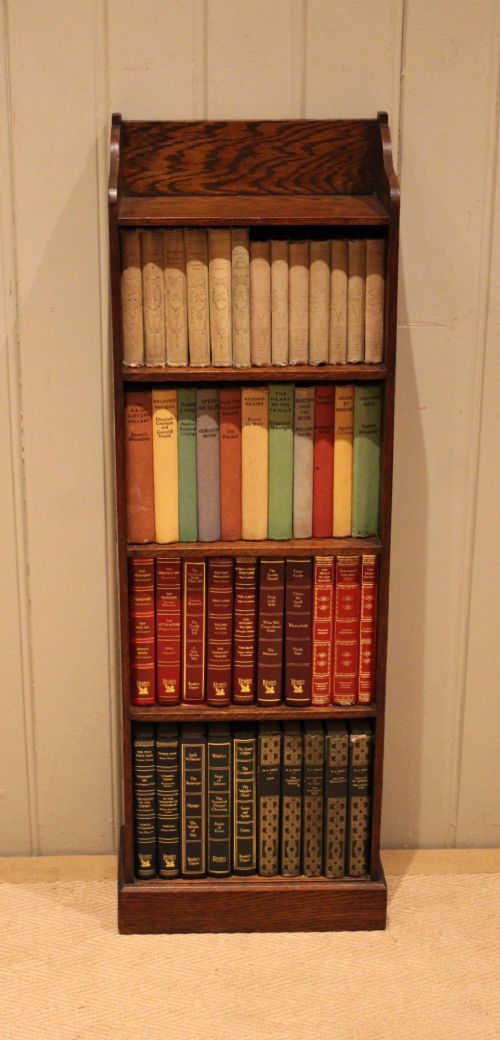
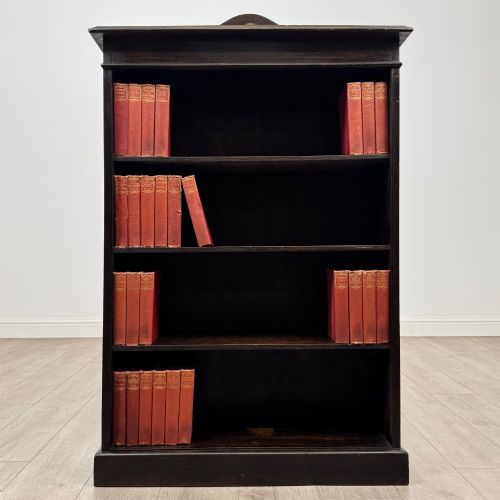
Tall bookshelf units designed for domestic interiors appear frequently as open bookcases, whatnots, and etageres. These pieces deliver vertical tiering to organise volumes and display objects without crowding floor space.
The versions most commonly met on this page span the nineteenth and early twentieth centuries. Construction ranges from utilitarian deal and pine to refined mahogany, walnut, and oak examples influenced by Arts and Crafts, Sheraton Revival, and Art Deco styles.
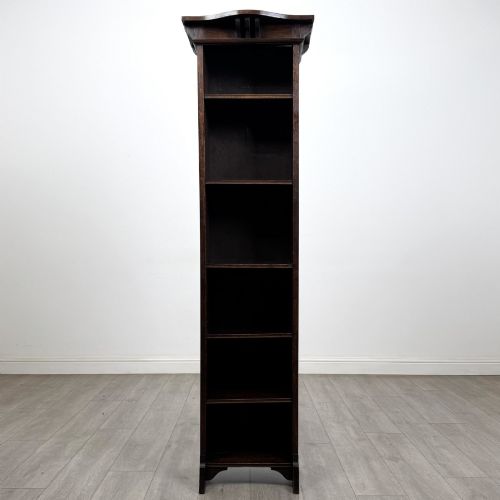
Proportions skew narrow and slim, accommodating smaller rooms alongside larger expanses. Gallery tops, raised backs, and adjustable shelves feature routinely across the selection.
How they were made
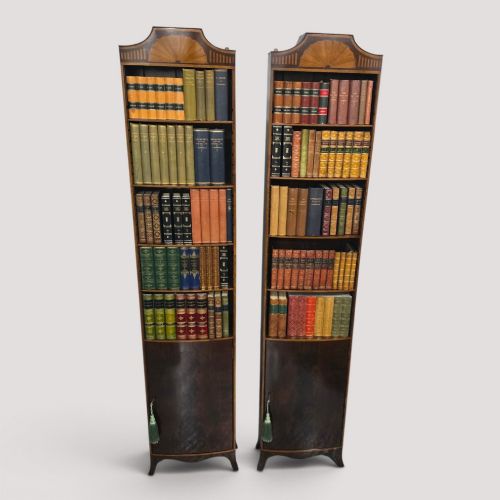
Cabinetmakers utilised solid timbers including oak, mahogany, pine, walnut, and rosewood for structural integrity and grain figure. Satinwood inlay added decorative contrast on select Edwardian and revival pieces.
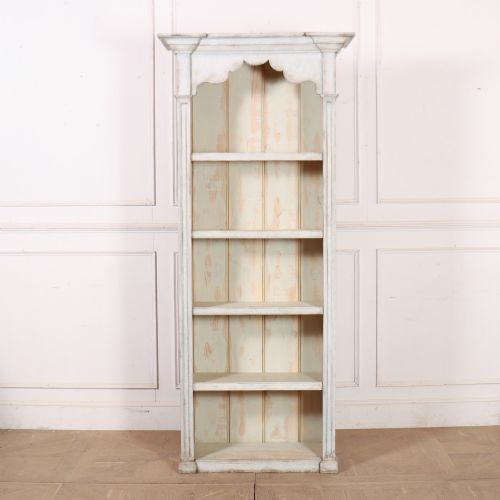
Surface treatments rely on traditional waxing and polishing to seal the wood, alongside painted finishes seen on French provincial examples. Brass fixtures and beaded edge mouldings complete the detailing on period pieces.
Tall Bookshelf Units Retail Price Guide 2026
Typical asking prices for tall bookshelf units among the pieces listed under this phrase on Sellingantiques today, from the lower quarter to the upper quarter. They describe what is for sale here now, not the wider market.
A travelling ship's teak four-tier whatnot braved the oceans before finding its way to dry land.
What varies in quality
Quality separates ordinary utility pieces from finer cabinetwork through timber selection and secondary wood use. Dense, well-figured mahogany and quarter-sawn oak denote superior workshops compared to plain deal or soft pine.
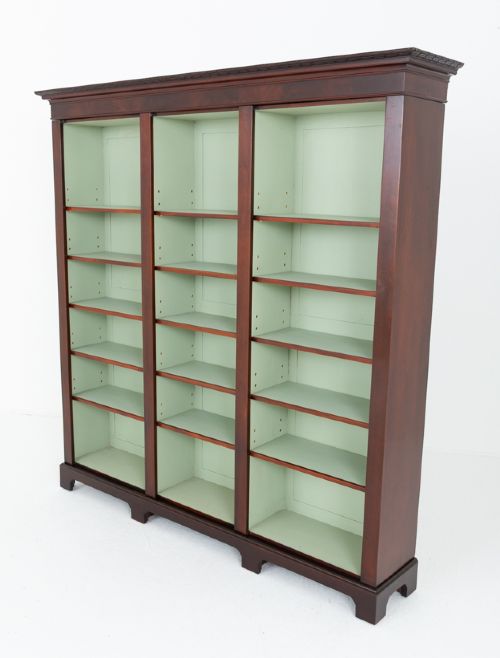
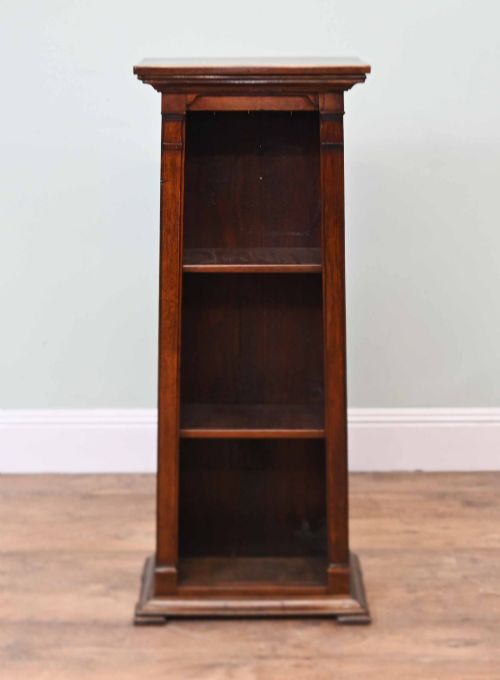
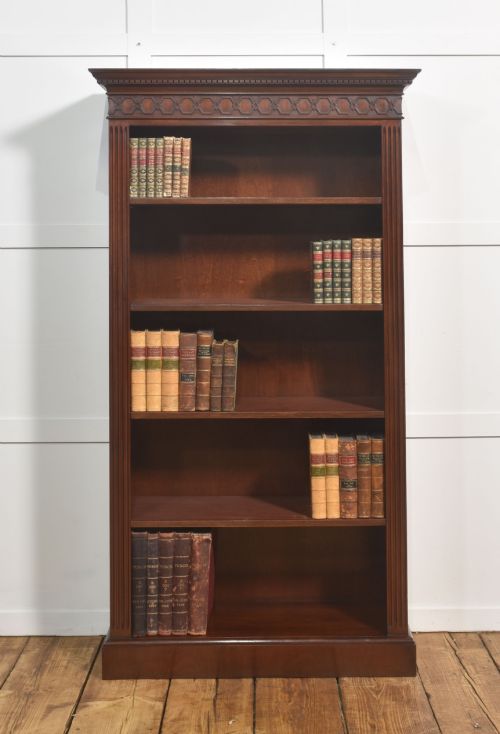
Refinement of detail distinguishes the range. Integrated dentil cornices, crisp inlay work, and functional adjustable shelving mechanisms reflect greater maker skill than plain fixed boards.
Wylie Lochhead of Glasgow·E.A. Taylor
The Tall Bookshelf Units Glossary
- Open bookcase
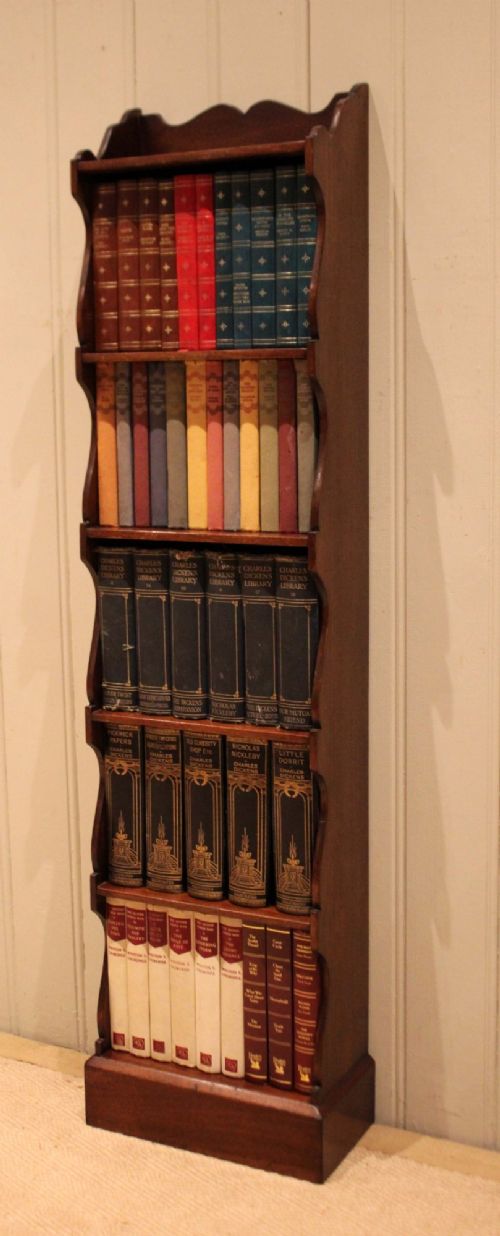
- A piece of furniture consisting of horizontal shelves supported by vertical uprights, lacking doors to enclose the books. This form dominates the current selection.
- Gallery top
- A low decorative railing or raised rim running along the top edge of a piece. It prevents items from sliding off the surface.
- Whatnot
- A piece of furniture with multiple open shelves for displaying ornaments, books, or curiosities. These tiered stands date largely from the nineteenth and early twentieth centuries.
- Dentil cornice
- A classical architectural moulding featuring a series of small, rectangular blocks projecting in a repeating pattern. It crowns the top of formal bookcases.
- Satinwood inlay
- Contrasting blonde wood veneers inserted into mahogany or other dark timber surfaces to form decorative motifs. This technique defines Sheraton Revival aesthetics.
Tall Bookshelf Units: Frequently Asked Questions
How were tall bookshelf units used?
These units served primarily in libraries, studies, and parlours for housing domestic book collections and displaying decorative ceramics. Their open format allowed quick retrieval of frequently read volumes.
Multi-tiered whatnots and etageres also held smaller ornaments and curiosities in reception rooms.
How do I live with tall bookshelf units?
Tall bookshelf units anchor room perimeters and suit narrow wall spaces due to their slender proportions. Adjustable shelving on many period pieces accommodates books of varying heights.
Pairing an oak or mahogany bookcase with period seating creates a traditional study environment, while painted finishes suit lighter interiors.
How do I tell periods apart?
Period identification relies on timber choice, decorative motifs, and structural lines. Victorian and nineteenth-century pieces often feature substantial mahogany or pine with simple moulded cornices.
Edwardian and 1920s examples incorporate Arts and Crafts strapwork, satinwood inlay, or clean Art Deco lines and geometric mouldings.