

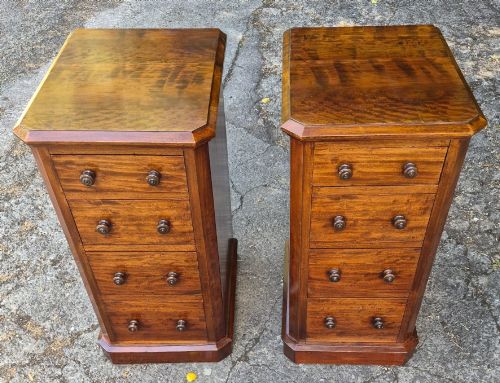
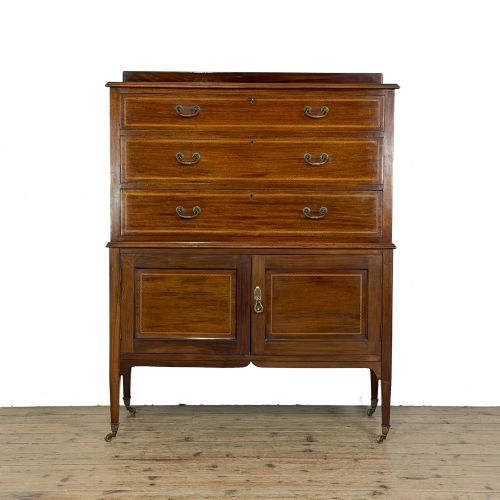
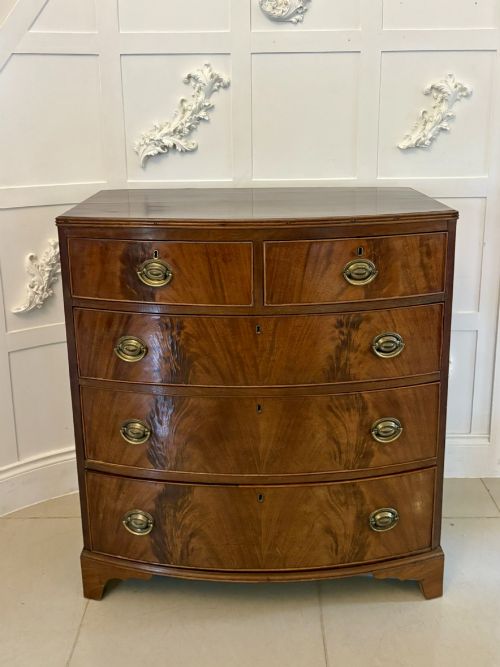
Tall Bedroom Drawers
Tall bedroom drawers solve the eternal storage puzzle by stacking capacity upwards rather than stealing valuable floor space.
Tall Bedroom Drawers
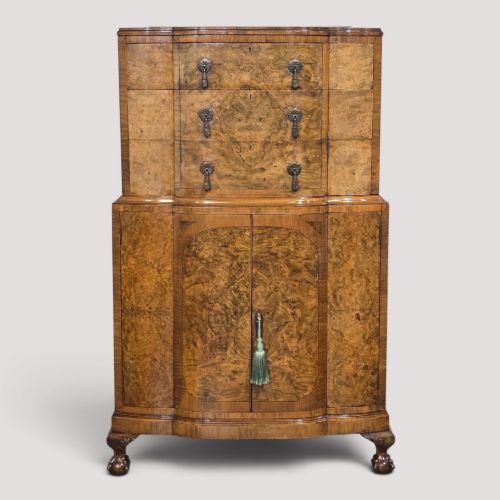
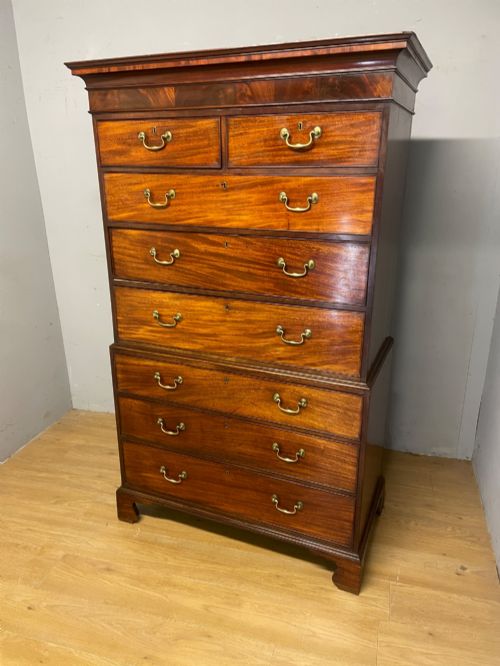
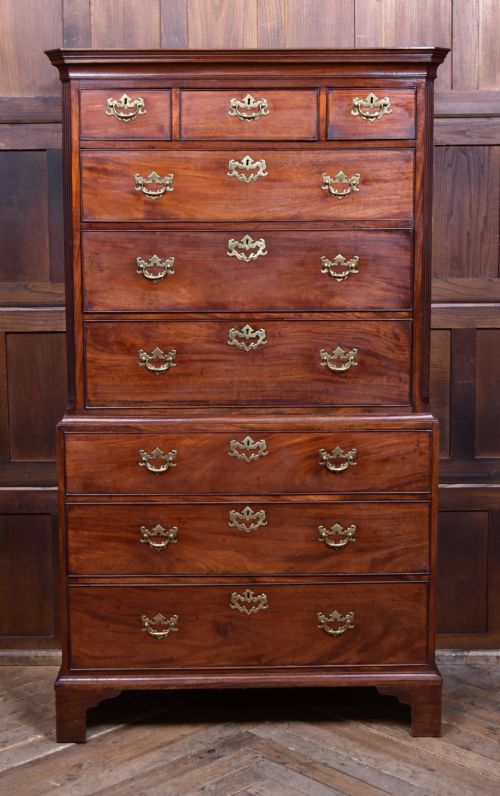
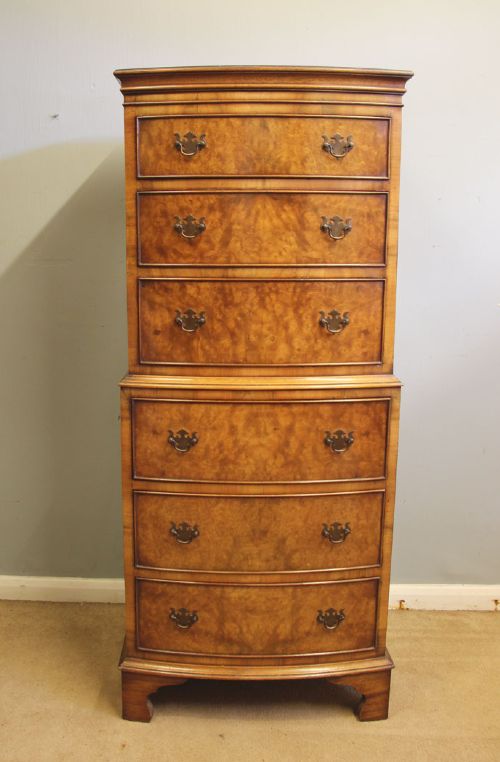
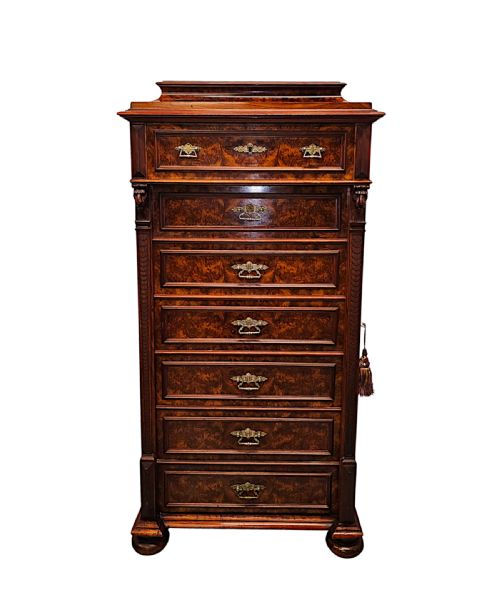
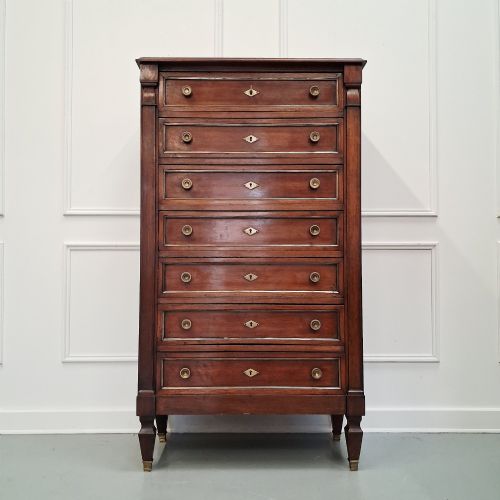
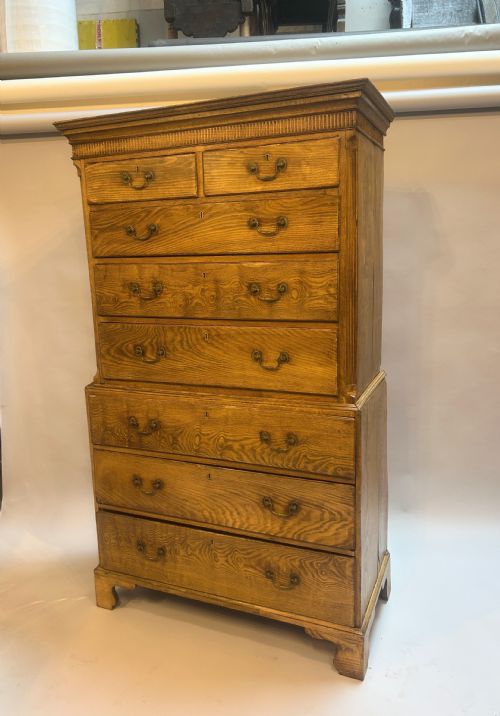
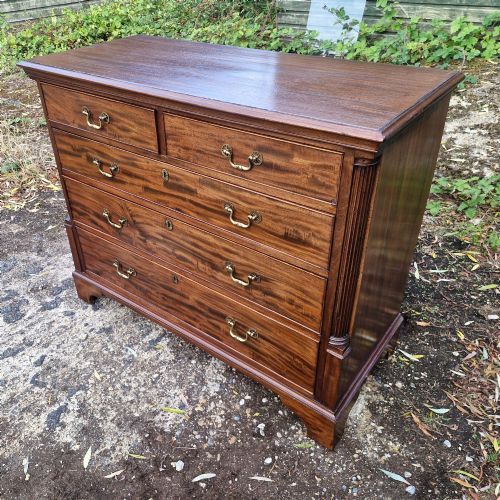
These pieces are vertical storage units designed for the bedroom, encompassing forms such as tallboys, chest on chest designs, Wellington chests, and semainiers. When searching for tall bedroom drawers, buyers encounter pieces spanning from the Georgian period through the Victorian and Edwardian eras into 1930 Art Deco designs.
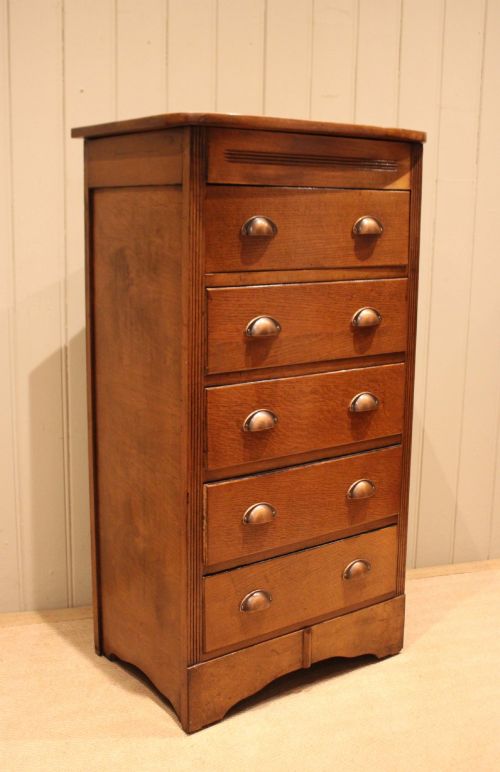
Mahogany and oak dominate the offerings, alongside burr walnut, satinwood, and maple. The selection ranges from imposing two-part chest on chest forms to narrow bedside chests and compact tallboys.
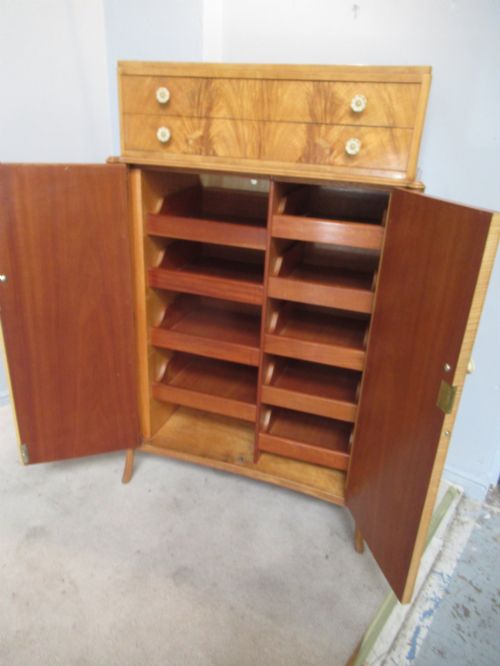
Georgian and George III examples appear frequently alongside Victorian multi-height chests and 1930s interpretations in limed oak or burr walnut. Buyers find both British and French origins represented across these vertical formats.
How they were made
Cabinet makers utilised solid timbers and veneers of mahogany, oak, walnut, and satinwood, often applying figured mahogany flames or burr walnut to drawer fronts for visual depth. Brass hardware, including drop handles and original pulls, secures the function of the drawers.
Construction techniques involve stacking separate carcases in the case of chest on chest designs, or building tall, slender frames with multiple stacked drawers as seen in Wellington chests and semainiers.
Listings feature pieces built from mahogany, oak, burr walnut, satinwood, maple, and brass across Georgian, Victorian, Edwardian, and 1930 Art Deco periods.
What varies in quality
The sophistication of the timber selection distinguishes examples, particularly where figured mahogany or burr walnut veneers display consistent grain matching across multiple stacked drawers. Structural integrity in tall, narrow carcases relies on precise joinery that prevents twisting over decades of use.
Original hardware, such as brass handles and working locking mechanisms with keys on Wellington chests, elevates an example. The crispness of carved details and the survival of original surface finishes determine the standing of each piece.
The Tall Bedroom Drawers Glossary
- Tallboy
- A tall chest of drawers, often consisting of one chest stacked upon another, providing significant vertical storage capacity.
- Chest on chest
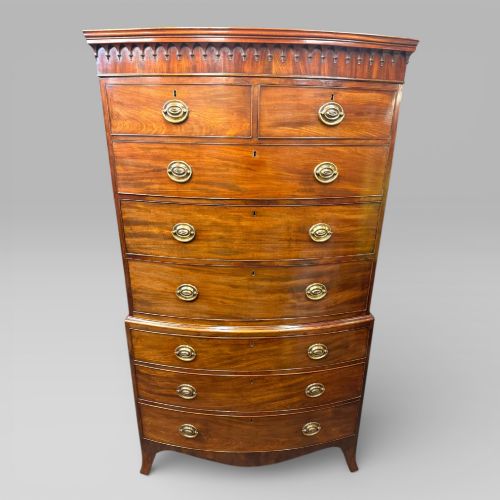
- A two-part storage piece where a smaller upper chest sits directly upon a larger lower chest, popular in Georgian cabinet making.
- Wellington chest
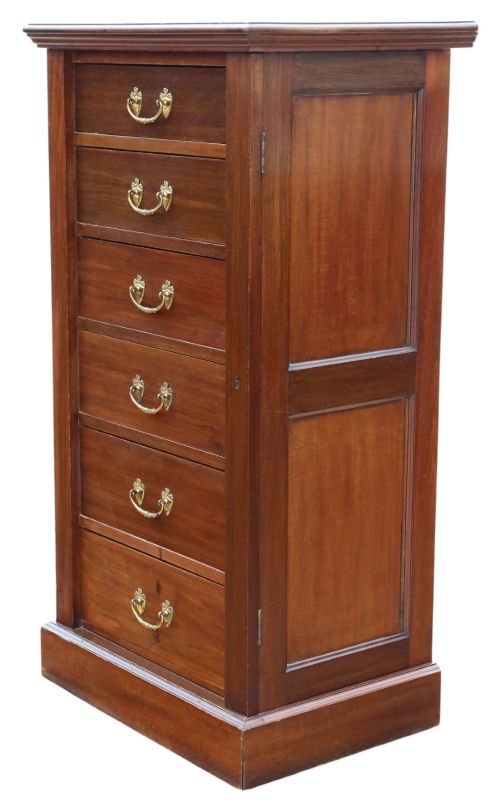
- A tall, narrow chest of drawers secured by a hinged side locking bar that fastens with a key.
- Semainier
- A tall French chest traditionally featuring seven drawers, one for each day of the week.
- Bow front
- A convex curved cabinet front that swells outward, frequently seen on Georgian and Art Deco tall bedroom drawers.
Tall Bedroom Drawers: Frequently Asked Questions
What is a chest on chest?
A chest on chest is a two-part storage unit where a slightly narrower upper chest sits upon a deeper lower chest. This configuration provides substantial vertical storage while remaining manageable to move in two sections.
Cabinet makers produced these extensively during the Georgian period, often utilising figured mahogany or walnut veneers on the drawer fronts.
How do I identify a Wellington chest?
A Wellington chest stands tall and narrow with a vertical locking bar attached to one side. Swinging this bar open releases all the drawers at once.
These pieces typically feature multiple shallow drawers and date from the nineteenth century in mahogany.
Are tall bedroom drawers suitable for small rooms?
These pieces excel in compact spaces by utilising vertical wall space rather than spreading wide across the floor. Their slender proportions provide maximum drawer capacity with a minimal footprint.
Examples include narrow bedside chests, compact tallboys, and semainiers designed specifically for upright placement.
What woods were used for tall bedroom drawers?
Mahogany and oak form the foundation of most pieces, appearing across Georgian, Victorian, and Edwardian periods. Walnut, burr walnut, satinwood, and maple also feature prominently in decorative veneers.
Cabinet makers selected these hardwoods for their strength in tall, stacked carcases.