


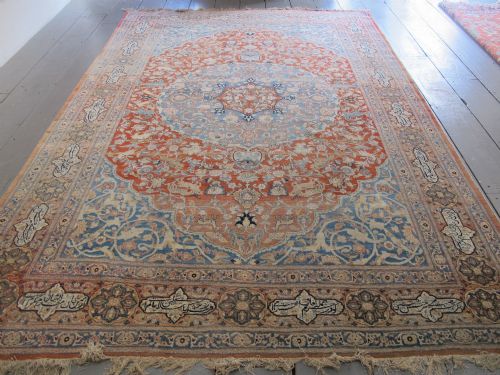


Tabriz Area Rug
A tabriz area rug brings centuries of Persian weaving tradition into a room, offering intricate floral designs and durable construction.
Tabriz Area Rug
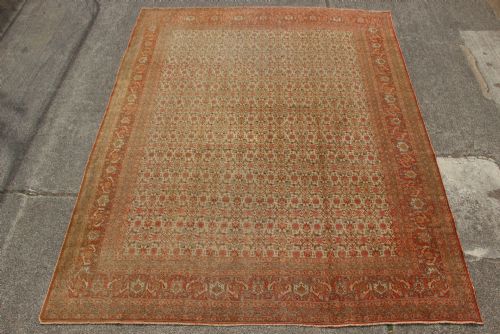
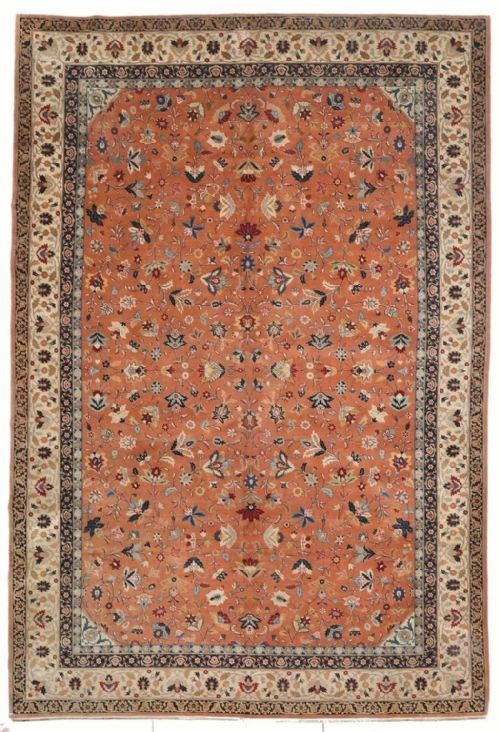
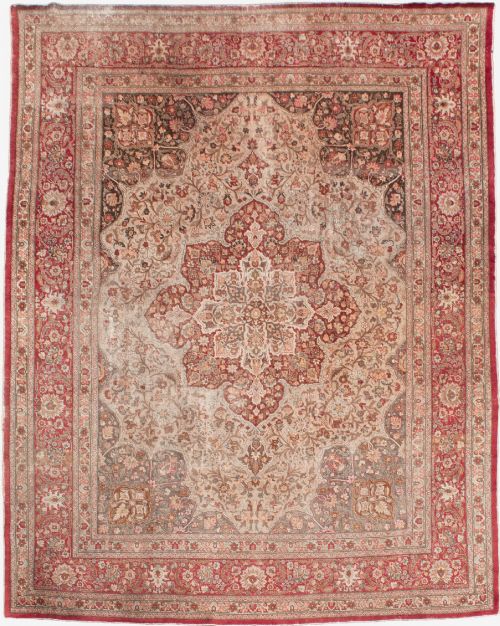
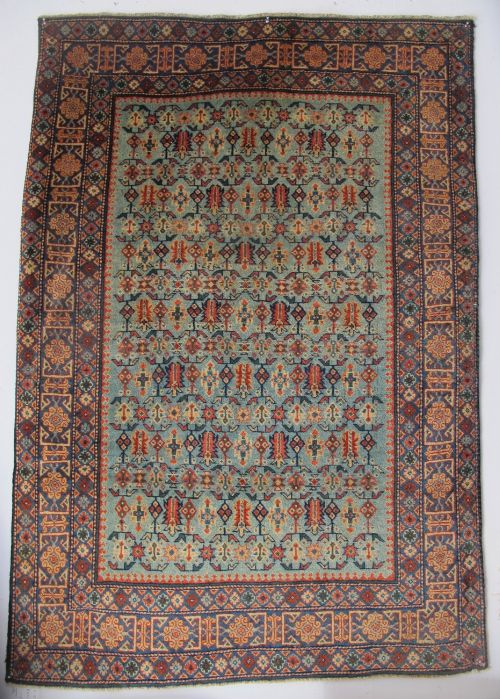
When searching for a tabriz area rug, a buyer encounters knotted floor coverings originating from North-West Persia, spanning production from the eighteenth century through the 1930s. These pieces include grand country house carpets exceeding four metres in length alongside smaller roomsize examples and compact rugs.
The most common formats on this page date from the late nineteenth century and the early decades of the twentieth century, carrying traditional Persian floral medallions or all-over patterns. They serve both as decorative room anchors and as historical textile artefacts reflecting the output of a major weaving centre.
Materials and technique
Weavers constructed these carpets using wool and cotton foundations, occasionally employing silk for finer pieces to achieve intricate detail and texture. The pile is hand-knotted, securing the materials firmly against a cotton warp and weft to withstand sustained foot traffic.
Dyers utilised natural and early synthetic compounds to colour the yarns, producing deep tones alongside softer pastel palettes. The density of the knotting dictates the sharpness of the floral and medallion motifs woven across the surface.
Tabriz Area Rug Retail Price Guide 2026
Typical asking prices for tabriz area rug among the pieces listed under this phrase on Sellingantiques today, from the lower quarter to the upper quarter. They describe what is for sale here now, not the wider market.
Some country house carpets are so expansive they require entire rooms to be rearranged just to view the central medallion.
Distinctions in quality
Quality rests on the fineness of the knotting and the precision of the design execution, which separates standard village rugs from workshop productions associated with master weavers. Finer knot counts allow complex curves in floral medallions and Herati patterns to appear crisp and well-defined.
The choice of materials also divides the range, with select pieces incorporating silk or high-grade wool that yields a softer handle and greater resilience. The harmony and subtlety of the colour palette, particularly in pastels or saturated dyes, further distinguish the upper tier of rugs.
Haji Jalili·Benlian
The Tabriz Area Rug Glossary
- Herati design
- A recurring repeating pattern featuring a central floral motif enclosed by a diamond lattice and flanked by leaf forms. This traditional layout appears frequently in Persian carpets.
- Medallion
- A large central ornamental design, often oval or circular, placed symmetrically in the middle of the field. It serves as the primary focal point for many traditional carpets.
- Warp
- The vertical threads stretched tightly on the loom that form the structural foundation of the rug. The pile knots are tied around these stationary threads.
- Weft
- The horizontal threads passed across the warp strands after each row of knots to bind the structure together. They are beaten down firmly to compact the pile.
- Pile
- The upright cut ends of the knotted yarn that form the usable surface of the rug. Its density and material determine the texture and durability.
Tabriz Area Rug: Frequently Asked Questions
How do I place a large carpet in a room?
Position the piece so that the main furniture grouping sits entirely upon the rug or with the front legs resting on the border. This anchors the seating arrangement and frames the floor.
Ensure adequate clearance around the edges to let the flooring show, maintaining visual balance within the space.
Are these rugs suitable for high traffic areas?
Wool construction on a cotton foundation provides natural resilience, allowing these pieces to endure regular movement in hallways and living rooms. The dense pile absorbs friction while maintaining its structural integrity over decades.
Rotate the rug periodically to distribute wear evenly across the surface from foot traffic and sunlight.
How do I clean an antique Persian rug?
Vacuum gently using a suction-only attachment without a rotating brush bar to protect the delicate wool pile and fringes. Avoid aggressive shaking or beating, which weakens the foundation threads.
Consult a professional textile conservator experienced in antique Persian carpets for deep washing or stain removal.
How do I tell different periods apart?
Examine the dye palette, wool quality, and design structure, as late nineteenth-century pieces often display deeper, saturated tones while 1920s examples frequently feature softer pastels. Workshop signatures or specific stylistic markers like refined Herati patterns point toward particular decades of production.
Compare the knot density and back construction against known examples from the same regional origin to narrow down the era.