







Tabletop Wooden Shelves
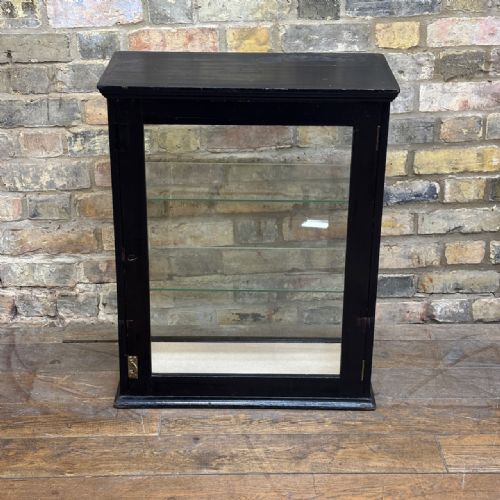
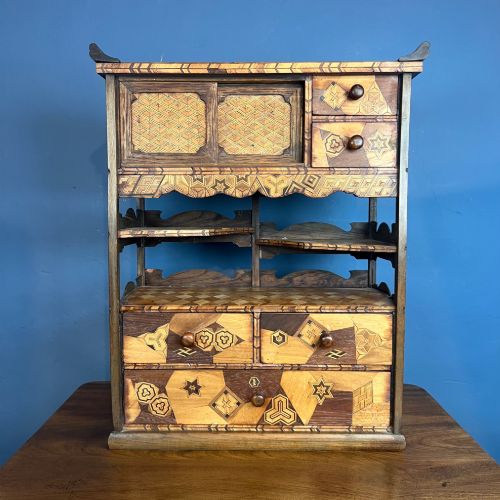
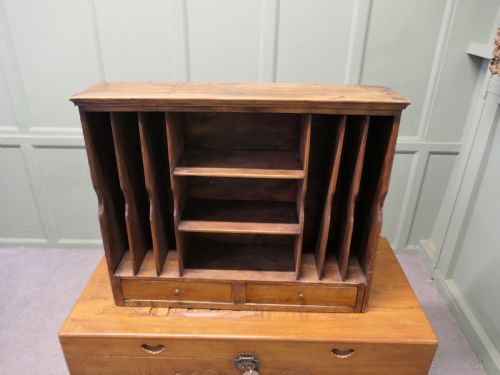
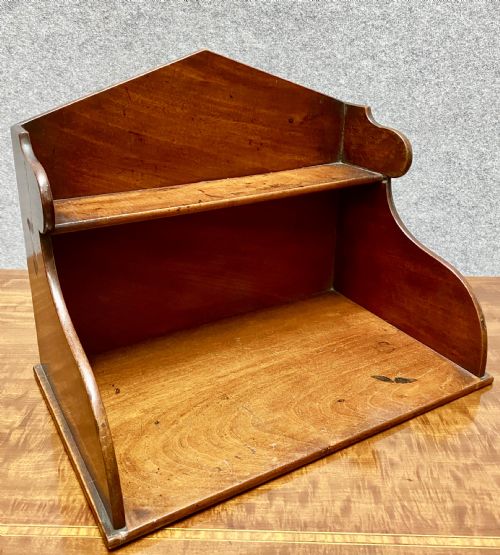
Tabletop wooden shelves bring order and character to a desk or mantelpiece, spanning compact book troughs, sturdy racks and architectural clock cases.
Tabletop Wooden Shelves
Tabletop wooden shelves encompass a practical group of desk organisers, book troughs, book stands and mantel clocks produced across the nineteenth and twentieth centuries. When you search for tabletop wooden shelves, you are looking at functional desktop furniture designed to keep books, papers and timepieces upright and accessible.
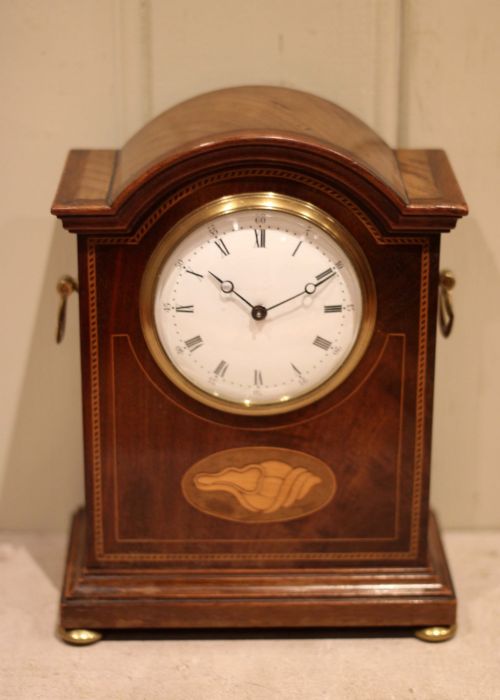
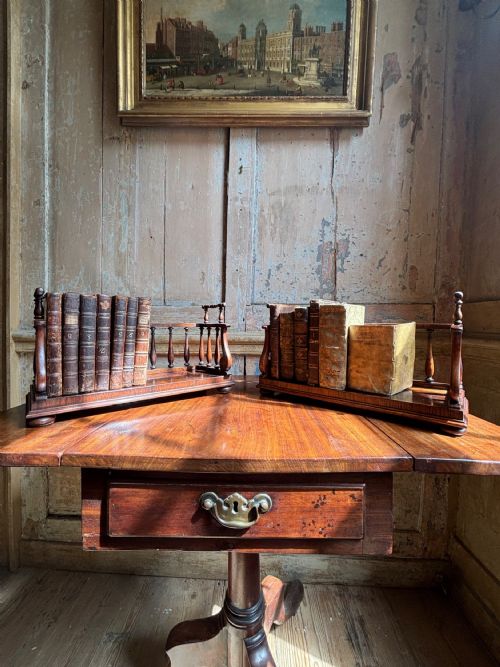
The pieces appearing on this page lean heavily towards Edwardian and nineteenth-century examples in mahogany, rosewood and oak. You will frequently encounter compact book troughs, sloping book carriers and architectural clock cases that double as miniature shelving units.
Makers from the Regency era through to the Art Deco period approached these utilitarian items with considerable decorative ambition. Whether structured as a simple waterfall-fronted set of open shelves or an inlaid mahogany desk tidy, each piece reflects the interior habits of its decade.
Materials and construction
Cabinetmakers relied on dense, stable hardwoods such as mahogany, walnut, rosewood and oak to construct these miniature shelf units and book carriers. These timbers were chosen for their ability to hold fine joints and withstand the daily handling of books and desk accessories.
Surface enrichment often involved contrasting stringing, brass fittings or figured wood veneers to catch the light on a desk or mantel. Joinery was kept robust to support the weight of volumes without warping over decades of use.
Tabletop Wooden Shelves Retail Price Guide 2026
Typical asking prices for tabletop wooden shelves among the pieces listed under this phrase on Sellingantiques today, from the lower quarter to the upper quarter. They describe what is for sale here now, not the wider market.
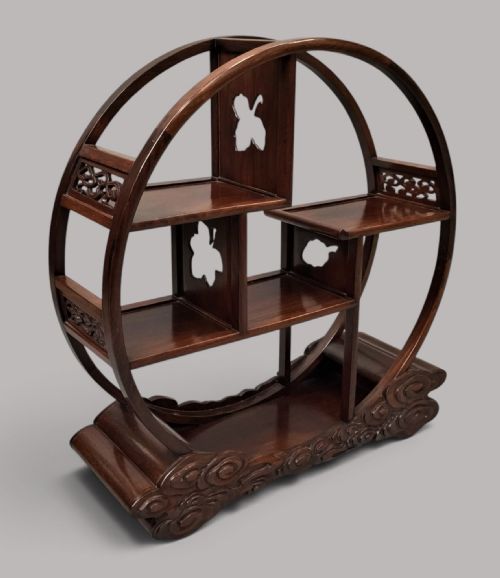
Object forms on this page include mantel clocks, book troughs, desk organisers and Chinese Hongmu display stands.
Assessing quality and proportion
Quality in these desktop accessories is evident in the crispness of the woodwork, the choice of figured timber and the harmony of the proportions. Finer examples display thoughtful timber selection, such as matched mahogany grains or carefully figured walnut.
The refinement of details like inlaid stringing, polished brass mounts and cleanly cut shelf brackets separates standard utility pieces from workshop productions intended for prominent libraries and drawing rooms.
The Tabletop Wooden Shelves Glossary
- Book trough
- A V-shaped desktop holder designed to keep volumes upright between two fixed ends. These are typically compact enough to sit on a writing table or side cabinet.
- Inlay
- A decorative technique where contrasting strips of wood or metal are inserted into hollowed-out channels on the surface. This method frequently defines Edwardian and Regency decorative pieces.
- Lancet top
- An architectural arched peak resembling a Gothic window shape, commonly seen on the upper timber cases of mantel clocks and small shelving units. It provides vertical lift to a compact desktop object.
- Waterfall front
- A tiered arrangement where successive shelves step forward and downward, creating an accessible cascade of tiers. This form is particularly associated with Regency open shelving.
Tabletop Wooden Shelves: Frequently Asked Questions
What were tabletop wooden shelves used for?
These pieces served as organised desktop storage for pocket ledgers, frequently consulted reference books and daily correspondence.
In domestic and office settings, they kept working surfaces clear by containing small collections of volumes within arm's reach.
How do I date a wooden desk shelf?
Dating relies on identifying timber choices, stylistic motifs and construction methods characteristic of specific periods like the Regency or Edwardian eras.
Inlaid stringing points towards Edwardian production, while heavier mahogany forms and brass gallery rails often suggest earlier nineteenth-century origins.
Are these shelves sturdy enough for heavy books?
Most tabletop book troughs and racks are constructed from solid hardwoods designed to bear the weight of standard volumes.
However, delicate nineteenth-century rosewood book stands are better suited to lighter octavos rather than massive folio volumes.
How do I care for antique desktop wood?
Maintain the finish by keeping pieces away from direct heat sources and sudden humidity changes that can cause timber to split.
Occasional dusting with a dry cloth and sparing application of appropriate furniture wax will preserve the patina over time.