

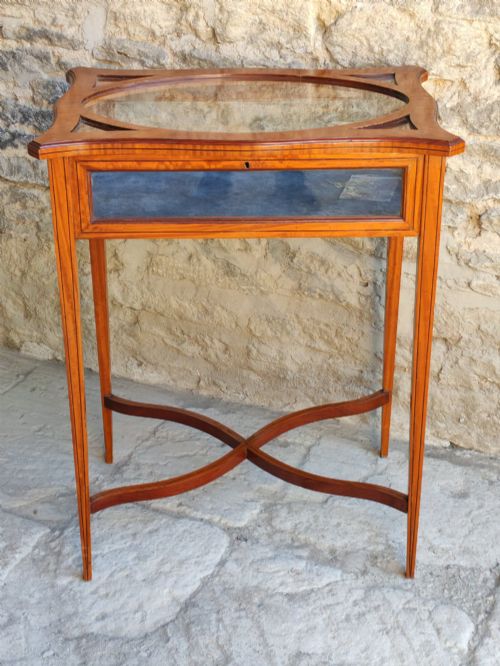
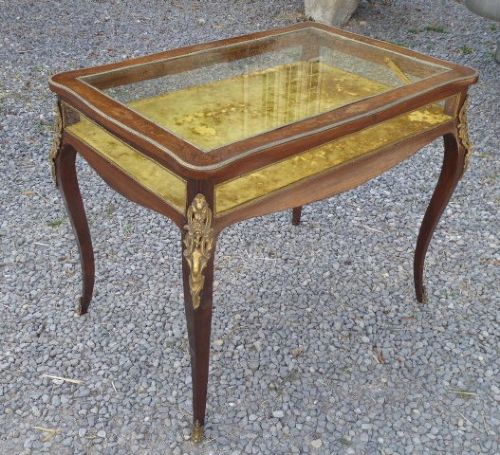
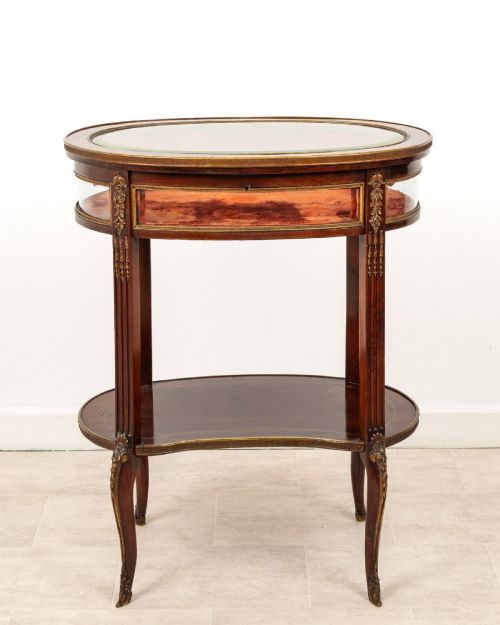


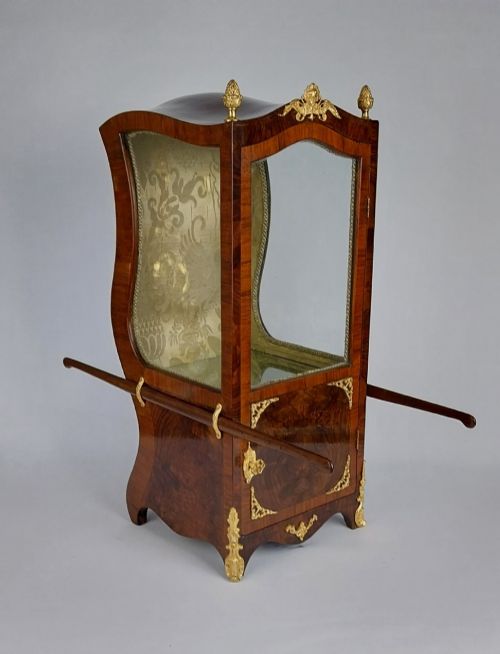


Table Top Vitrine
A table top vitrine displays small treasures under glass, bringing a refined focal point to any room.
Table Top Vitrine
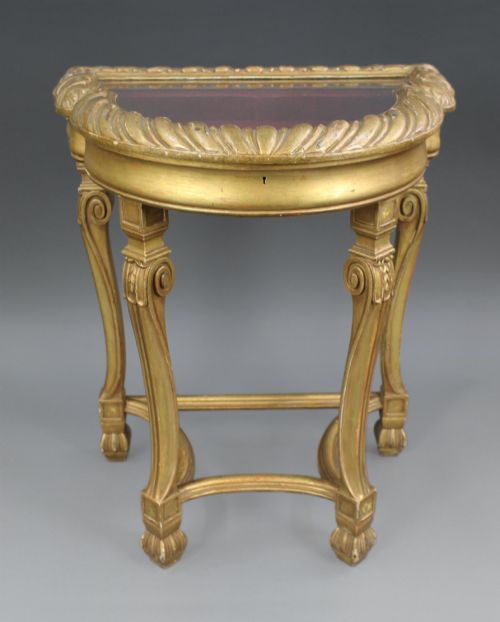
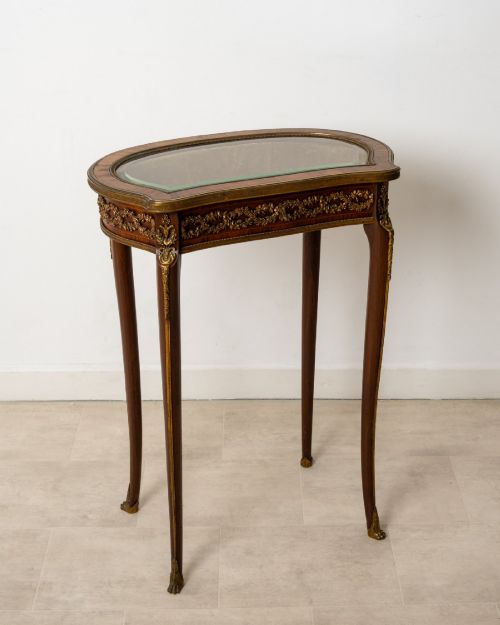
A table top vitrine and its close relative, the bijouterie table, serve to present small valuables, jewellery, and curiosities safely beneath a glazed surface. The pieces appearing here span the Victorian, Edwardian, and nineteenth-century periods, alongside French Louis XV and Louis XVI revival styles.
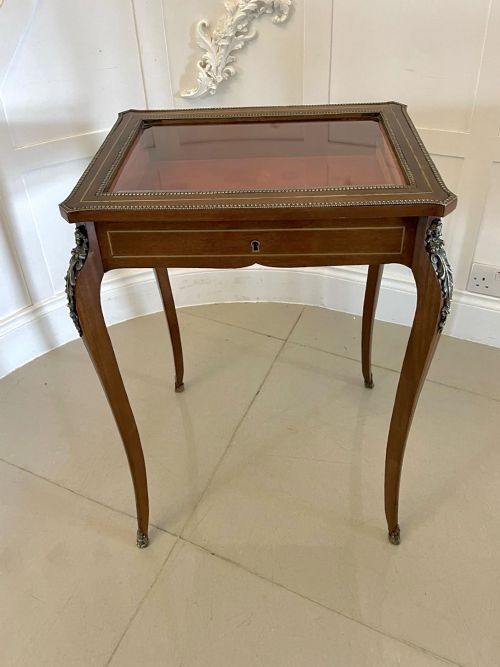
Most examples take the form of display tables or glazed cabinets designed to sit upon furniture or stand on slender legs. Mahogany and rosewood form the main structure of many items, often enriched with satinwood or kingwood veneers.
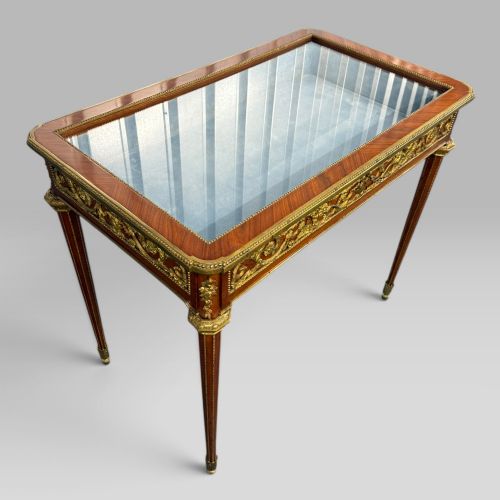
Makers produced these display pieces in both English and continental workshops to showcase personal collections. Buyers meet various shapes, including kidney, octagonal, oval, and rectangular formats.
How they were made
Craftsmen utilised cabinet woods such as mahogany, rosewood, kingwood, and satinwood, often applying marquetry or brass inlay across the surfaces. Glass panels formed the hinged or fitted lids and sides, allowing light to illuminate the interior velvet or fabric lining.
Ormolu and gilt-bronze mounts highlighted the structural corners, legs, and borders, particularly on French revival pieces. Joinery relied on traditional methods to support the weight of glazed frames and metal embellishments.
Table Top Vitrine Retail Price Guide 2026
Typical asking prices for table top vitrine among the pieces listed under this phrase on Sellingantiques today, from the lower quarter to the upper quarter. They describe what is for sale here now, not the wider market.
Listings feature Edwardian, Victorian, and nineteenth-century periods, utilising mahogany, rosewood, brass, and ormolu.
What varies in quality
The refinement of the ormolu mounts and the precision of the brass inlay distinguish standard items from the finest work. Crisp casting on the gilt-bronze details and carefully matched wood veneers indicate superior craftsmanship.
Proportion and the integrity of the original glass panels also set individual examples apart. Pieces retaining their fitted fabric linings and original working locks demonstrate better preservation.
François Linke·Quincy Showcase Works
The Table Top Vitrine Glossary
- Bijouterie table
- A glass-topped table specifically made for displaying small ornaments, trinkets, and jewellery. These pieces usually feature hinged glazed lids.
- Ormolu
- Gilded bronze used for decorative mounts and feet on nineteenth-century furniture. The technique involves applying a gold amalgam to a bronze base.
- Kingwood
- A dense, richly figured wood utilised for veneering luxury furniture during the eighteenth and nineteenth centuries. It provides a striking contrast when paired with lighter timbers.
- Marquetry
- Decorative woodwork where pieces of veneer are fitted into a ground to form geometric or floral patterns. Craftsmen used various coloured woods to achieve pictorial designs.
- Vitrine
- A glass cabinet designed for exhibiting objects of vertu or porcelain. Table top versions elevate the display surface to eye level.
Table Top Vitrine: Frequently Asked Questions
What fits inside a table top vitrine?
These glass-topped cases suit small collectibles, pocket watches, medals, and fine jewellery. The enclosed velvet or fabric base protects delicate items from dust.
Larger versions accommodate silver trinkets and miniature porcelain figures while keeping them visible from every angle.
How do I clean the glass top?
Wipe the glass gently with a soft cloth and a mild glass cleaner applied to the cloth rather than sprayed directly. This prevents liquid from seeping into the wooden frame or metal mounts.
Take care around ormolu and brass details to avoid moisture accumulation in the crevices.
Where should I place a vitrine table?
Position the piece away from direct sunlight to protect interior fabrics and sensitive items from fading. A drawing room, study, or hallway allows the glazed top to catch natural light.
Ensure the table sits on a level floor so the hinged lid opens smoothly without straining the glass.
How do I identify French revival styles?
French revival pieces often display elaborate ormolu mounts, serpentine frames, and kingwood veneers that echo Louis XV or Louis XVI designs. Makers in the nineteenth century frequently drew inspiration from these royal French aesthetics.
English variants tend to show simpler mahogany frames with modest satinwood inlay rather than heavy gilt-bronze enrichment.