




Swivelling Full Length Mirror
A swivelling full length mirror offers a head-to-toe view framed in mahogany, walnut or satinwood from the Georgian, Victorian and Edwardian eras.
Swivelling Full Length Mirror
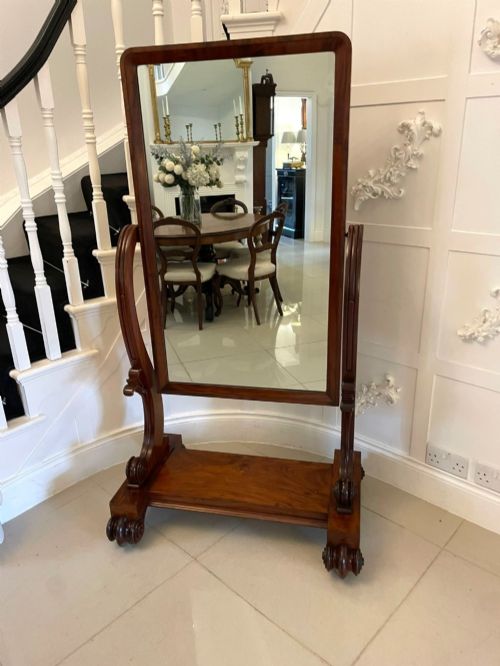
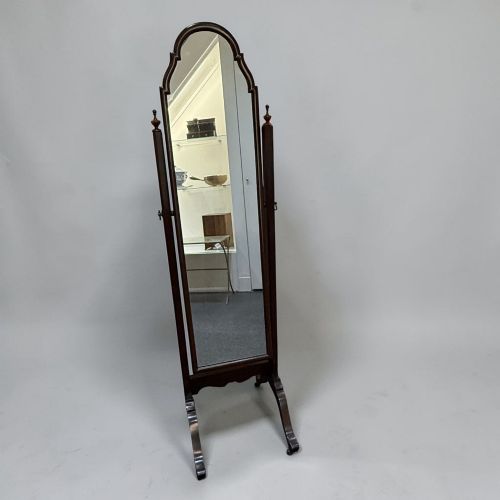
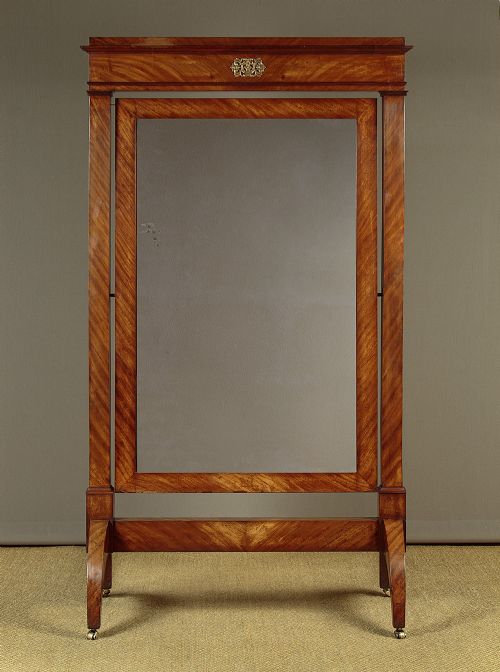
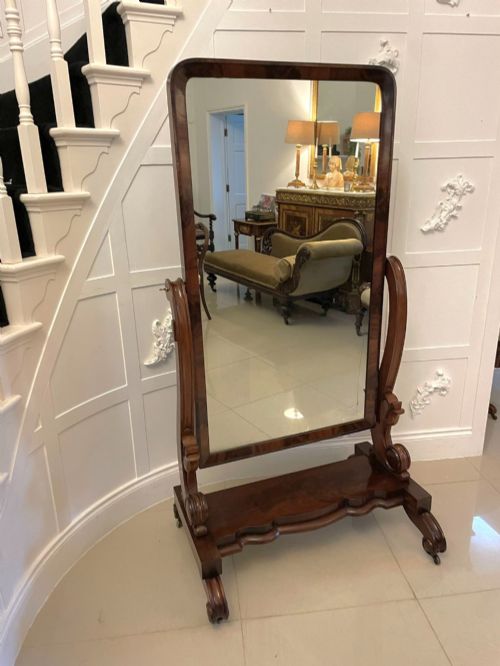
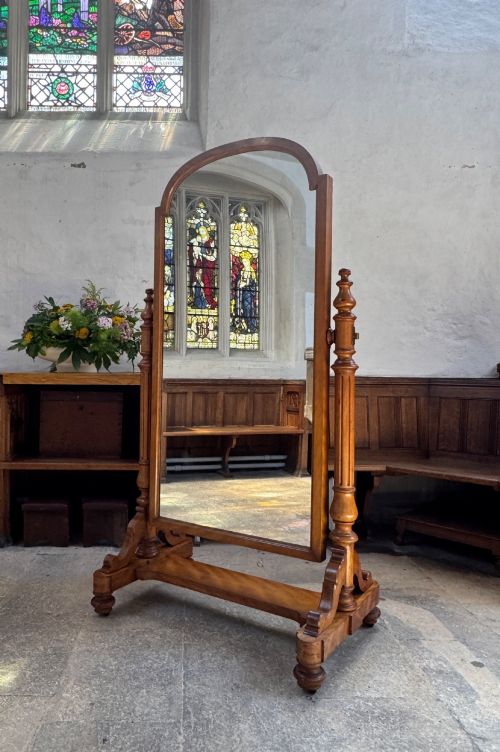
A swivelling full length mirror, known historically as a cheval mirror, is a freestanding glass plate mounted on pivots that allow it to tilt. These pieces are designed for full-height viewing in a dressing room or bedroom, supported by a sturdy wooden frame and base.
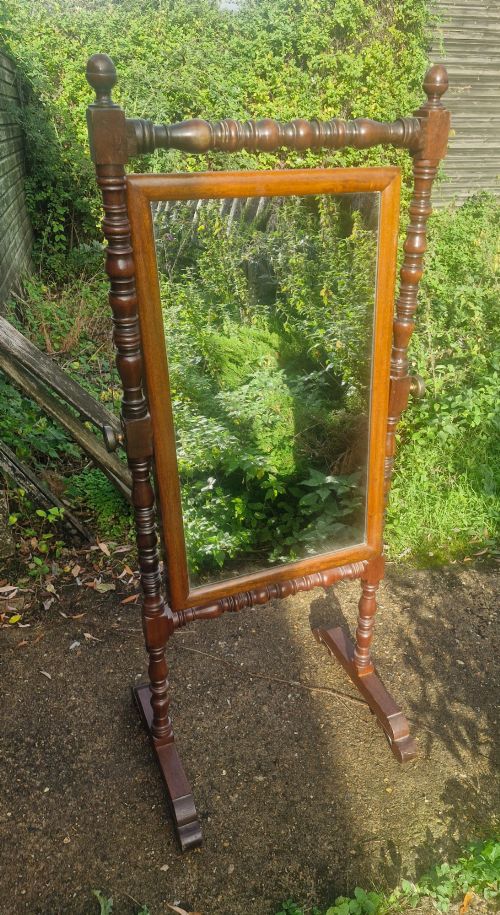
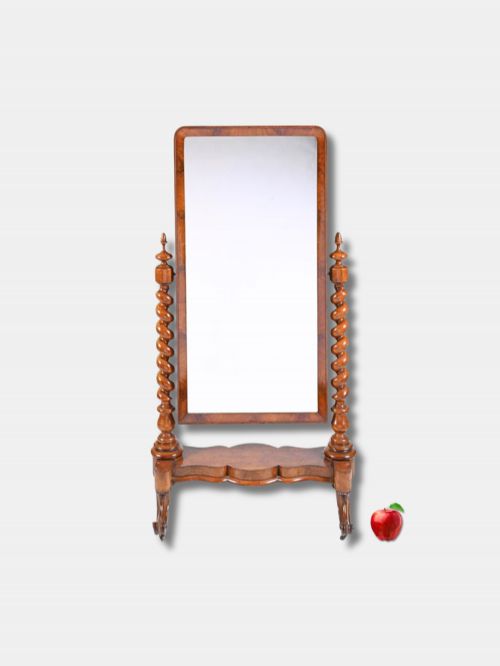
Most examples encountered on this page originate from the Victorian and Edwardian periods, constructed primarily in mahogany or walnut. Buyers often find forms featuring adjustable brass candle holders, barley twist supports or sabre legs with castors.
Earlier variants extend back to the Georgian and Regency eras, displaying classic cabinetwork and fine veneers. Later twentieth-century examples also appear, reflecting art deco influences or revival styles.
How they were made
Cabinetmakers utilised dense timbers like mahogany, walnut and satin birch to construct the heavy supporting frames necessary to bear the weight of large glass plates. These woods were frequently polished, carved or inlaid with contrasting veneers to decorative effect.
The pivoting mechanism relies on brass mounts and articulated joints, allowing the mirror frame to tilt smoothly on its vertical axis. Metal components such as brass sabots, castors and candle holders were cast and fitted to the base and uprights.
Swivelling Full Length Mirror Retail Price Guide 2026
Typical asking prices for swivelling full length mirror among the pieces listed under this phrase on Sellingantiques today, from the lower quarter to the upper quarter. They describe what is for sale here now, not the wider market.
Listings feature pieces spanning from the Georgian and Regency eras through the Victorian, Edwardian and 1920s periods.
What varies in quality
The distinction between standard examples and finer pieces lies in the selection of timber veneers, such as burr walnut or figured mahogany, and the crispness of hand-carved details. Superior cabinetwork is evident in stable joinery that supports heavy glass without sagging.
Hardware quality also separates grades of manufacture, with substantial cast brass pivots, articulated candle arms and original castors marking out better workshops. The clarity and depth of the mirror glass itself reflect the original cost of production.
The Swivelling Full Length Mirror Glossary
- Cheval mirror
- A freestanding full-length mirror suspended on a frame with pivoting side pins. This term derives from the French word for horse, referencing the four-legged frame structure.
- Sabre leg
- A concave sweeping leg shape tapering towards the foot, commonly found on Regency and William IV furniture bases. These legs often terminate in brass sabots and castors.
- Barley twist
- A turned wooden column carved in a helical screw pattern. This decorative turning style appears frequently on Victorian mirror uprights and supports.
- Sabot
- A metal shoe or cap fitted to the foot of a furniture leg for protection and ornamentation. They are typically cast in brass to match other metalwork on the piece.
- Marquetry
- Decorative patterns formed by fitting contrasting pieces of veneer into a wooden background. Edwardian and Georgian pieces often display this technique on the frame or base.
Swivelling Full Length Mirror: Frequently Asked Questions
How do I date a cheval mirror?
Dating relies on stylistic details, timber choices and construction methods visible in the frame and base. Georgian and Regency pieces show lighter woods and sabre legs, while Victorian examples often feature heavier mahogany or barley twist supports.
Later Edwardian and twentieth-century versions introduce satinwood inlay or art deco silhouettes. Examining the brass pivots and mirror backing provides further clues to the period of manufacture.
Where should I place a freestanding mirror?
These mirrors require a stable floor space with sufficient clearance around the frame to allow the glass to swivel freely. Bedrooms and dressing rooms provide the traditional setting for full-length attire checks.
Positioning the piece near a natural light source enhances the reflection, while ensuring the heavy base rests firmly on a level surface protects the pivot joints from strain.
What is the difference between a cheval and dressing mirror?
A cheval mirror is a full-length glass plate mounted on a freestanding floor frame designed to show the entire outfit. Dressing mirrors are traditionally smaller tabletop or chest-standing units intended for upper-body reflection.
Over time, terminology overlaps in historical listings, but true cheval forms consistently extend down to floor level on their own dedicated stands.
Can the mirror angle be adjusted?
The glass plate is mounted on central side pivots or trunnions that allow the frame to tilt forward and backward. Tightening or loosening the fixing screws on the upright posts controls the tension of the swivel movement.
Original brass hardware on period pieces is designed to hold the glass securely at the desired viewing angle during daily use.