
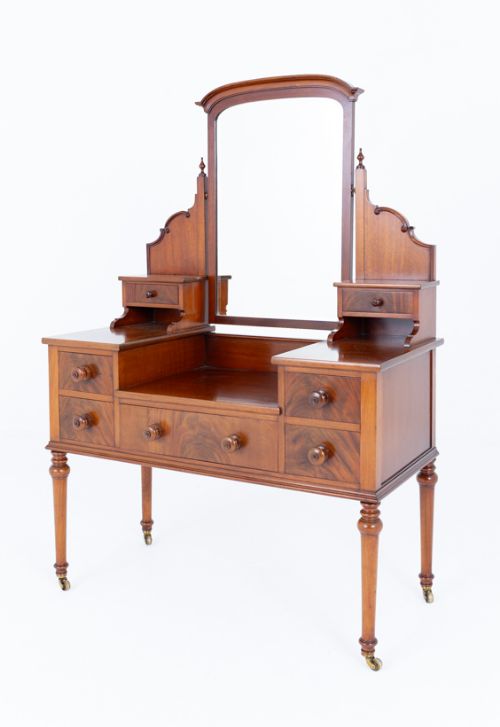
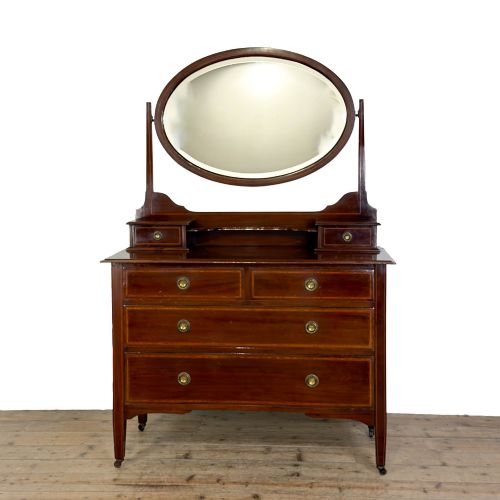


Swivel Mirror Vanity Desk
A swivel mirror vanity desk brings together practical glass and fine timber, offering a dedicated surface for daily grooming.
Swivel Mirror Vanity Desk
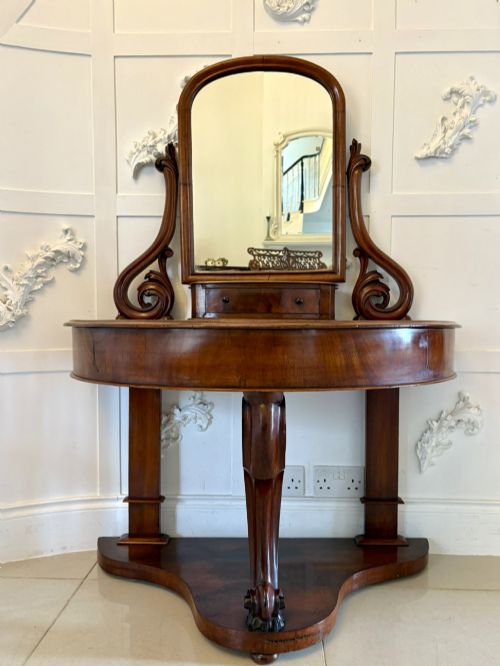
A swivel mirror vanity desk combines a dressing table or chest with an adjustable swing glass, appearing across Victorian, Edwardian, and 18th-century periods. These pieces serve as functional grooming stations equipped with pivoting mirror plates for adjustable angles during use.
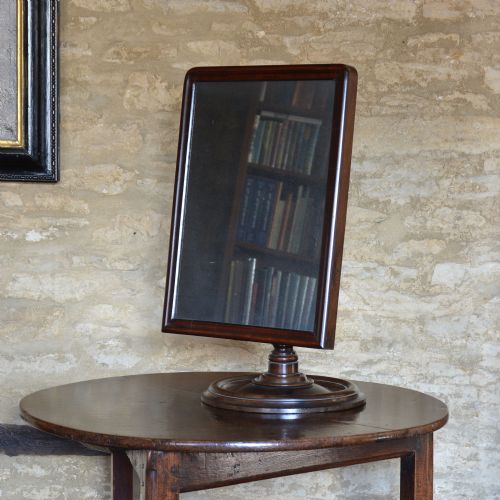
The selection ranges from compact table-top mirrors with drawers to large pedestal dressing tables and duchess forms. Mahogany and walnut dominate the offerings, frequently accompanied by smaller examples in boxwood, satin birch, and cast bronze.
Materials and construction methods
Cabinetmakers utilised solid timbers and veneers such as mahogany, burr walnut, and satin birch, often framing the glass with brass or ormolu mounts. Frames and supports rely on traditional joinery techniques to sustain the weight of the pivoting glass plates.
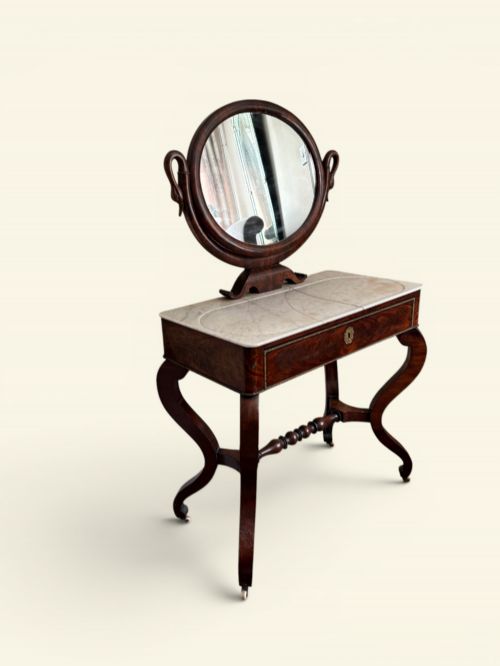
Table mirrors and dressing tables incorporate working drawers for storage, utilising fine boxwood stringing or marble tops for decorative finish. The swivel mechanism itself depends on secure side pivots that allow the mirror glass to tilt smoothly.
Some Victorian mirrors possess scientific precision, allowing owners to adjust their reflections with the exactness of an optical instrument.
Distinctions in construction and finish
Quality rests upon the selection of timber figures, such as dense burr walnut and rich mahogany, alongside the crispness of carved details. Superior examples display careful attention to internal drawer construction and the stability of the mirror frame.
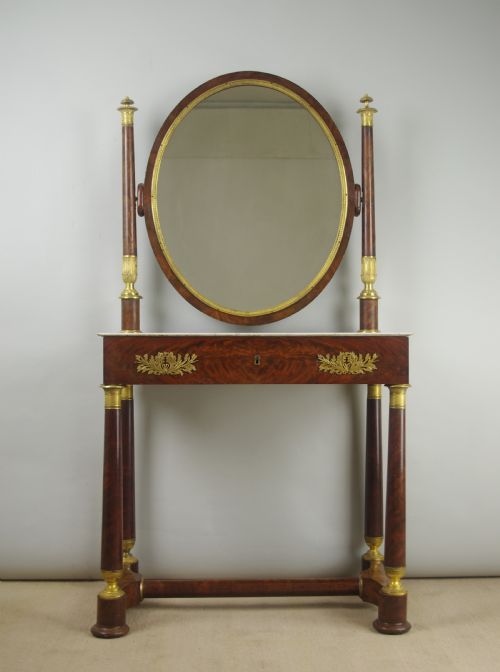
The clarity of the mirror glass and the precision of the brass or bronze hardware distinguish finer pieces from standard production. Elaborate forms like the French Empire dressing table or the scientific optical mirror demonstrate specialised craftsmanship.
Thomas Rubergall of London
The Swivel Mirror Vanity Desk Glossary
- Swivel mirror
- A glass plate mounted on side pivots allowing it to tilt back and forth. This mechanism is central to dressing tables and toilet mirrors.
- Duchess dressing table
- A large Victorian vanity form featuring a large attached swing mirror surrounded by smaller trinket drawers. It typically includes a curved demi-lune base.
- Toilet mirror
- A smaller table-standing glass and drawer unit designed to sit upon a separate chest or table. Examples date from the 17th century through the Georgian era.
- Ormolu
- Gilded bronze mounts applied to furniture for decorative enrichment. This technique appears on French Empire pieces.
- Burr walnut
- A highly figured wood veneer taken from the burl growths of the walnut tree. It creates rich, swirling patterns across Victorian surfaces.
Swivel Mirror Vanity Desk: Frequently Asked Questions
What is a duchess dressing table?
A duchess dressing table is a large Victorian vanity design featuring a prominent central swing mirror and an arrangement of smaller drawers. These substantial pieces often feature a demi-lune base and elaborate carved woodwork.
They function as grand focal points in period bedrooms, combining surface space with integrated storage for grooming accessories.
How do I date a swivel mirror?
Dating relies on timber choice, framing style, and the construction of the mirror support standards. Early pieces from the 17th and 18th centuries often employ walnut or boxwood with simple, clean lines.
Victorian and Edwardian versions introduce heavier mahogany framing, burr walnut veneers, and more ornate carved decoration around the swing glass.
Where should I place a table mirror?
Table mirrors are versatile pieces designed to sit atop existing chests of drawers, sideboards, or dedicated dressing tables. They require a stable surface with enough depth to support the weight of the pivoting frame.
Placement near a natural light source enhances the reflection, making them practical for daily grooming as well as decorative display.
Are toilet mirrors and dressing tables the same?
Toilet mirrors are compact, table-standing units with or without small drawers, meant to be placed on top of another piece of furniture. Dressing tables are larger, self-contained furniture items that incorporate the surface, drawers, and mirror into one single structure.
Both serve the same grooming purpose but differ significantly in scale and floor footprint.