

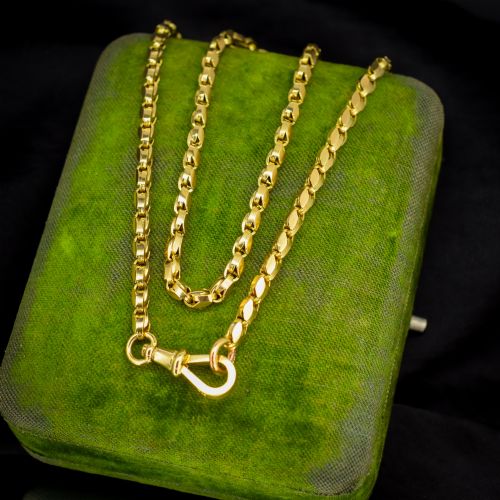
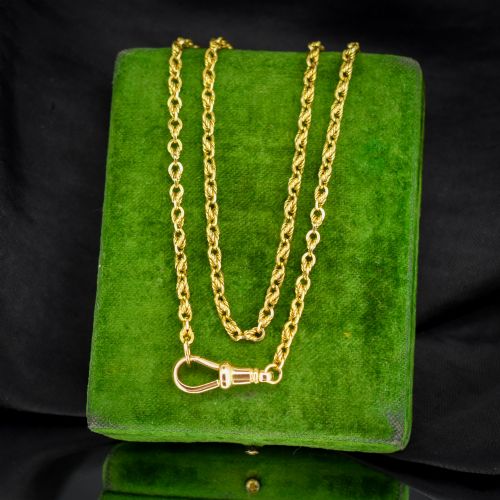
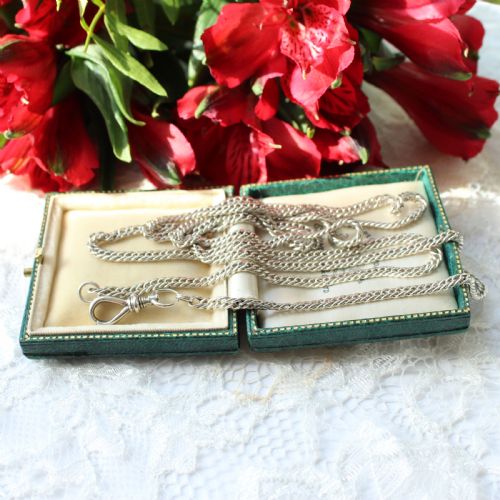
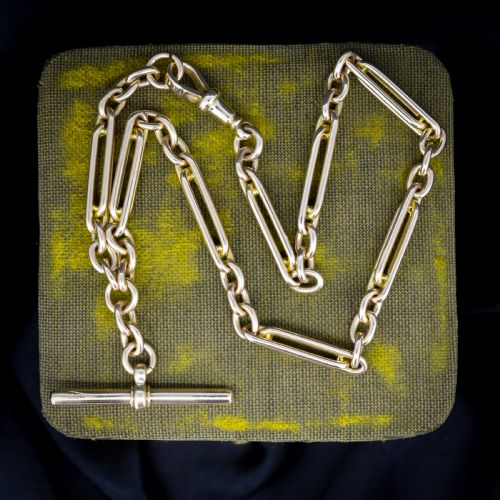


Swivel Clasp Necklace
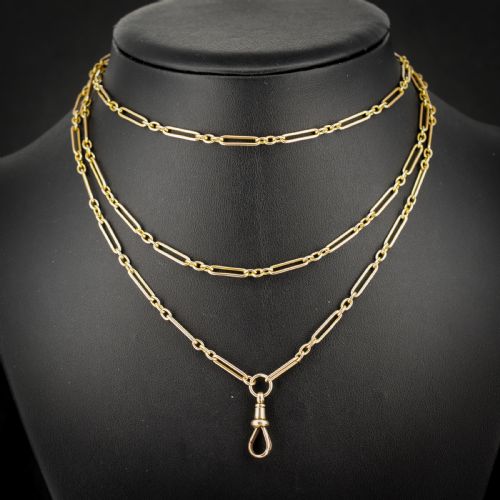
These swivel clasp necklace pieces are substantial gold chains adapted from historical watch chains, offering versatile historic charm for modern wear.
Swivel Clasp Necklace
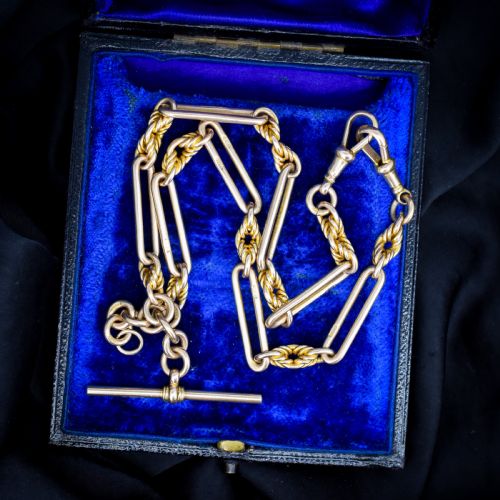
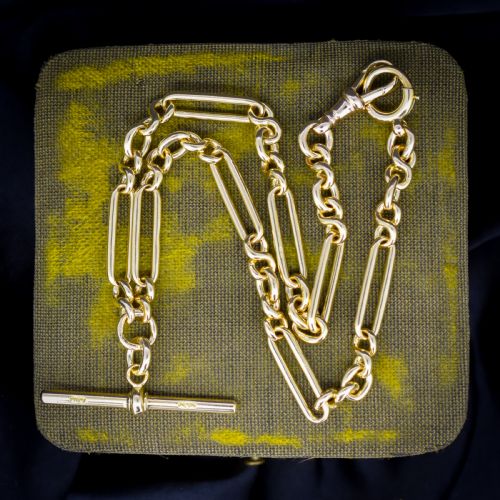
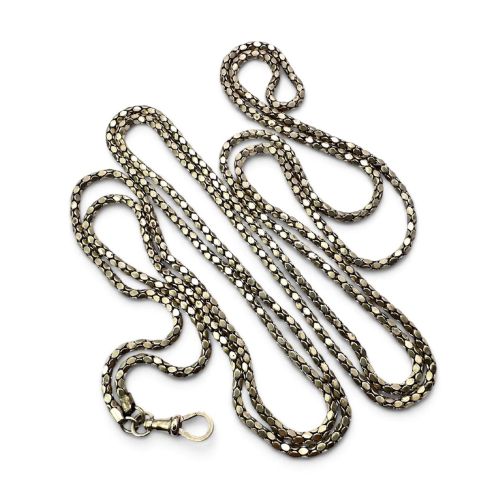
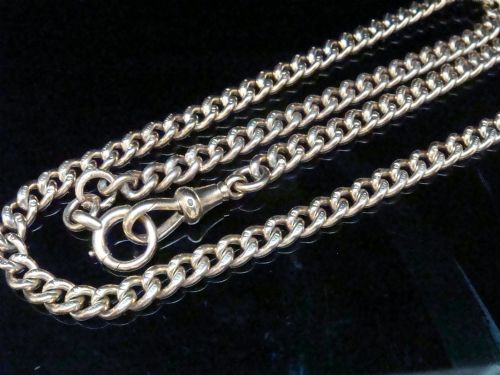
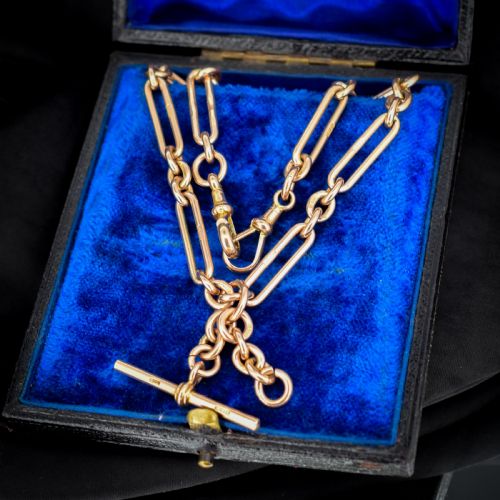
A swivel clasp necklace comprises historical watch chains and pocket watch chains repurposed as necklaces, frequently retaining their original functional dog clips or swivel clasps. When you search for swivel clasp necklace, you encounter longuard chains, albert chains, and fancy link formations from the Victorian, Edwardian, and Art Deco eras.
The items appear in lengths ranging from short fourteen-inch pieces to exceptionally long seventy-eight-centimetre guard chains. Many incorporate trombone links, love knot links, curb links, or paper links fabricated during the nineteenth and early twentieth centuries.
How they were made
Goldsmiths constructed these chains predominantly from yellow gold, rose gold, white gold, and platinum, utilising nine carat, ten carat, twelve carat rolled gold, fifteen carat, and eighteen carat standards. Individual links were shaped by hand or machine, with certain pieces bearing hallmarks on every single link.
Makers integrated mechanical fasteners such as dog clips, bolt rings, and swivel clasps to secure pocket watches or pendants. Surface ornamentation includes faceted finishes, turquoise embellishments, and structural linkages like trombone and love knot configurations.
Swivel Clasp Necklace Retail Price Guide 2026
Typical asking prices for swivel clasp necklace among the pieces listed under this phrase on Sellingantiques today, from the lower quarter to the upper quarter. They describe what is for sale here now, not the wider market.
Listings feature items spanning the nineteenth century, 1890, 1900, the Edwardian era, 1920, and 1925, constructed in yellow gold, rose gold, white gold, platinum, and rolled gold.
What varies in quality
The calibre of a chain depends on the complexity of its link geometry, such as alternating trombone and oval patterns, and the weight of the precious metal used. Pieces that retain complete hallmarks across every link demonstrate superior original manufacturing standards.
Subtleties in the integrity of the swivel mechanisms and the condition of integrated gemstone accents distinguish standard productions from finer examples. The gauge of the gold wire and the uniformity of hand-assembled links further separate ordinary items from exceptional survivors.
The Swivel Clasp Necklace Glossary
- Albert chain
- A short watch chain designed for men's pocket watches, now commonly worn as a necklace.
- Dog clip
- A spring-loaded snap hook utilised on watch chains to attach a fob or pendant.
- Trombone link
- An elongated rectangular metal link resembling the slide of a musical trombone, popular in period chains.
- Longuard chain
- An extra-long necklace chain historically worn doubled over or suspended with a watch.
- Rolled gold
- A composite material formed by bonding a layer of gold to a base metal core.
Swivel Clasp Necklace: Frequently Asked Questions
What is an albert chain necklace?
An albert chain necklace is a repurposed pocket watch chain designed to be worn around the neck rather than across a waistcoat. These items retain their original utilitarian character through integrated swivel clasps and dog clips.
They originate primarily from the Victorian and Edwardian periods, offering robust gold construction and distinctive link patterns like the trombone or curb form.
Are all links hallmarked on antique chains?
Not every antique chain bears full hallmarks on every single component, though select pieces feature stamped assay marks on each individual link. British pieces often display regional assay office symbols alongside the gold carat purity.
Rolled gold and continental European pieces may exhibit different stamp conventions or maker marks rather than standard British hallmarks.
What gold purity is used in these necklaces?
These historical chains utilise a range of gold purities, most commonly nine carat, fifteen carat, and eighteen carat yellow, rose, or white gold. Ten carat and twelve carat rolled gold variants also appear among the selections.
The metal standard reflects the manufacturing customs of the nineteenth and early twentieth centuries.