




Swiss Black Forest Furniture
Swiss black forest furniture brings the deep woods indoors with bold, carved animal figures and rich timber.
Swiss Black Forest Furniture
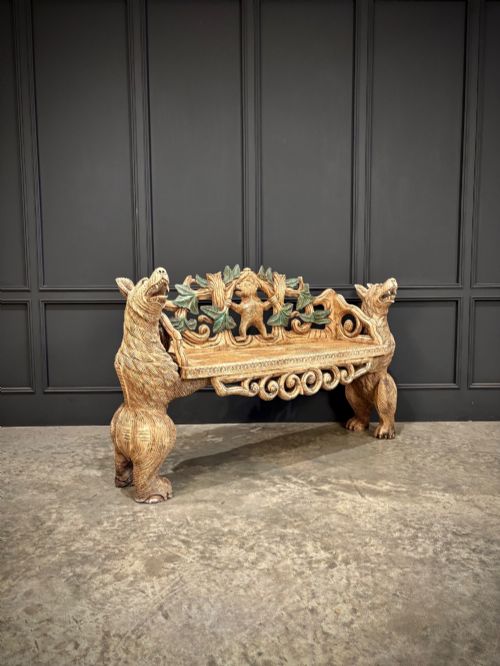
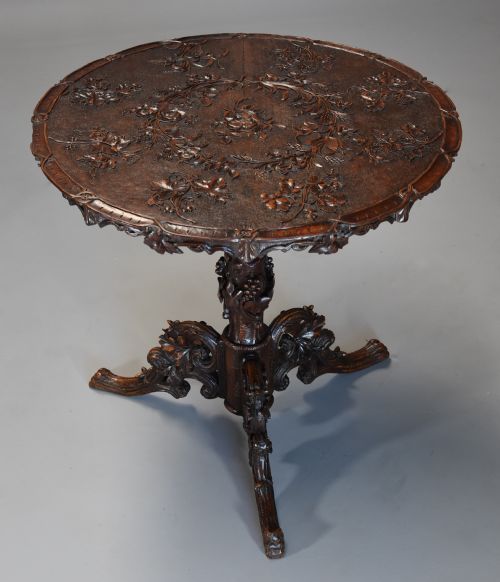
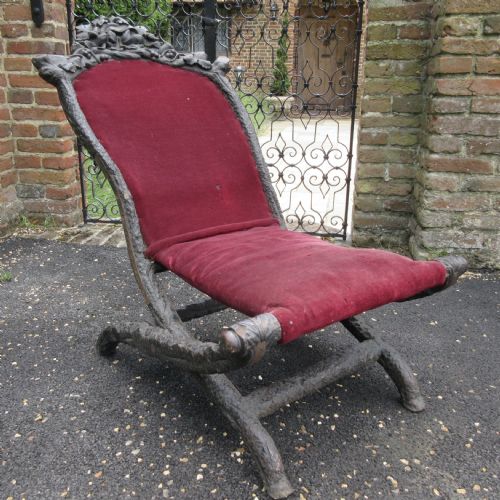
Swiss black forest furniture comprises deeply carved wooden pieces dominated by bears, deer, foxes, and eagles, capturing the spirit of Swiss alpine folk art. The inventory on this page ranges from large hall stands and benches to occasional tables, folding chairs, and stick stands, representing the Victorian era through the early twentieth century.
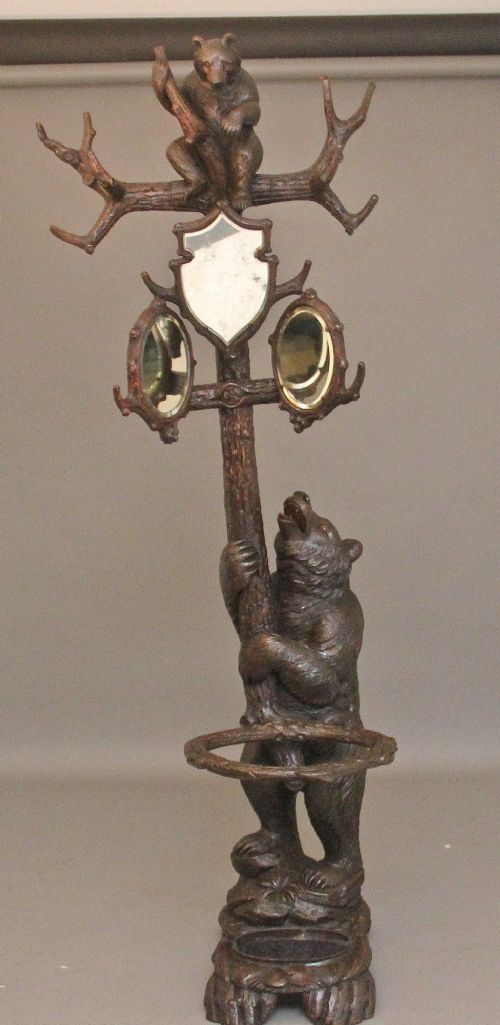
The most common form you will encounter is the bear hall stand or hall seat, where lifelike carved bears support branches or hold card trays. Alongside these substantial hall furnishings, smaller tables with marquetry inlay or musical mechanisms frequently appear, reflecting the skilled craftsmanship of the period.
Materials and construction
Carvers utilised soft timbers such as linden wood and fruitwood alongside tougher hardwoods like walnut and oak to shape intricate animal forms and foliage. These woods allowed artisans to achieve deep relief and realistic fur textures without splintering the delicate details.
Specialised construction techniques combined traditional joinery with applied carvings, occasionally incorporating natural materials such as deer antler and horn into wall-hanging hat and coat stands. Glass and metal elements also appear in specific functional components like umbrella wells and hardware.
Materials recorded include linden wood, walnut, fruitwood, hardwood, glass, and metal.
Assessing quality
The integration of the carved elements into the overall furniture structure also dictates the standard of the piece. Superior examples feature seamless joins where structural supports merge organically with naturalistic tree trunks, branches, or animal limbs.
The Swiss Black Forest Furniture Glossary
- Linden wood
- A pale, fine-grained timber favoured by carvers for its cooperative texture and lack of prominent grain. It allows deep undercutting and precise rendering of animal fur.
- Marquetry
- The art of applying small pieces of veneer to a structure to form decorative patterns. In these tables, geometric or pictorial wood designs contrast with the rustic carvings.
- Hall stand
- A piece of hallway furniture designed for coats, hats, and umbrellas, frequently incorporating a mirror and a seat or glove box. Black forest examples use carved bears and trees as the main structural supports.
- Escabelle chair
- A traditional style of Swiss alpine chair with a solid panel back and splayed legs. These regional seats often display folk art carving.
- Stick stand
- A piece designed specifically for walking sticks and umbrellas, often constructed here as a standing bear holding a trough or resting against an oak tree.
Swiss Black Forest Furniture: Frequently Asked Questions
What is black forest furniture?
Black forest furniture is a distinct style of heavily carved wooden furnishings originating from the alpine regions of Switzerland and Germany during the nineteenth and early twentieth centuries. The pieces typically feature naturalistic animal carvings, most notably bears, integrated into functional items such as tables, chairs, and hall stands.
The style emerged from local woodworking traditions in areas like Brienz, where artisans applied fine carving skills to domestic objects. Today, these pieces are celebrated for their sculptural quality and the charm of their folk art origins.
How were these pieces used?
These furnishings served practical daily functions in the grand entrance halls, reception rooms, and parlours of Victorian homes. Hall stands held coats, hats, and walking sticks, while benches and hall seats provided a place to sit when changing footwear.
Smaller occasional tables and musical tables functioned as display surfaces and sources of parlour entertainment. Despite their whimsical appearance, they were built for robust, everyday household use.
How do I date a piece?
Dating relies on examining the construction methods, secondary timbers, hardware, and stylistic shifts visible across the nineteenth and early twentieth centuries. Pieces marked as Victorian or mid-nineteenth century often display heavier, exhibition-quality carving and elaborate structural integration.
Later pieces from the early twentieth century can feature simpler proportions or variations in wood finishing. Comparing the specific forms against documented periods helps narrow down the decade of manufacture.
How do I care for carved wood?
Care involves keeping the carved wooden surfaces away from direct sunlight and extreme fluctuations in temperature or humidity. Regular dusting with a soft, dry brush ensures that dirt does not accumulate within the deep recesses of the fur and foliage carvings.
Avoid heavy liquid polishes that can build up in the intricate crevices. A microfibre cloth or gentle brush is usually sufficient to maintain the timber's natural lustre.