
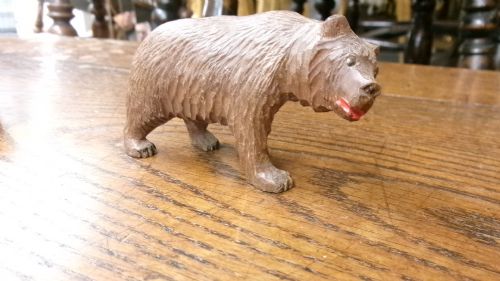
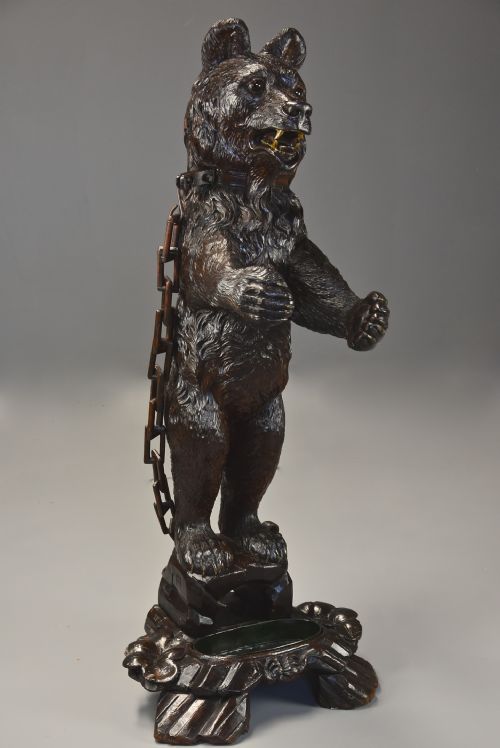


Swiss Bear Carving
These Swiss bear carving pieces bring rustic charm and practical utility to a hallway or study.
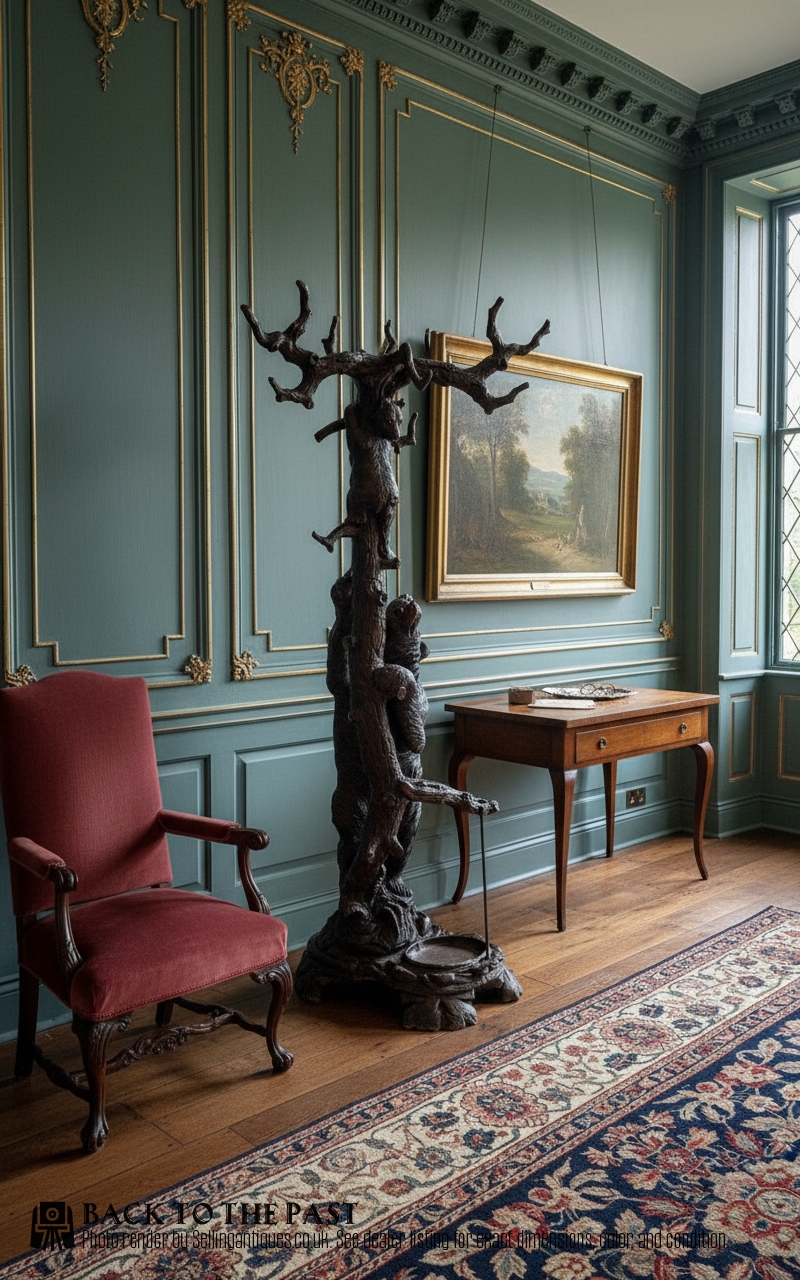
Swiss Bear Carving
A swiss bear carving unites European folk traditions with practical utility, appearing most often on this page as hall stands, umbrella holders, and seating furniture. These items originate predominantly from the nineteenth century and the early twentieth century, carrying the distinct aesthetic of the Black Forest and Swiss folk art movements.
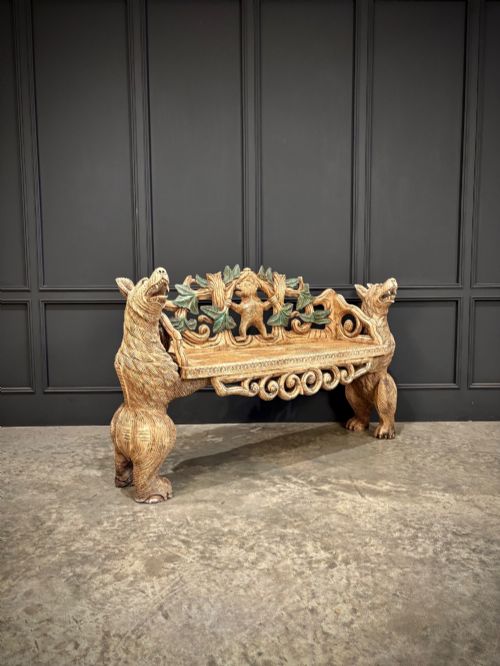
Buyers encounter smaller decorative items alongside large functional pieces such as stick stands, benches, and tobacco jars. The bear motif dominates these works, rendered either as a solitary figure or incorporated into furniture structures like hall seats and lamp bases.
Materials and construction
Metal components appear on functional pieces like stick stands and inkwells, while glass occasionally integrates into lamp designs or eyes. The craftsmanship relies entirely on hand carving, creating depth and varied surface textures across each wooden bear.
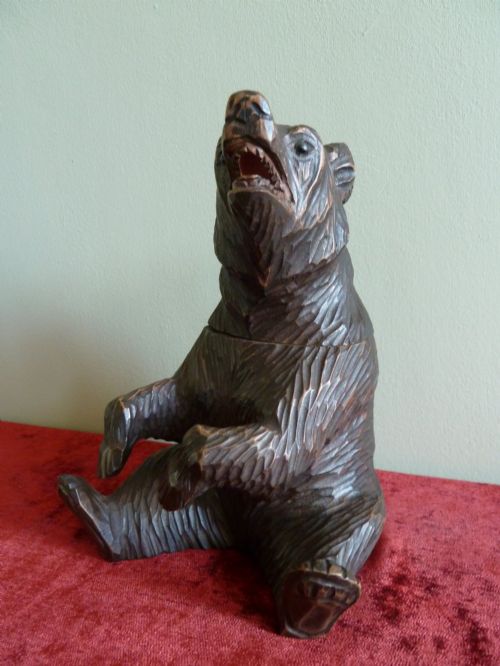
Miniature bears frequently double as inkwells or condiment figures, proving that even a grumpy forest predator can hold your mustard.
Assessing quality
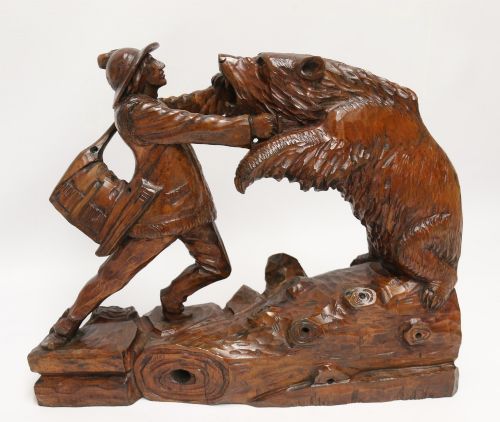
Superior examples demonstrate anatomical precision and confident proportions in the bear's form, whereas lower tiers exhibit stiff rendering and flat detailing. The depth and crispness of the fur carving separate master carvers from commercial workshops.
Scale and ambition dictate the upper echelon of these objects, with large hall stands and exhibition pieces commanding greater artistic complexity than small desktop items or standard bookends.
The Swiss Bear Carving Glossary
- Black Forest
- A regional style of wood carving originating from central Europe, known for realistic animal motifs and rustic furniture. This designation covers most items found within this category.
- Hall stand
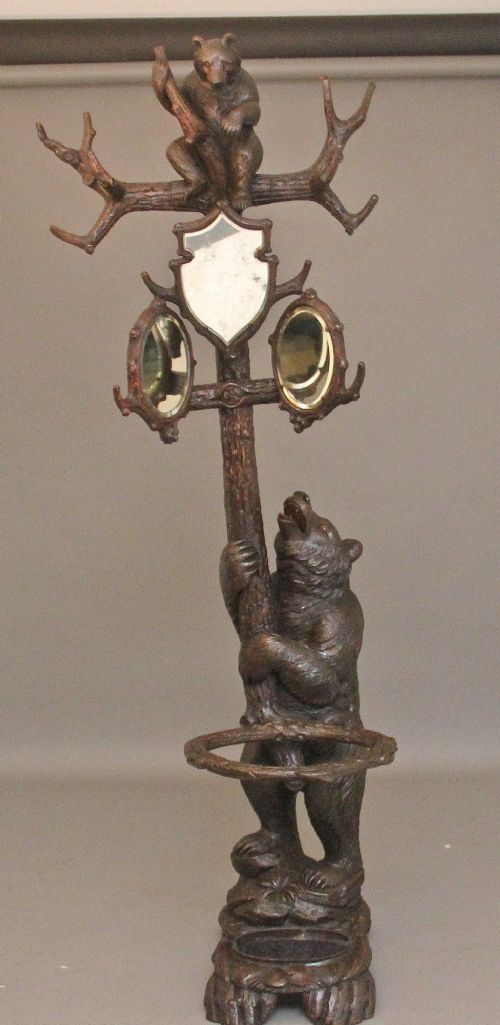
- A tall hallway furniture piece combining coat hooks, a mirror, and a drip tray for umbrellas. Bear carvings often serve as the structural support or decorative crest for these items.
- Humidor
- A specialised box designed to keep tobacco moist, frequently modelled here as a seated or standing bear holding a jar. These linden wood containers often feature hinged lids.
- Stud eyes
- Inset glass or metal pins used to represent the eyes of carved animals. They provide a reflective, lifelike focal point on otherwise matte wooden surfaces.
Swiss Bear Carving: Frequently Asked Questions
Where were these carvings made?
These wooden pieces stem primarily from Swiss and European alpine workshops during the nineteenth and early twentieth centuries.
Local artisans utilised native timbers to produce both decorative sculptures and functional household items.
How do I maintain the wood?
Protect the surface by keeping the carvings away from direct sunlight and sudden temperature shifts.
An occasional light dusting with a dry cloth preserves the natural finish of the linden wood or walnut.
What is a stick stand?
A stick stand is a hallway accessory built to hold walking sticks, canes, and umbrellas.
In this category, carved bears often form the main post or enclose the base of the stand.
How are different periods identified?
Periods are determined through timber choice, tool marks, and stylistic shifts between Victorian folk art and later twentieth-century production.
Earlier nineteenth-century examples often display deeper hand-chiselled texturing compared to later works.