



Swing Mirror with Drawers
A swing mirror with drawers offers a practical tabletop dressing glass that brings both reflection and concealed storage to a historic bedroom.
Swing Mirror with Drawers
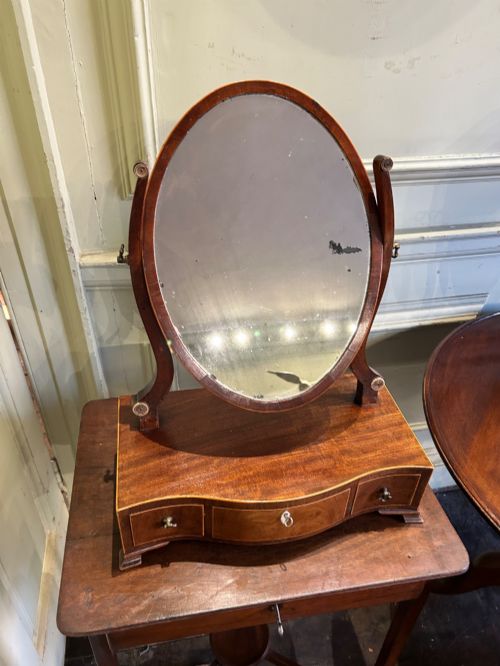
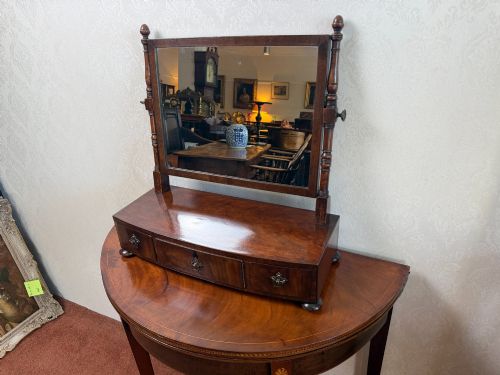
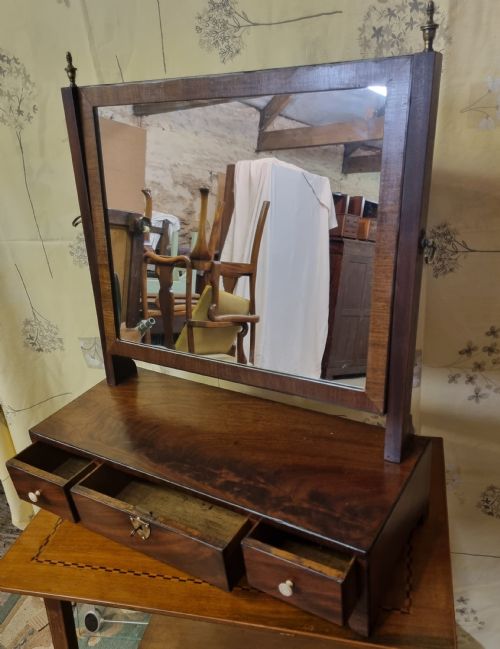
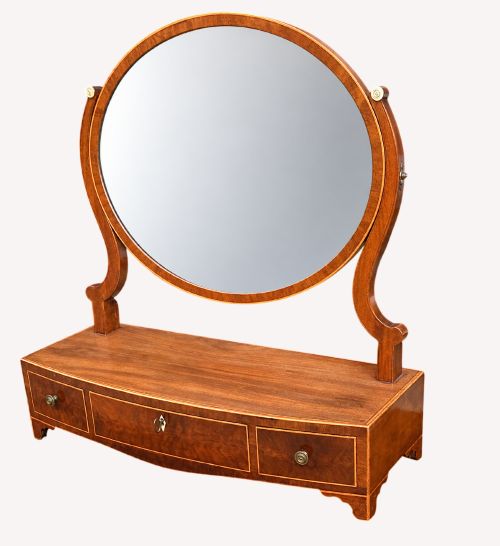
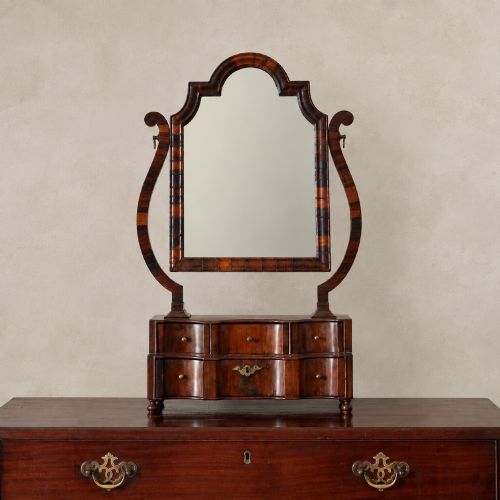
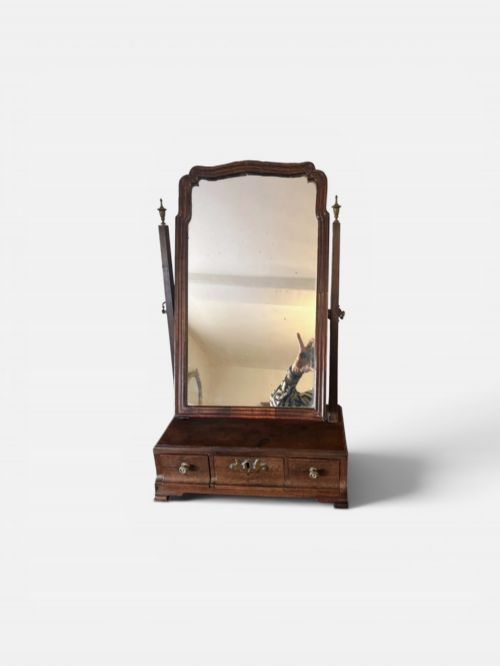
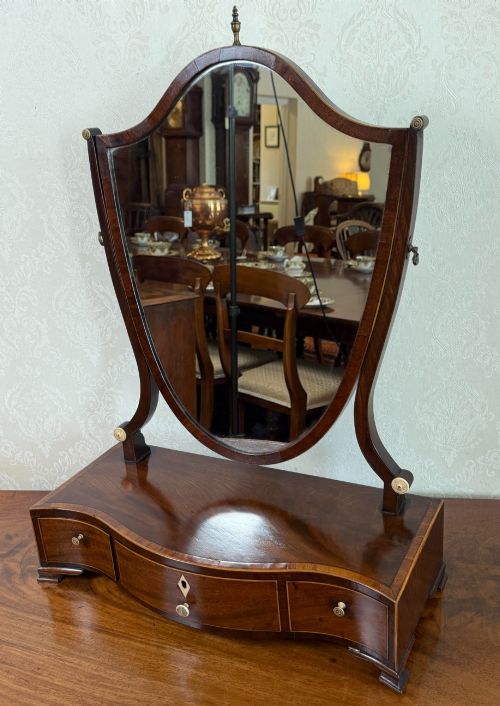
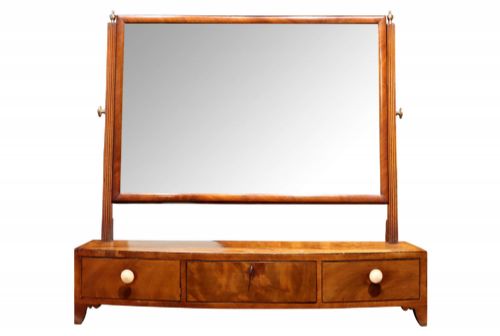
When you search for a swing mirror with drawers, you are looking at tabletop dressing glasses designed to sit atop a chest of drawers or a dedicated dressing table. These pieces provide an adjustable tilting plate mounted between upright supports, anchored to a small plinth base fitted with one or more small compartments.
The versions you are most likely to meet on this page hail primarily from the eighteenth and nineteenth centuries, spanning the Georgian, Regency, and Victorian eras. These items appear under various historical designations, including toilet mirrors, dressing mirrors, and vanity mirrors.
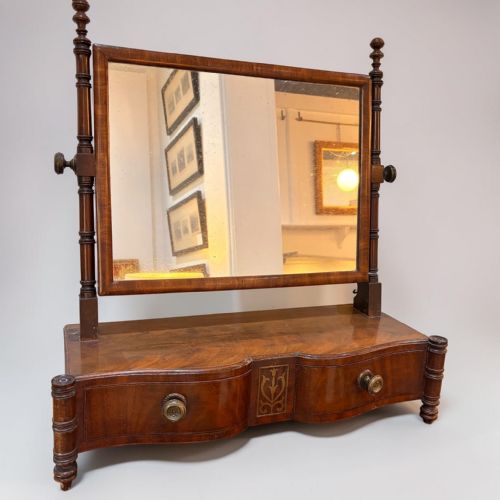
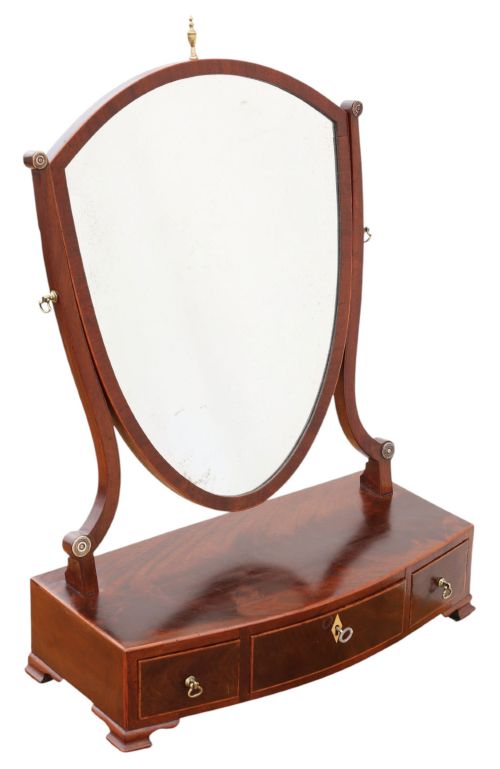
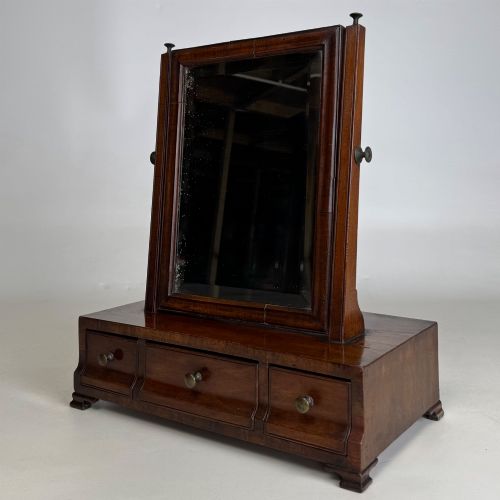
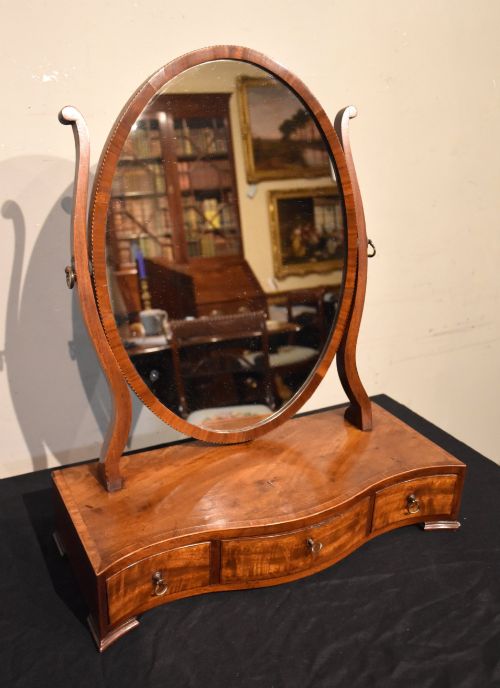
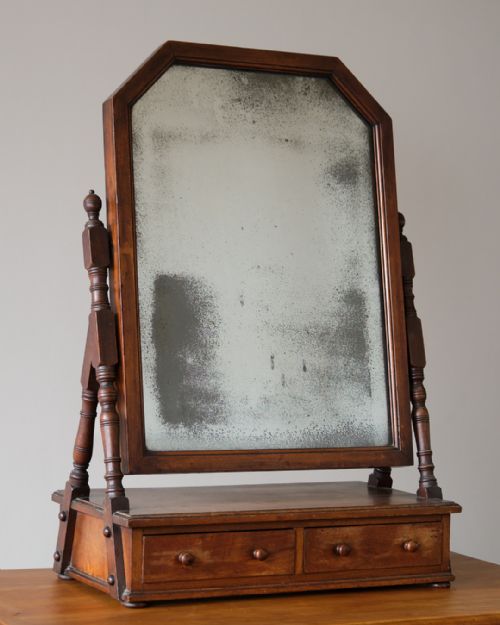
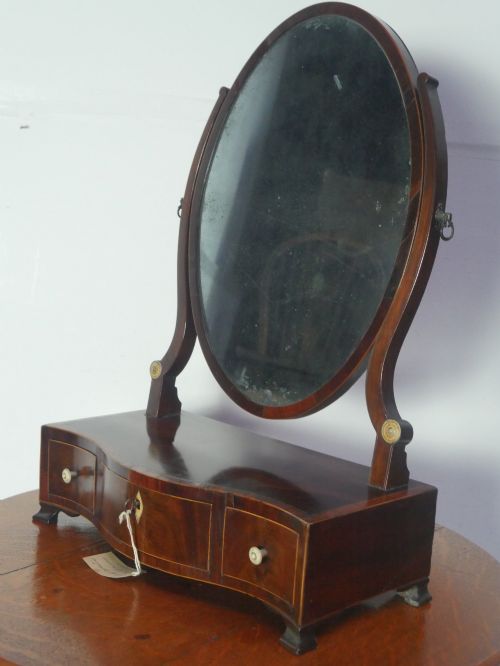
Formats range from plain rectangular plates on simple uprights to serpentine-fronted bases and shield-shaped glasses supported by scrolling arms. Some incorporate bureau fitments or intricate marquetry, showing how makers adapted the basic form to changing domestic habits.
How they were made
Cabinetmakers constructed the frames and drawer bases using dense timbers such as mahogany, walnut, and satinwood, often accentuating the surfaces with figured veneers. Inlays of boxwood, bone, or marquetry added decorative contrast to the primary wood.
The mirror plates themselves utilise historic glass, frequently held in place by wooden panels at the back. Brass pivots, screws, and small drop handles complete the hardware, allowing the glass to tilt smoothly between upright arms.
Swing Mirror with Drawers Retail Price Guide 2026
Typical asking prices for swing mirror with drawers among the pieces listed under this phrase on Sellingantiques today, from the lower quarter to the upper quarter. They describe what is for sale here now, not the wider market.
What varies in quality
Quality rests in the proportion of the frame and the choice of timbers used for the base. Fine examples display carefully selected mahogany or figured walnut figures on the drawer fronts, matched across the surfaces with thoughtful grain continuity.
The joinery of the small drawers and the refinement of the brass hardware distinguish superior work from simpler utilitarian pieces. Crisp mouldings and well-turned support arms show the hand of a skilled workshop rather than standard production.
Wright and Hunter of Belfast
The Swing Mirror with Drawers Glossary
- Toilet mirror
- A historical term for a tabletop dressing mirror with drawers, intended for the dressing table rather than the water closet. These pieces sat in bedrooms for personal grooming.
- Shield mirror
- A dressing glass shaped like a heraldic shield, popular during the Georgian period. The curved top rests on scrolling upright arms above a box base.
- Bureau fitment
- A small desk interior incorporated into the drawer base of a mirror, featuring pigeonholes or tiny compartments for letters and papers. This combines writing facilities with a dressing glass.
- Marquetry
- Decorative veneer work formed by fitting together thin pieces of wood, bone, or other materials to create pictorial patterns. It adorns the surfaces of select table mirrors.
- Serpentine
- A curved line of furniture fronts featuring a convex centre flanked by concave ends. This contour gives a sense of movement to the drawer bases of larger mirrors.
Swing Mirror with Drawers: Frequently Asked Questions
Where did these mirrors sit?
These mirrors were designed primarily for tabletop use in bedrooms and dressing rooms. They rested securely on top of chests of drawers or dedicated dressing tables.
Because they were portable, owners could move them around the home to follow the best natural daylight for grooming.
How do I tell periods apart?
Georgian examples often feature clean mahogany lines, shield shapes, or simple box bases with bracket feet. Victorian pieces frequently display heavier mahogany timbers, burr walnut veneers, or carved scroll supports.
Earlier eighteenth-century versions sometimes utilise walnut and laburnum with cushion moulding, while Edwardian items lean towards lighter satinwood inlays.
What were the drawers used for?
The small drawers built into the base held personal items such as cosmetics, pins, jewellery, and small grooming tools. They kept the tabletop tidy while elevating the glass to a convenient height.
Some specialised variants even included miniature writing drawers or bureau compartments for correspondence.
How do I live with one?
Place the mirror on a sturdy chest of drawers, sideboard, or dressing table where the weight of the timber base is fully supported. Ensure it sits out of direct, harsh sunlight to protect historic wood finishes and silvered glass.
Handle the tilt mechanism gently when adjusting the angle to preserve the original brass pivots and wooden uprights.