

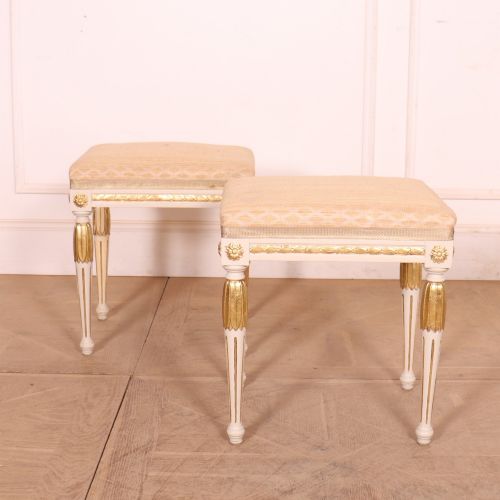


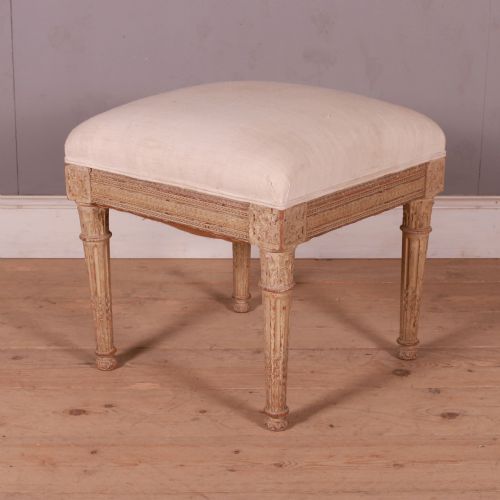

Swedish Wood Stools
These Swedish wood stools bring clean lines and pale finishes to a room, offering both practical seating and distinct Nordic character.
Swedish Wood Stools
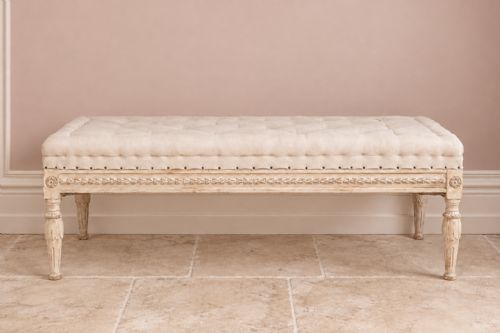
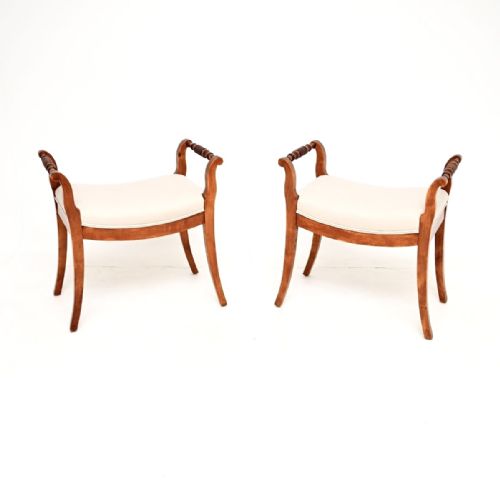
Swedish wood stools encompass versatile seating and footstools dating from the nineteenth century and the early twentieth century. Buyers searching for swedish wood stools typically encounter painted pine or rich satin birch timbers.
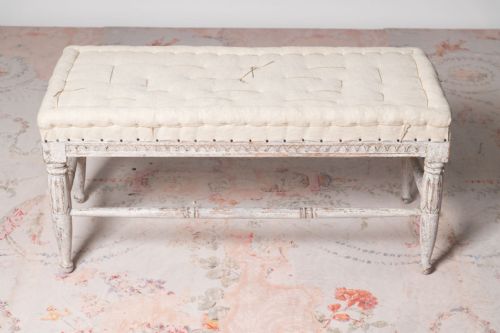
The selections on this page range from compact single seats to longer bedroom stools and benches. Gustavian and Biedermeier styles dominate the available forms, reflecting classic Scandinavian design traditions.
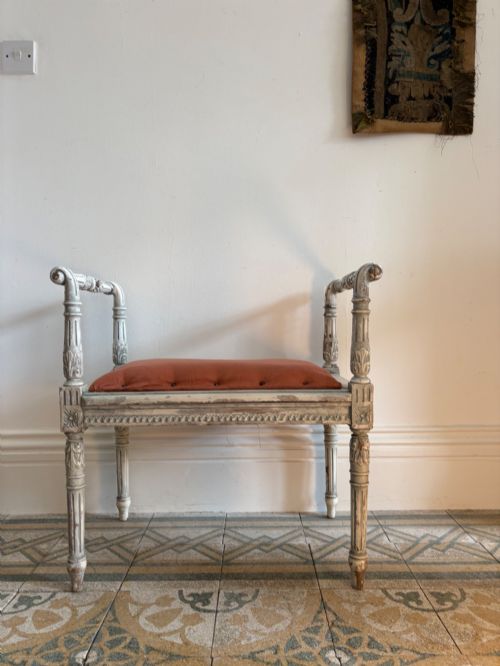
Many examples feature pale painted finishes or original paintwork alongside upholstered seats in silk, linen, cotton, or simple fabric. Pairs frequently appear alongside individual pieces, suiting symmetrical interior arrangements.
How they were made
These stools rely on traditional timber construction, utilising native woods like satin birch and pine shaped by skilled hands. Craftsmen carved structural details directly into the wood before applying decorative treatments.
Surface finishes include white paint and subtle gilding with gold leaf to catch the light in northern European interiors. Upholstered tops use textiles such as silk, linen, and cotton secured over padding.
Swedish Wood Stools Retail Price Guide 2026
Typical asking prices for swedish wood stools among the pieces listed under this phrase on Sellingantiques today, from the lower quarter to the upper quarter. They describe what is for sale here now, not the wider market.
Listings feature items exclusively from the nineteenth century and the early twentieth century, spanning Gustavian, Biedermeier, and Swedish Grace styles.
What varies in quality
Quality rests primarily in the crispness of the carved detail and the integrity of the original paint surface. Pieces retaining their early or original painted finishes command closer attention from purists.
The choice of timber creates a distinct tier in quality, with figured satin birch standing apart from standard painted softwood. Structural joinery and the selection of fine upholstery fabrics like silk complete the distinction.
The Swedish Wood Stools Glossary
- Gustavian
- The Swedish neoclassical style spanning the late eighteenth and nineteenth centuries, characterised by restrained elegance and pale tones.
- Biedermeier
- A Central European and Scandinavian design movement favouring warm wood grains like satin birch and clean, comfortable domestic forms.
- Satin Birch
- A pale hardwood with a lustrous, rippled grain frequently utilised in nineteenth-century Scandinavian cabinetmaking.
- Gold Leaf
- Extremely thin hammered gold used for gilding decorative carved details and mouldings on antique furniture.
Swedish Wood Stools: Frequently Asked Questions
Where do I put a Swedish wood stool?
These stools fit easily at the foot of a bed, beside a fireplace, or beneath a dressing table. Their compact size allows them to move between rooms as extra seating when needed.
Pale painted and satin birch versions brighten dark corners and complement both traditional and modern minimalist interiors.
How do I clean original painted wood?
Dust the surface regularly with a soft, dry cloth to protect the fragile historic paint layers. Avoid modern chemical sprays and water, which can lift or discolour aged finishes.
Professional conservators recommend pure microcrystalline wax very sparingly if the wood appears dry or thirsty.
What is the difference between Gustavian and Biedermeier?
Gustavian pieces draw on French neoclassical symmetry with pale painted surfaces, fluted legs, and restrained carved motifs. They feel light, airy, and formal.
Biedermeier design focuses on unpainted wood grains, particularly satin birch, prioritising domestic comfort and smooth, unadorned surfaces.
Are these stools comfortable for daily sitting?
Many feature padded seats upholstered in linen, cotton, or silk, offering a comfortable perch for reading or dressing. Tighter footstool variants are built lower and serve primarily as rests for feet.
Consider the seat height and upholstery firmness depending on whether the piece will see regular daily use.