



Swedish Upholstered Seats
Swedish upholstered seats bring painted wood, satin birch and refined classical proportions into domestic rooms.
Swedish Upholstered Seats
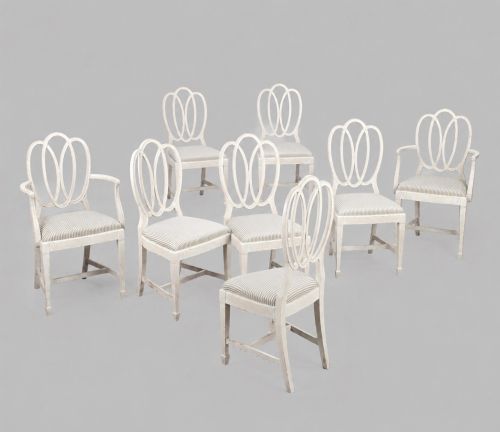
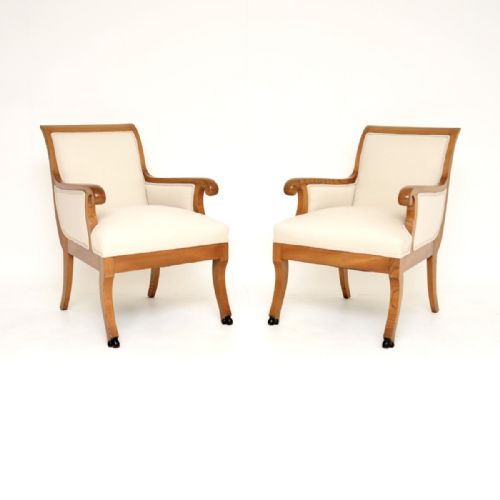
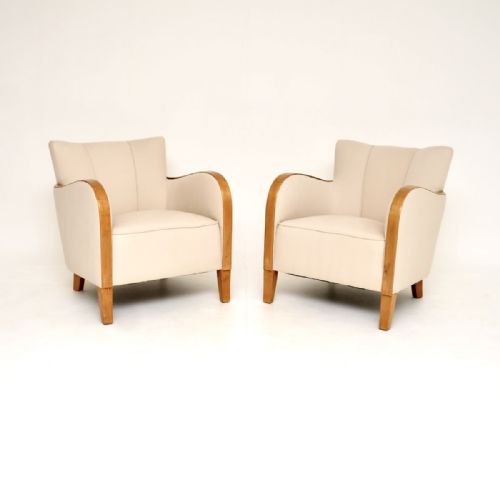
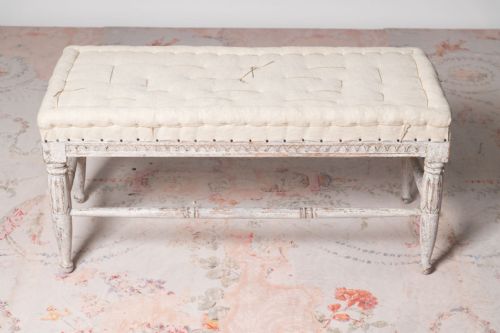
When buyers search for Swedish upholstered seats, they encounter a diverse array of forms spanning dining chairs, armchairs, benches, stools and settees. The pieces date from the eighteenth century through the nineteenth century and into the early twentieth century.
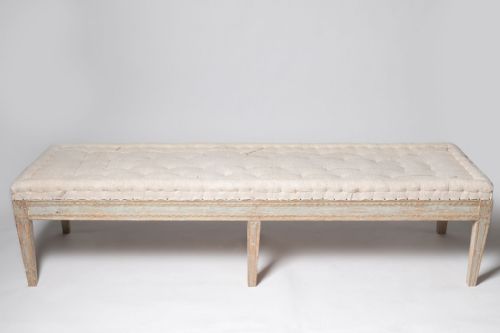
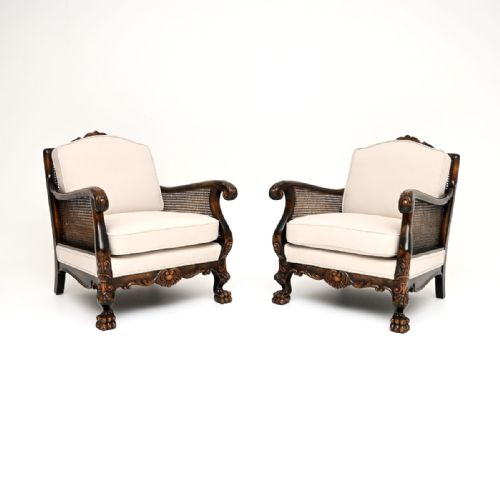
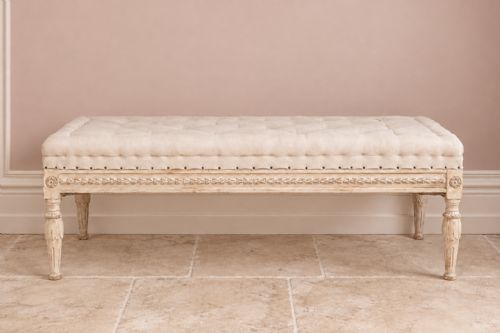
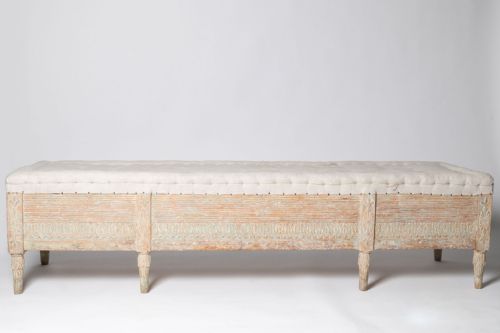
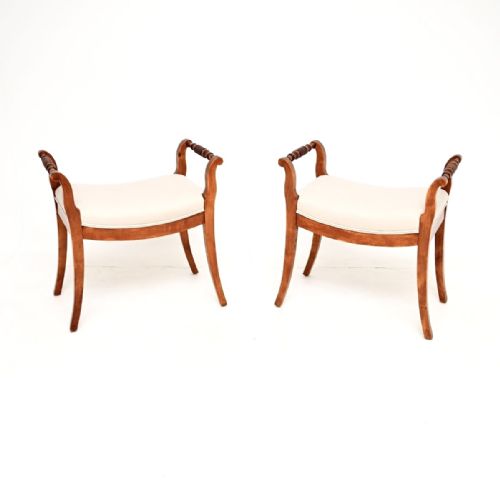
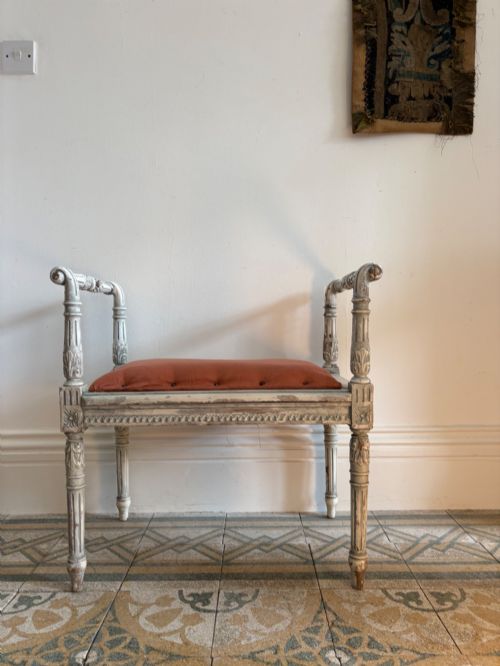
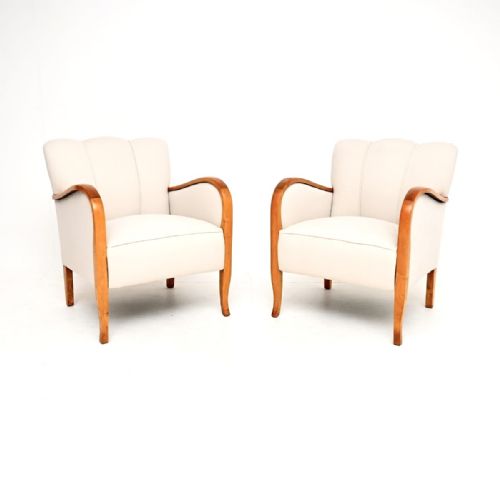
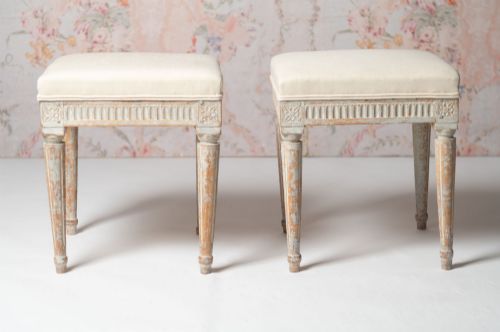
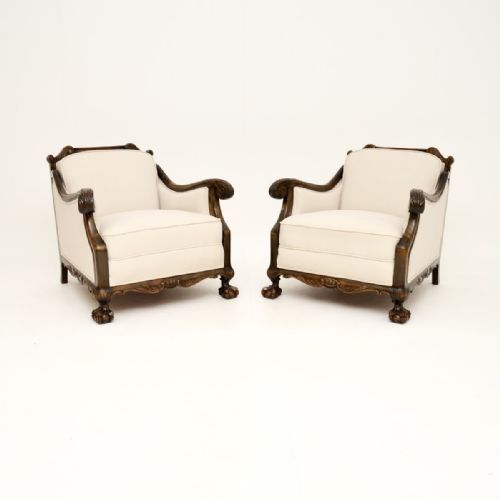
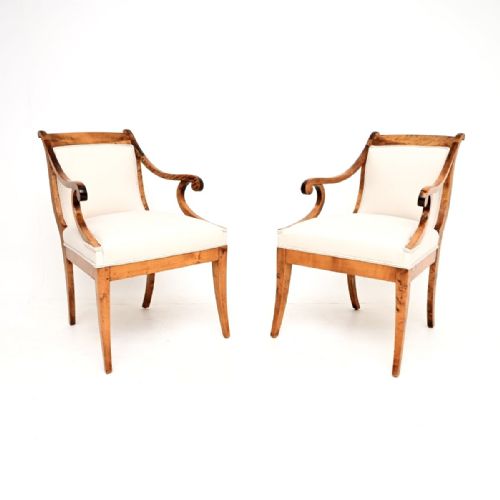
The most common versions met on this page include painted wood stools and satin birch armchairs. These functional forms range from simple Gustavian benches to elaborate Art Deco club armchairs and Biedermeier seating.
Origins trace directly to Scandinavian workshops where local timbers such as birch, pine and elm were shaped into distinct regional interpretations of European neoclassical and modern aesthetics. Pieces often retain their original painted surfaces or show later layers of decorative paint.
Materials and construction
Carpenters constructed the frames using native timbers including birch, satin birch, pine, elm and wood, often applying layers of paint or giltwood to the exterior surfaces. Upholstery relied on traditional textiles such as fabric, linen and silk secured over padded seat foundations.
Joinery involved careful carving of wooden elements, visible in the detailed armchairs, stools and settees from the Gustavian, Biedermeier and Art Deco periods. Painted finishes were applied directly to wood or pine substrates, preserving the tactile grain of satin birch and elm.
Swedish Upholstered Seats Retail Price Guide 2026
Typical asking prices for swedish upholstered seats among the pieces listed under this phrase on Sellingantiques today, from the lower quarter to the upper quarter. They describe what is for sale here now, not the wider market.
Listings feature seating in Gustavian, Biedermeier, Art Deco and Empire styles, constructed from birch, pine, elm and painted wood.
Qualities of distinction
Excellence in these pieces rests upon the crispness of the carved wooden details and the preservation of original painted surfaces rather than overpainted restorations. Satin birch and burr birch veneers show superior figuring and depth on higher-tier seating.
Proportion and structural integrity separate simpler utility forms from finely designed neoclassical or Art Deco salon seating. The harmony between the exposed wood frame and the upholstered fabric defines the visual success of each piece.
The Swedish Upholstered Seats Glossary
- Gustavian
- The Swedish neoclassical style inspired by French design during the reign of Gustav III, characterised by restrained carving and light painted finishes. It appears frequently on stools, dining chairs and armchairs.
- Bergère
- An enclosed upholstered armchair with wooden framing, often seen in pairs from the early twentieth century. These seats combine padded armrests with supportive backrests.
- Biedermeier
- A Central European and Scandinavian style focusing on utility and clean lines without excessive ornamentation, executed largely in birch and elm. Pieces from this movement display warm wood tones.
- Giltwood
- Wood that has been treated with gold leaf or gold paint to produce a metallic surface finish. This technique highlights carved details on formal nineteenth-century settees.
Swedish Upholstered Seats: Frequently Asked Questions
What periods do these seats come from?
The listings span from the eighteenth century through the nineteenth century and into the early twentieth century. Examples include Gustavian, Victorian and Art Deco eras.
Craftsmanship evolved from neoclassical painted wood forms into streamlined birch designs of the twentieth century.
Are these seats painted or polished wood?
Makers utilised both painted finishes and exposed natural wood grains. Painted wood, white paint and original painted surfaces appear alongside polished satin birch and elm.
Choice of finish depends heavily on the stylistic period, with Gustavian pieces typically painted and Biedermeier pieces showing timber grain.
How do I identify a Gustavian seat?
Gustavian pieces display restrained neoclassical carving, straight tapered legs and light painted woodwork. They reflect eighteenth-century Swedish interpretations of French Louis XVI design.
These chairs and stools often feature simple geometric lines and muted painted tones.
What fabrics are used for upholstery?
Upholstery materials recorded in the evidence include standard fabric, linen and silk. These textiles cover the seats of armchairs, long stools and dining chairs.
Original or replacement coverings complement the painted wooden frames beneath.
Where were these pieces made?
Items originate from Swedish workshops and Scandinavian makers. They reflect regional interpretations of broader European styles including Empire, Biedermeier and Art Deco.
Local timber such as birch, pine and elm governed the construction of these domestic items.