



Swedish Pine Coffer
A swedish pine coffer brings robust folk utility and layered historical surfaces into a modern room.
Swedish Pine Coffer
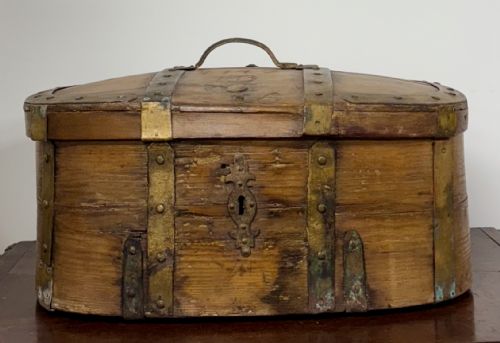
When you search for a swedish pine coffer, you encounter sturdy storage pieces spanning from the mid eighteenth century through the late nineteenth century. These objects include heavy dome top coffers, blanket boxes, marriage chests, and strong boxes shaped for practical household utility.
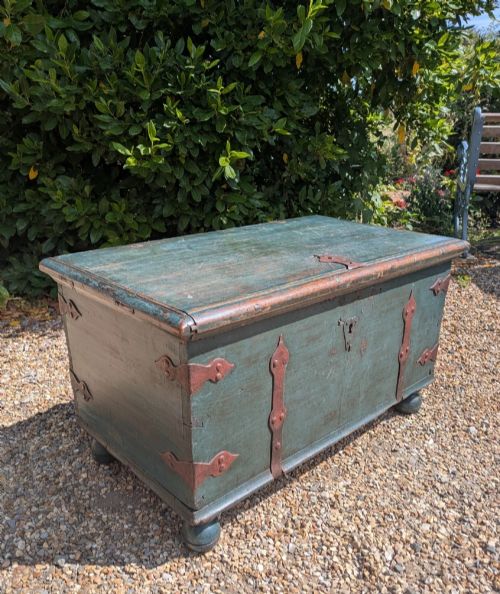
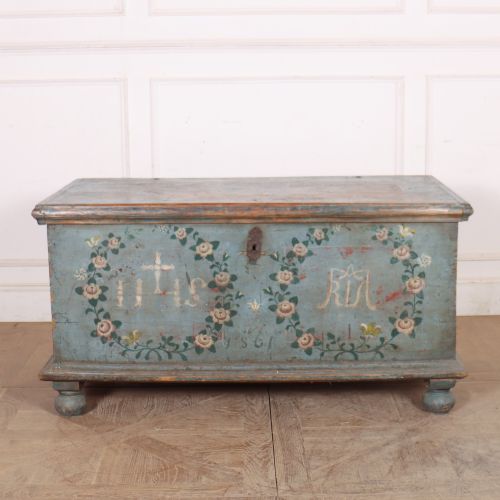
The versions most frequently met on this page date from the nineteenth century, often bearing painted finishes, folk art motifs, or hand forged strapwork. Forms range from large floor standing chests down to small table top boxes and log bins.
Materials and Construction
Carpenters built these pieces primarily from solid pine, utilising timber planking joined to withstand heavy daily use. Surfaces received coats of pigment and paint, frequently layered over decades to create rich patinated finishes.
Iron, wrought iron, and brass provided structural reinforcement and security. Blacksmiths shaped hand forged strapwork, hinges, and metal bound corners that locked the wooden panels together.
Swedish Pine Coffer Retail Price Guide 2026
Typical asking prices for swedish pine coffer among the pieces listed under this phrase on Sellingantiques today, from the lower quarter to the upper quarter. They describe what is for sale here now, not the wider market.
Object types catalogued here include storage chests, blanket boxes, log bins, and dome top coffers.
Distinctions in Quality
The distinction between standard utility items and finer examples rests in the complexity of the surface decoration and the integrity of the original paint. Pieces featuring detailed folk art, mazes, or specific period ornamentation show higher artistry than plain surfaces.
Hardware execution also separates the work, as finely beaten hand forged iron strapwork and intact original hinges elevate a box above those fitted with later replacements.
The Swedish Pine Coffer Glossary
- Strapwork
- Ornamental bands of metal, often hand forged iron, applied to reinforce corners and joints while adding visual pattern.
- Marriage chest
- A specific box commissioned or gifted for a wedding, frequently inscribed with dates or initials and decorated with folk art.
- Dome top
- A rounded lid profile designed to shed water and increase internal storage capacity. This shape requires specialised curved framing timbers.
- Pigment
- Ground colour applied to the pine surface, forming the matte painted finishes characteristic of Scandinavian folk pieces.
Swedish Pine Coffer: Frequently Asked Questions
What were swedish pine coffers used for originally?
Households utilised these chests to store precious textiles, blankets, grain, and legal documents securely away from damp floors and pests.
Larger versions often doubled as benches or tables within modest rural homes where multi-purpose furniture was essential.
How do I date an 18th century coffer?
Examination of the timber joints, hand forged ironwork, and the chemical composition of the pigment layers reveals the age of the piece.
Eighteenth century examples often display Baroque influences or specific labyrinth designs that differ from later nineteenth century folk art decoration.
Are painted finishes usually original?
Many listings preserve original pigment layers, though rural pieces were frequently repainted during subsequent generations of use.
Close inspection under natural light helps identify surface wear patterns and the subtle craquelure associated with aged oil and milk paints.
How do I integrate a coffer into a modern room?
These boxes function effectively as coffee tables in living spaces, offering internal storage while anchoring the room with rustic texture.
Smaller strong boxes and log bins fit easily onto side tables or hearths to hold smaller everyday items.