



Swedish Painted Armoire
A swedish painted armoire brings light, colour and practical storage into a room through generous proportions and historic painted finishes.
Swedish Painted Armoire
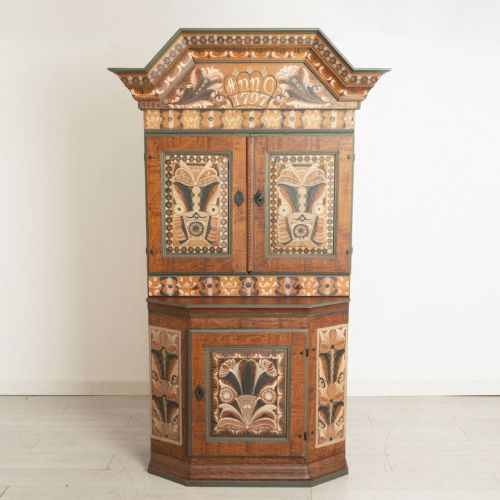
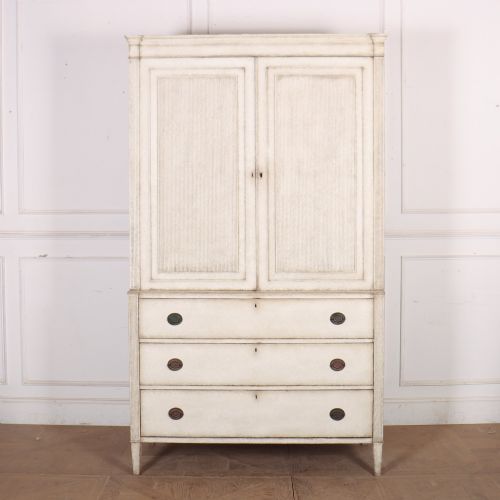
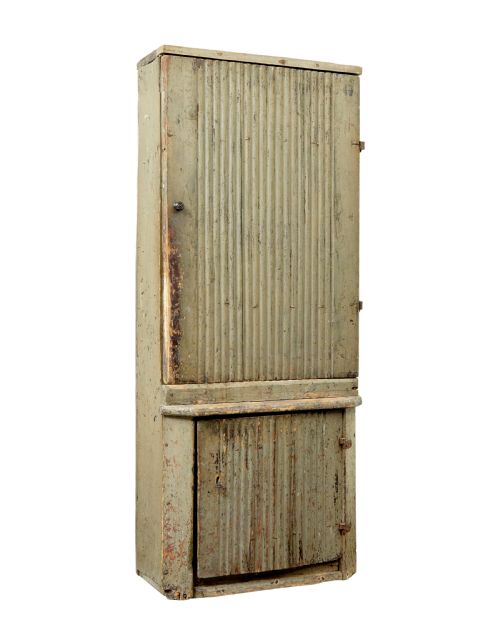
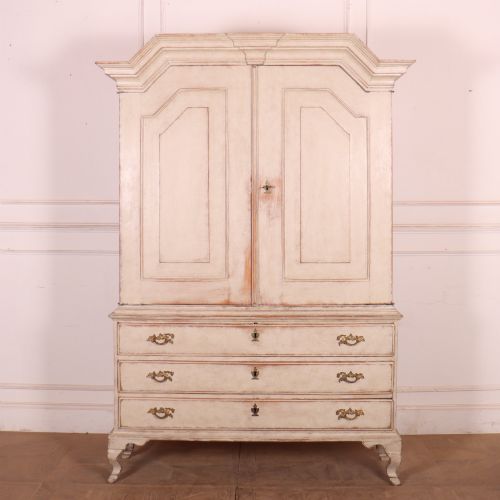
A swedish painted armoire encompasses large storage pieces such as linen cupboards, hall wardrobes, and double door cupboards originating from Scandinavian countries. These items serve as substantial focal points in domestic interiors, offering deep internal capacity alongside decorative surface character.
The pieces on this page span the eighteenth and nineteenth centuries, with examples appearing from both the Georgian period and Scandinavian traditions. Forms range from simple single door cupboards to grander double door linen cupboards and cupboards raised on stands.
What varies in quality
Quality rests upon the preservation of the original painted surface and the subtlety of folk art or Gustavian details. Pieces showing authentic hand-painted decoration and period ragwork demonstrate higher artistic merit than later or simpler reinterpretations.
Structural integrity of the pine carcase and the retention of original iron or brass fittings influence the overall desirability. The proportion between the architectural mouldings and the painted body determines the visual balance of each individual cabinet.
Swedish Painted Armoire Retail Price Guide 2026
Typical asking prices for swedish painted armoire among the pieces listed under this phrase on Sellingantiques today, from the lower quarter to the upper quarter. They describe what is for sale here now, not the wider market.
Some nineteenth-century pine cupboards carry traces of bright folk pigments hidden inside their doors, left behind by painters who tested colours away from public view.
The Swedish Painted Armoire Glossary
- Gustavian
- A Swedish neoclassical style characterised by restrained symmetry, pale painted finishes, and classical carved motifs. This style draws inspiration from French Louis XVI design adapted to Scandinavian tastes.
- Ragwork
- A decorative painting technique where cloths or rags are used to apply or texture paint onto a surface. It creates mottled, broken colour effects typical of traditional folk furniture.
- Pine
- A soft timber extensively used throughout Scandinavia for carcase construction and interior shelving. Its lightweight yet durable nature made it the standard material for painted case furniture.
- Folk art
- Decorative painting and carving executed by regional craftspeople rather than formal academic artists. It incorporates local motifs, vibrant pigments, and traditional patterns unique to specific districts.
Swedish Painted Armoire: Frequently Asked Questions
How do I use a swedish painted armoire today?
These large cupboards work exceptionally well in bedrooms for hanging garments and storing folded linens. Their generous internal depth also suits use in hallways or living spaces for general household storage.
The decorative painted exterior allows the piece to function as a primary visual anchor in a room. Interior shelving or hanging rails can be adapted to suit modern organisational needs without altering the historic exterior.
What periods do these painted cupboards come from?
The pieces available originate predominantly from the eighteenth and nineteenth centuries, alongside examples associated with the Georgian era. Construction methods and decorative motifs generally align with these broader historical periods.
Stylistic markers such as Gustavian symmetry or folk art ragwork help contextualise the age of the piece. Cabinet forms range from early carved pine designs to later nineteenth-century double door formats.
How do I care for antique painted wood?
Protect painted surfaces from direct sunlight and steady heat sources to prevent the historic paint layers from drying out or cracking. Dust gently with a dry, soft cloth and avoid chemical cleaning agents.
Maintaining a stable room temperature and humidity level preserves both the pine timber and the fragile painted finishes. Periodic light waxing can protect unpainted internal pine sections.
What is the difference between a linen cupboard and a wardrobe?
Linen cupboards traditionally feature internal shelving designed specifically for stacking folded textiles and household linens. Wardrobes and hall armoires typically prioritise vertical hanging space for garments.
Many Scandinavian cupboards feature double doors opening to reveal flexible interior configurations that can accommodate both hanging and shelving. Depth dimensions vary according to whether the piece was built for bulky bedding or coats.