






Swedish Gustavian Console
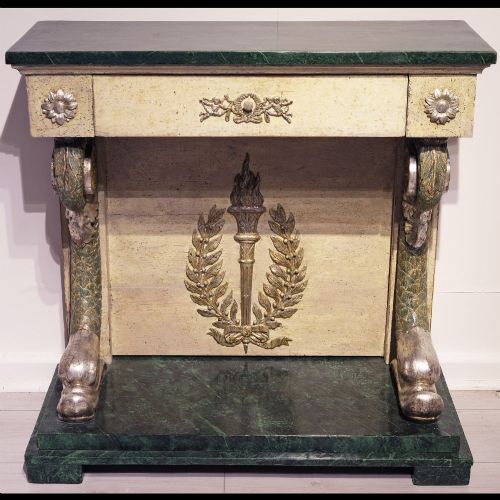
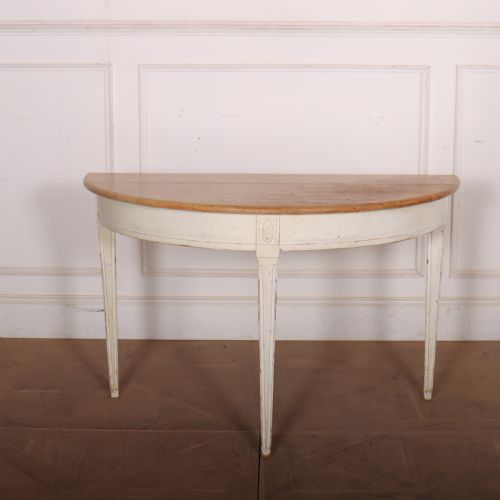
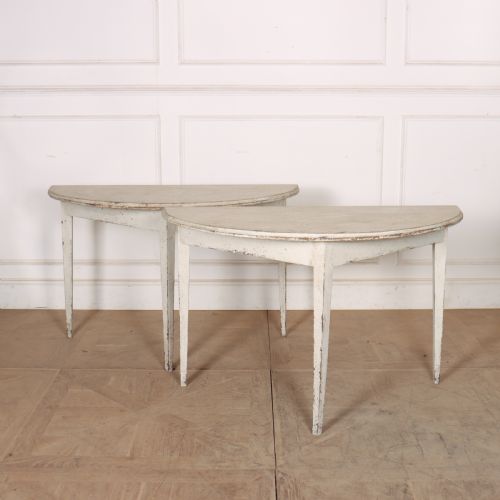
These Swedish Gustavian console tables bring restrained neoclassical elegance and pale painted surfaces to an interior.
Swedish Gustavian Console
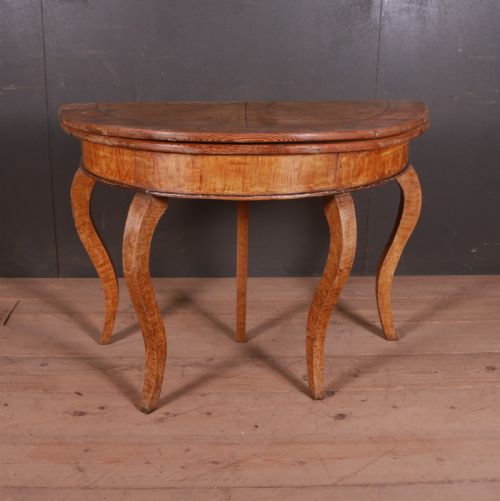
When you search for a swedish gustavian console, you look at items spanning the eighteenth century through to the Edwardian period, alongside related side tables, writing desks and centre tables. The most common form on this page is the demi-lune console table, frequently appearing in pairs.
The aesthetic draws heavily on Gustavian, Scandinavian Country, Swedish Rococo and Swedish Empire styles. Makers and workshops adapted continental neoclassical design into a lighter, distinctly Nordic vocabulary that suits modern and traditional rooms alike.
Materials and construction
These pieces are built primarily from pine and other woods, finished with layered paint, gesso and occasionally gold leaf. Surfaces often display scraped paint effects or traditional painted treatments over softwood carcasses.
Many examples incorporate marble tops set within wooden frames. Brass mounts and decorative details occasionally complement the carved wooden ornament.
Swedish Gustavian Console Retail Price Guide 2026
Typical asking prices for swedish gustavian console among the pieces listed under this phrase on Sellingantiques today, from the lower quarter to the upper quarter. They describe what is for sale here now, not the wider market.
Listings feature pine and painted wood constructions alongside marble tops and gilded gesso details across multiple centuries.
Assessing quality and character
The distinction between pieces rests on the handling of the painted finish, the crispness of the carved detail and the presence of original marble tops. Pieces attributed to documented makers command particular attention for their cabinetmaking standard.
Age and untouched surface patination drive interest, particularly where early paint layers survive beneath later coats. The proportion and symmetry of demi-lune forms also dictate the visual strength of each table.
Jonas Frisk
The Swedish Gustavian Console Glossary
- Demi-lune
- A half-moon shape used for console tables designed to stand flat against a wall.
- Gustavian
- The Swedish neoclassical style spanning the late eighteenth and early nineteenth centuries, characterised by restrained geometric forms and pale colours.
- Gesso
- A plaster-like mixture applied to wood surfaces to prepare them for painting or gilding.
- Scraped pine
- Wood finishes where later paint layers are partially removed to reveal older historic colours underneath.
Swedish Gustavian Console: Frequently Asked Questions
Where should I place a console table?
These tables sit comfortably in hallways, living rooms or dining spaces against a flat wall. Demi-lune shapes fit well in narrower areas where floor space is limited.
Pairs of consoles can be arranged symmetrically beneath mirrors or windows to create a balanced focal point in a reception room.
How do I care for painted wooden surfaces?
Dust regularly with a soft, dry cloth and avoid harsh chemical cleaners that might damage historic paint layers. Keep wooden furniture away from direct heat sources and strong sunlight.
Use coasters or protective pads under objects placed on marble or wooden table tops to prevent surface scratches.
Are these tables suitable for everyday use?
Most pieces function well as side tables, lamp tables or writing desks depending on their specific form. Writing tables and centre tables provide practical surfaces for daily tasks.
Care should be taken with delicate antique paintwork and antique marble surfaces during normal household use.
How can I tell the period of a table?
Dating relies on construction methods, timber types and the characteristics of the painted or gilded decoration. Eighteenth-century and early nineteenth-century pieces display different proportions compared to later nineteenth-century interpretations.
Stylistic shifts range from the early Gustavian neoclassical restraint through to later nineteenth-century revivals and Edwardian craftsmanship.