




Swedish Birch Chairs
Swedish birch chairs bring warmth and striking grain to a room, offering both sturdy seating and sculptural elegance rooted in northern European design traditions.
Swedish Birch Chairs
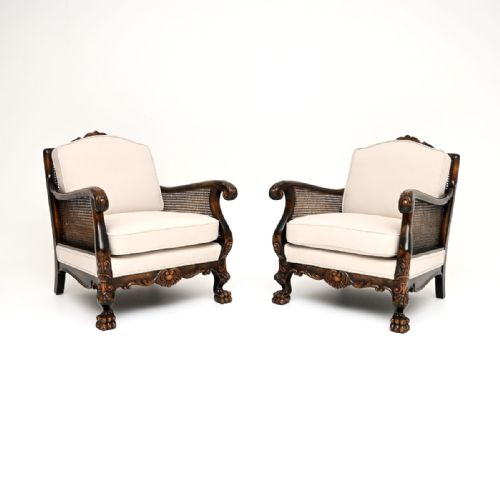
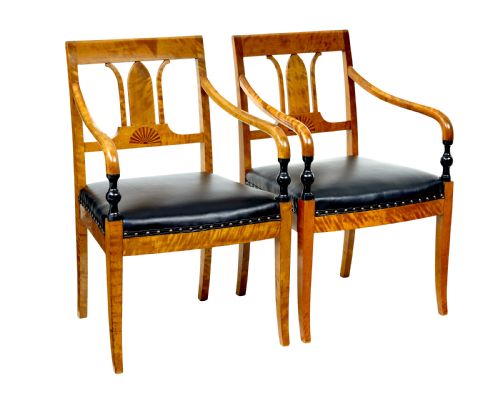
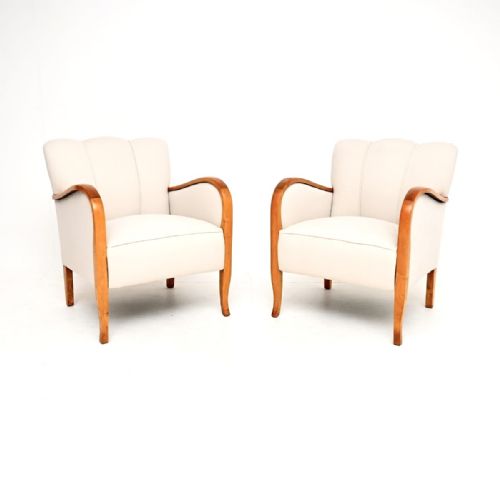
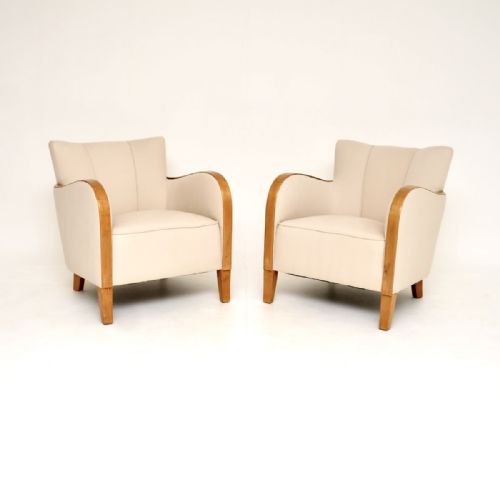
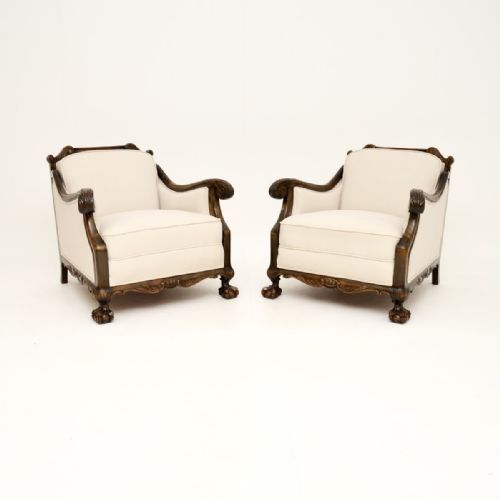
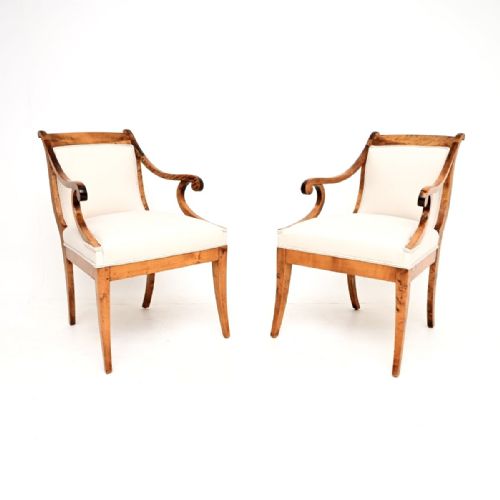
When you search for Swedish birch chairs, you encounter seating ranging from the nineteenth century through the Art Deco period. The selections primarily feature armchairs, often presented in pairs, alongside occasional sofas and settees.
The aesthetic shifts across distinct eras, moving from the classical restraint of the Swedish Empire and Karl Johan periods to the robust curves of Biedermeier and the streamlined geometry of Art Deco. Birch and satin birch dominate the visual language, frequently paired with contrasting ebonised wood or elm details.
Most pieces available lean heavily toward twentieth-century Art Deco interpretations and nineteenth-century Biedermeier forms. These chairs serve as functional focal points that ground a contemporary interior with pale timber tones and tactile upholstery.
Materials and construction
Cabinetmakers utilised birch, satin birch, and burr birch veneers to create luminous, highly figured wooden surfaces. Secondary timbers such as elm appear alongside ebonised wood accents to define structural borders and architectural outlines.
Upholstery fabrics, leather, and woven cane provide the seating surfaces and backrests, integrating traditional padding techniques with exposed wooden frames. Carved elements and bentwood profiles demonstrate the versatility of birch in shaping sculptural chair arms and crest rails.
Swedish Birch Chairs Retail Price Guide 2026
Typical asking prices for swedish birch chairs among the pieces listed under this phrase on Sellingantiques today, from the lower quarter to the upper quarter. They describe what is for sale here now, not the wider market.
Listings span the nineteenth century, including the 1860s and 1880s, alongside twentieth-century eras such as the 1920s and 1930s.
Assessing quality and craftsmanship
The distinction between standard examples and the finest pieces rests upon the selection of timber veneers. Master craftsmen chose intensely figured satin birch and burr birch, laying out the grain patterns to create symmetrical, mirror-image effects across the chair backs and armrests.
Structural integrity and the subtlety of carved or ebonised details further separate ordinary seating from exceptional items. The crispness of the joinery and the harmonious balance between upholstered areas and exposed wood reveal the skill of the original workshop.
The Swedish Birch Chairs Glossary
- Satin birch
- A timber featuring a natural luminescence and fine grain pattern, highly prized by Scandinavian cabinetmakers for decorative veneer work. This wood reflects light softly and forms the primary visual identity of many northern European seats.
- Biedermeier
- A influential nineteenth-century central and northern European design style focused on utilitarian comfort and clean lines. Pieces from this period emphasise polished timber surfaces over excessive ornamentation.
- Karl Johan
- A Scandinavian neoclassical style spanning the early nineteenth century, drawing inspiration from French Empire design. It bridges heavier classical forms and the lighter, domestic comfort of later decades.
- Ebonised wood
- Timber treated to imitate ebony, providing dark, dramatic contrasts against pale birch frames. Makers used this technique to highlight architectural profiles and decorative borders.
- Bergère
- An enclosed upholstered armchair with wooden framing, offering comfortable seating with padded armrests. This classic form appears frequently in twentieth-century Scandinavian interpretations.
Swedish Birch Chairs: Frequently Asked Questions
How do I identify Swedish Art Deco chairs?
Swedish Art Deco pieces from the early twentieth century typically display clean geometric lines, club chair silhouettes, and prominent satin birch or elm veneers. They eschew heavy nineteenth-century ornamentation in favour of streamlined, functional forms.
The woodwork often highlights the natural blonde tones and dynamic movement of the grain, occasionally paired with leather or modern fabric upholstery.
What is Biedermeier furniture?
Biedermeier design originated in the nineteenth century, prioritising domestic comfort, warm wood tones, and restrained elegance. Chairs from this movement feature smooth surfaces and graceful curves rather than complex carving.
These pieces integrate easily into modern spaces due to their unpretentious proportions and the glowing quality of the birch timber.
How should I care for satin birch surfaces?
Satin birch and burr birch benefit from minimal interference, requiring only a soft, dry cloth for dusting. Avoid placing antique timber furniture in direct sunlight or near heat sources to prevent the wood from drying out.
Applying a specialist wax occasionally helps nourish the grain and maintains the subtle sheen characteristic of Scandinavian cabinetwork.