
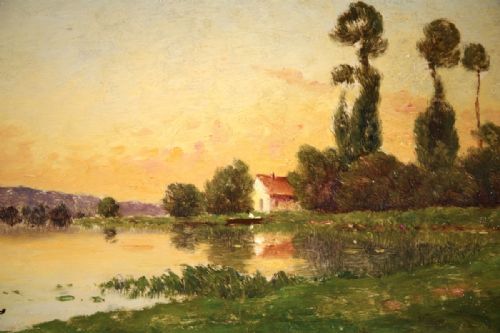


Sunset Landscape Oil
When you search for sunset landscape oil, you find painted evocations of evening light created across the nineteenth and twentieth centuries.
Sunset Landscape Oil
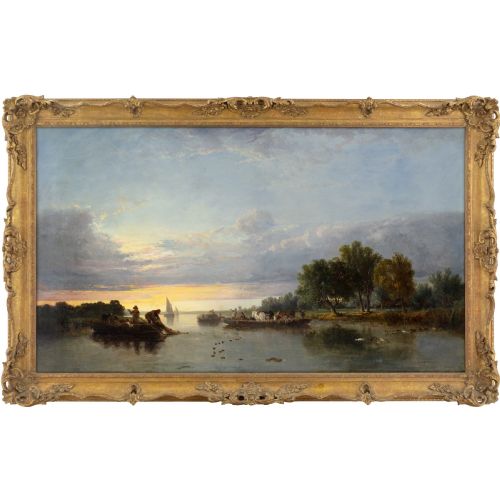
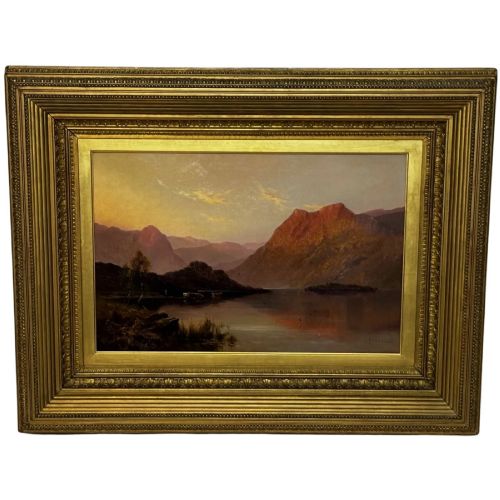
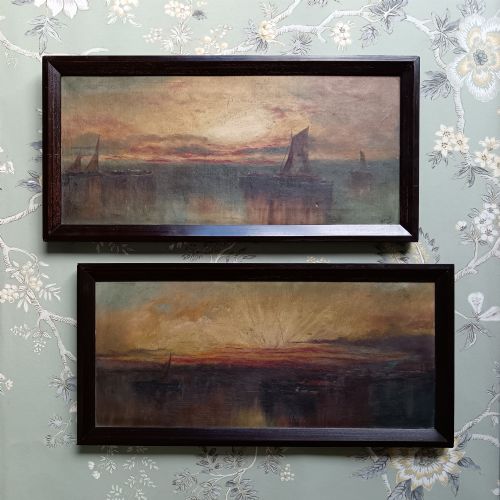
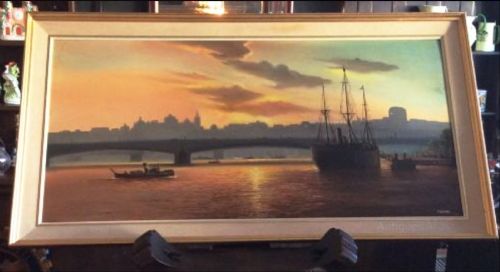
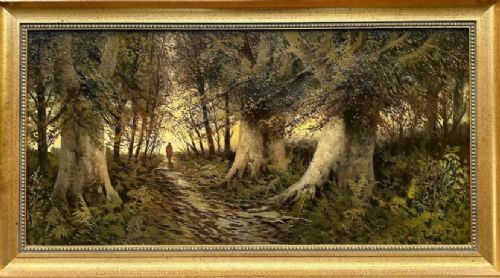
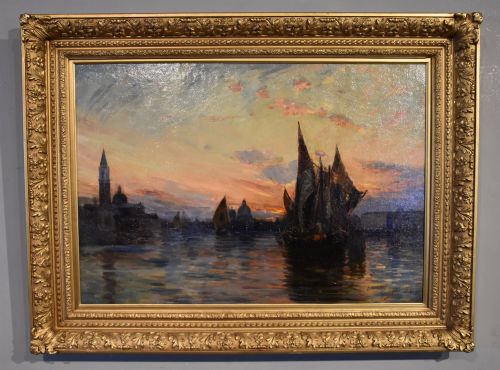
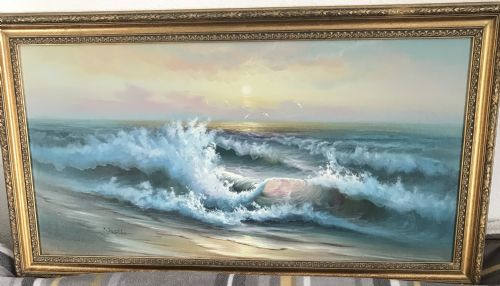
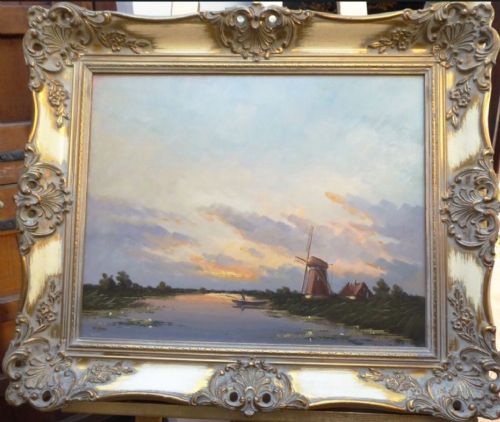
A sunset landscape oil captures the fading light of day across rivers, coastal waters, highland lochs, and rural fields. These paintings range from Victorian academic works to British Impressionism and mid-century scenes.
The subjects span British estuaries, Dutch flatlands, Venetian waterways, and mountainous terrain, rendered in oil paint on canvas, board, or panel.
Edwardian and Victorian canvases frequently depict figures by rivers or coastal marshes at dusk, while mid-century examples lean toward broader atmospheric effects.
How They Were Made
Artists built these compositions using oil paint applied to stretched canvas, wood panels, or board, often layering pigment to capture the warm hues of evening.
Many surviving examples retain their original gesso and giltwood frames, which provide structural support and complement the tonal palette of the artwork.
Framing materials include original gesso and giltwood alongside later mouldings that house coastal and rural views.
What Varies in Quality
Quality rests in the handling of light and atmospheric depth, where the best examples capture the distinct amber glow of dusk through confident brushwork rather than formulaic blending.
The relationship between the painted landscape and its original frame matters greatly, as period giltwood enhances the visual weight and historical context of the canvas.
Alfred Fontville de Breanski Jr·Thomas W Lascelles·Thomas Hodgson Liddell·George Vicat Cole·David Watts·Frank Hider·Roger de la Corbiere·Arthur Winter Shaw·Walter Williams·Herbert Royle·William Langley·Henry H Parker·Daniel Sherrin·Charles Pettitt·Samuel Bough·Henry Cooper·William Burns·Ada Stone·Robert Gallon·August Van Hier·Anders Wahlgren·Prudence Turner·William Manners·Paul Fenton
The Sunset Landscape Oil Glossary
- Oil paint
- A slow-drying medium consisting of pigments suspended in a drying oil, usually linseed, which allows artists to blend tones smoothly.
- Gesso
- A plaster-like mixture applied to canvas or wood panels to prepare a smooth surface for oil painting.
- Giltwood
- Wood carved and coated with gold leaf, commonly found on period picture frames.
- Impressionism
- A style of painting emphasising spontaneous brushstrokes and the shifting effects of natural light.
- Provenance
- The documented history of ownership of an artwork, establishing its authenticity and origin.
Sunset Landscape Oil: Frequently Asked Questions
How do I identify the period of a sunset landscape oil?
Dating relies on stylistic clues, canvas preparation, and framing techniques. Victorian and Edwardian works often feature detailed brushwork and ornate giltwood surrounds.
Mid-century examples tend toward looser application of oil paint, reflecting broader shifts in landscape painting traditions.
Where should I hang a sunset landscape oil?
These works suit rooms with controlled natural light that complements the warm tones of the evening palette. Avoid placing oil paintings in direct sunlight or damp environments.
Pairing the canvas with a sympathetic period frame helps anchor it visually within a traditional or modern interior.
What subjects are common in these paintings?
Common motifs include Scottish lochs, Welsh coastal views, Thames bridges, and rural harvest fields at dusk. Figures such as lone walkers, farm workers, or fishermen frequently appear in the foreground.
Maritime scenes involving sailing vessels and coastal tides also feature prominently across the collection.
Are these paintings executed on canvas or board?
Both supports appear across the selection, with oil on canvas being the most widespread format. Wood panels and rigid boards also serve as the foundation for numerous nineteenth-century and twentieth-century works.
The choice of support often aligns with the scale of the composition and the date of execution.