

Study Desk with Drawers
A study desk with drawers provides a practical workspace, uniting traditional craftsmanship with useful storage.
Study Desk with Drawers
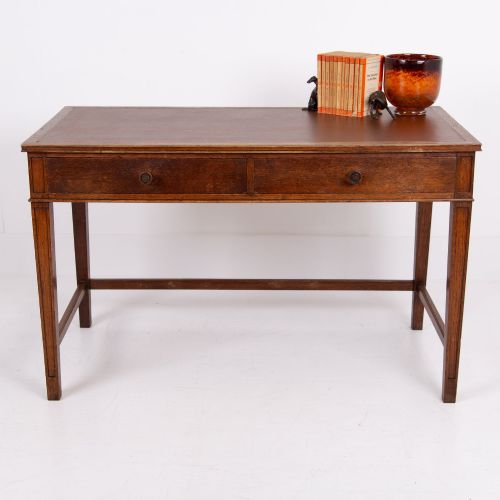
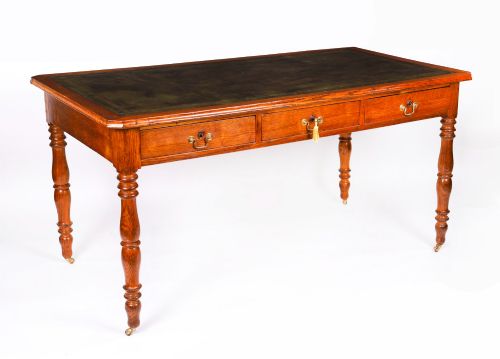
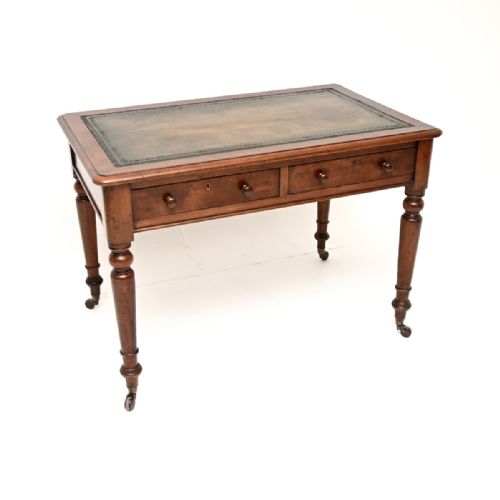
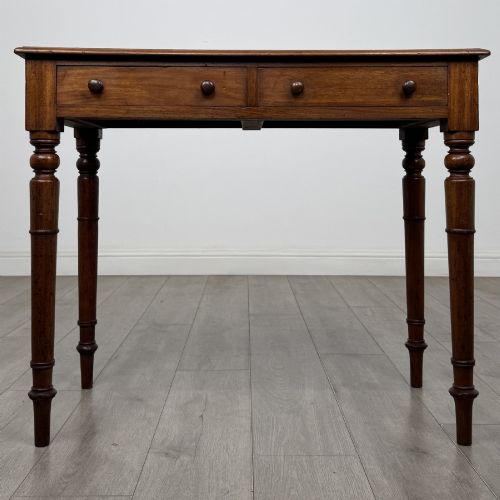
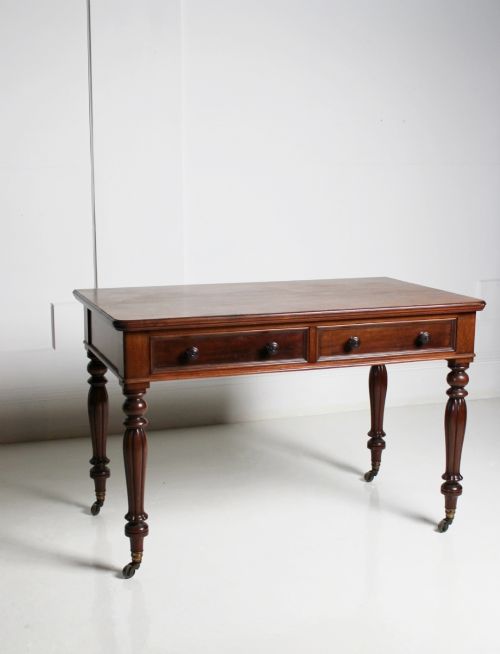
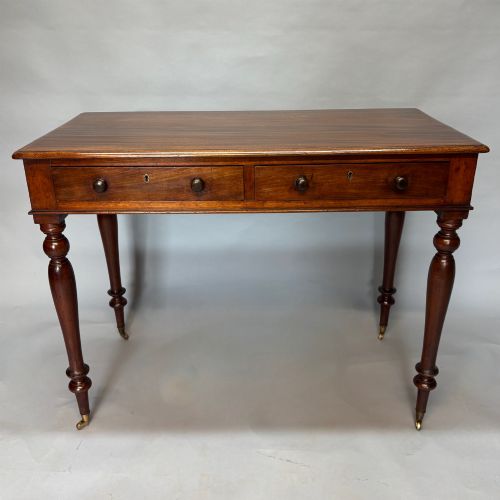
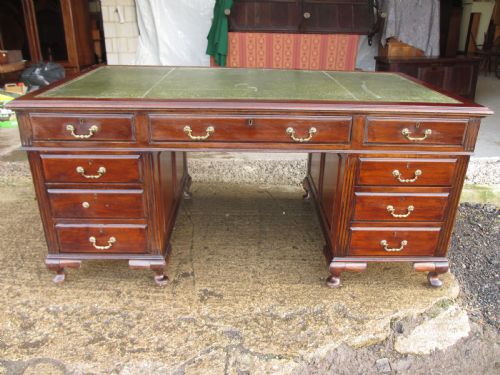
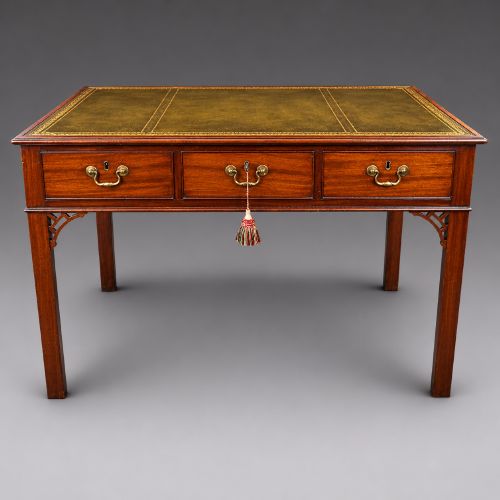
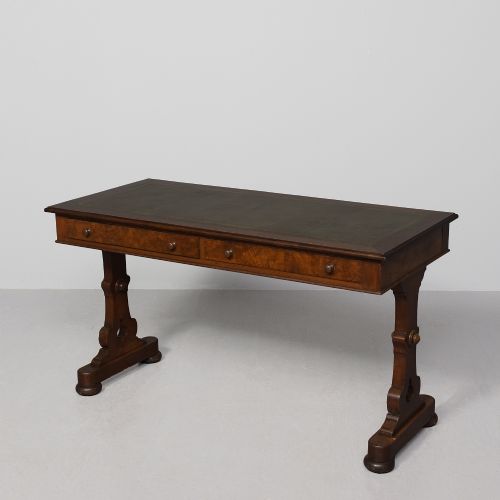
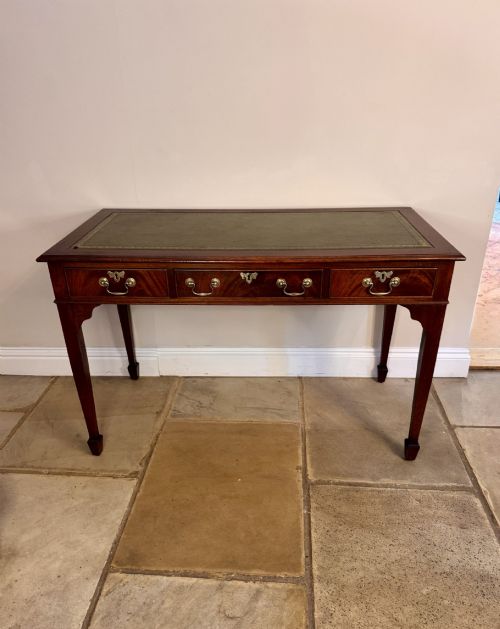
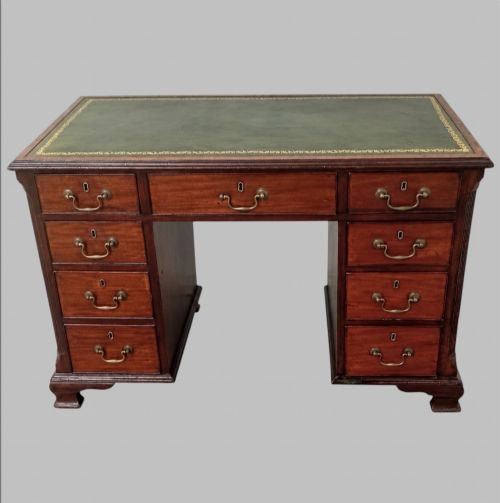
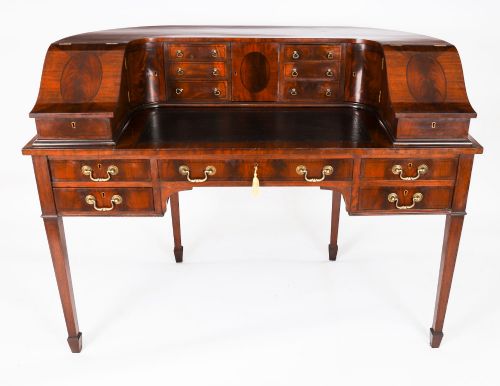
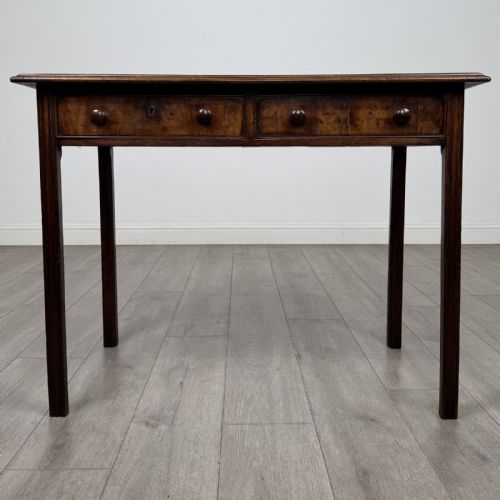
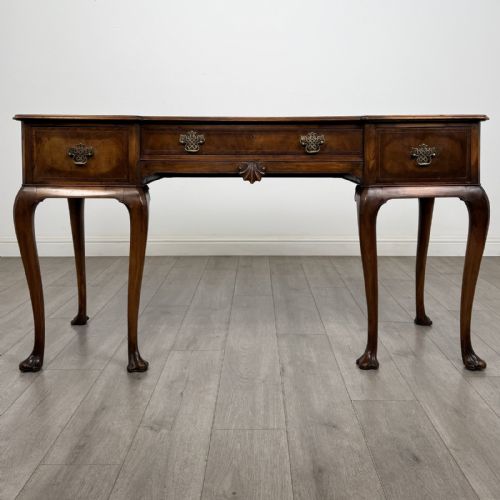
A study desk with drawers appears primarily in Victorian and Edwardian iterations, alongside Georgian, Regency, and William IV examples. These pieces range from compact writing tables with single rows of drawers to substantial pedestal desks featuring multiple side drawers and kneeholes.
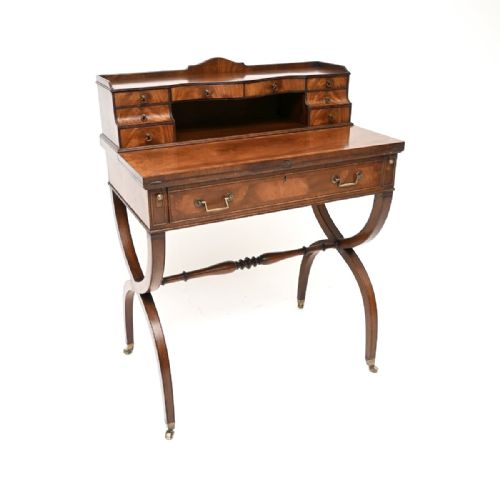
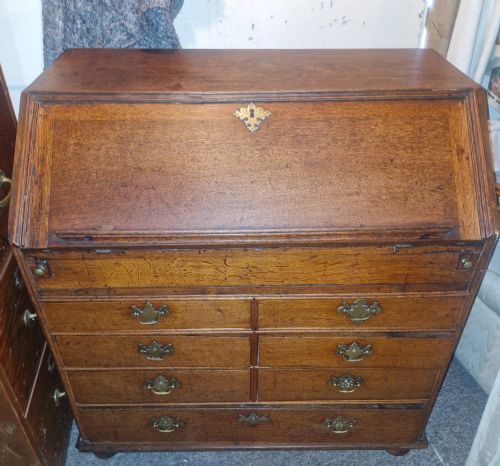
Makers often utilised mahogany, oak, and walnut, sometimes incorporating burr walnut, satinwood, or birds-eye maple. Structural variations include raised galleries, fitted stationery compartments, and integrated writing slides designed for daily correspondence.
The selection encompasses freestanding library tables, Davenport desks, and bureau forms suited to domestic studies and home offices. Each version preserves the fundamental utility of surface space combined with concealed or open storage compartments.
Materials and construction
Cabinet makers constructed these desks using solid timbers like oak and mahogany, often applying flame mahogany veneers or marquetry inlay to primary surfaces. Brass hardware, including swan neck handles and drawer pulls, provides functional contrast to the dark timber.
Writing surfaces frequently integrate inset leather panels, bordered by blind tooling or gilt decoration. Secondary woods form the internal linings of dovetailed drawer boxes, ensuring durability during daily use.
Study Desk with Drawers Retail Price Guide 2026
Typical asking prices for study desk with drawers among the pieces listed under this phrase on Sellingantiques today, from the lower quarter to the upper quarter. They describe what is for sale here now, not the wider market.
Listings feature Victorian, Edwardian, and Georgian periods, utilising mahogany, oak, walnut, satinwood, and brass.
Defining quality
Design sophistication distinguishes standard utility items from superior pieces produced by established workshops or noted retailers. The proportion of the pedestal structure, the crispness of carved pillars, and the retention of original brass hardware elevate the standing of an individual desk.
Maple and Co·Gillows·Hobbs and Co·Heals of London
The Study Desk with Drawers Glossary
- Pedestal desk
- A heavy office or library desk supported by two banks of drawers flanking a central kneehole. This form offers substantial storage capacity beneath a primary writing surface.
- Davenport
- A compact writing desk featuring a sloping top above a bank of side drawers. Originating in the late eighteenth century, this form balances economy of space with enclosed storage.
- Writing slide
- A pull-out shelf housed immediately beneath the main writing surface. It extends to provide auxiliary space for inkwells or temporary documents.
- Library table
- A large freestanding table fitted with frieze drawers, finished on all sides for placement in the centre of a room. These pieces served scholarly purposes in period homes.
- Marquetry
- The art of applying decorative veneer pieces onto a structural base to form geometric or pictorial patterns. Craftsmen utilised contrasting timbers to achieve ornamental detail.
Study Desk with Drawers: Frequently Asked Questions
Where do I place a pedestal desk?
Freestanding pedestal desks are designed to sit in the centre of a room with finished backs exposed to view. Smaller writing tables fit comfortably against walls or within modest home office spaces.
Consider the clearance needed for chair movement and drawer access when positioning your desk within the room.
How do I maintain leather writing surfaces?
Inherent oils in traditional leather inserts require periodic conditioning to prevent drying and cracking over time. Gentle dusting with a dry cloth preserves the gilt tooling along the borders.
Avoid placing moisture-heavy items directly on the leather surface to protect the underlying timber and hide.
What is a kneehole desk?
A kneehole desk incorporates a recessed central space beneath the writing surface, allowing the user to sit squarely before the drawers. Flanking pedestals contain stacked drawers for storage.
This configuration balances workspace availability with accessible storage on both sides.
How do I distinguish Edwardian from Victorian desks?
Victorian desks generally employ heavier proportions, dark mahogany, and robust brass hardware such as swan neck handles. Edwardian pieces often display lighter satinwood, delicate inlay, or painted decoration.
Construction methods and timber selection offer reliable clues for dating individual pieces.