

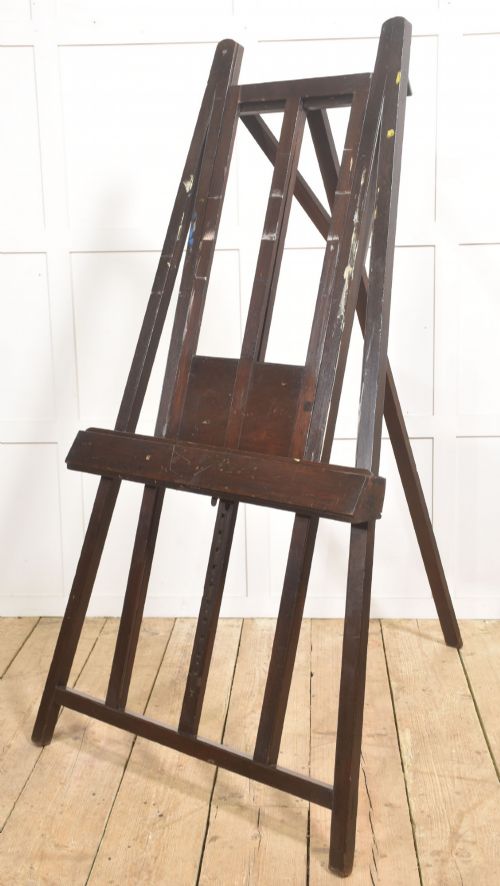


Studio Easel Stand
A studio easel stand holds a canvas steady while you paint or displays a finished picture.
Studio Easel Stand
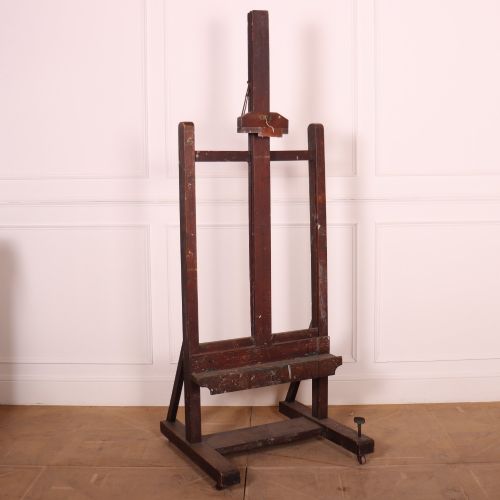
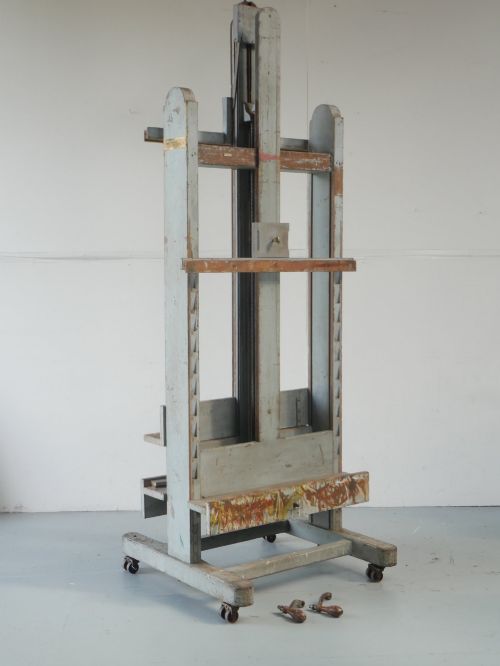
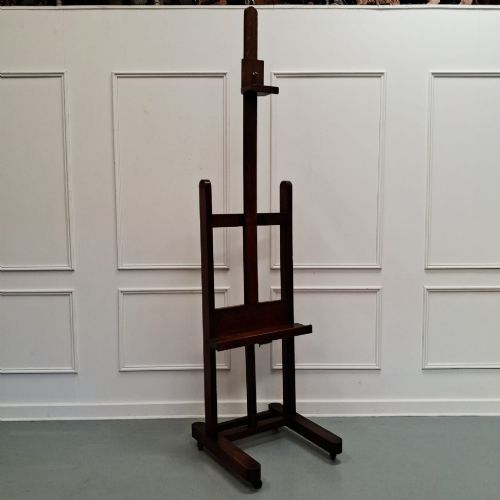
A studio easel stand is a heavy, functional piece of equipment designed to hold canvases upright for painters or to exhibit framed artwork in a room. When you search for this phrase, you find substantial wooden structures built to bear weight and withstand the rigours of daily artistic work.
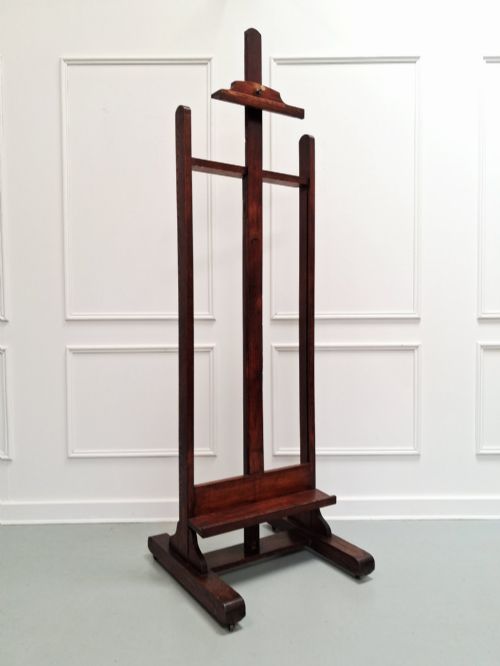
The versions you meet most frequently on this page date from the nineteenth century up to the nineteen-thirties, constructed predominantly in oak or mahogany. They range from large floor-standing models with adjustable mechanisms to smaller tabletop and display variations.
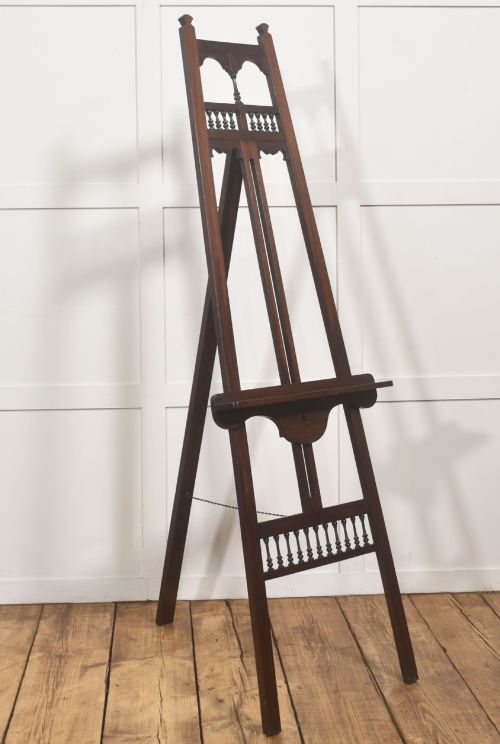
Many examples reflect specific historical styles such as Victorian, Edwardian, or French Provincial, bringing decorative presence alongside practical utility. Whether configured as double-sided gallery boards or ornate floor stands, these pieces serve both working artists and collectors.
How they were made
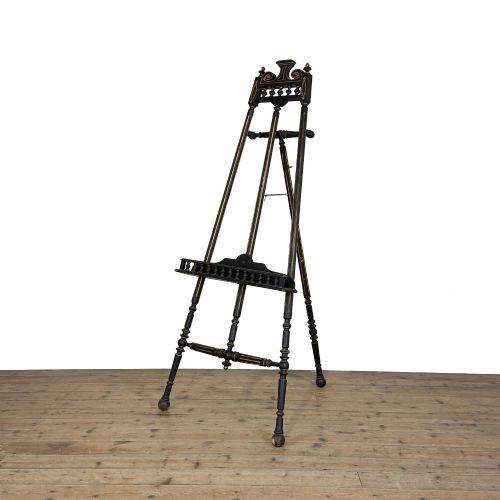
Makers utilised dense hardwoods such as oak, mahogany, walnut, and pitch pine to ensure the framework remained rigid under heavy loads. Ebonised wood and metal components also appear, providing structural support and contrasting decorative finishes.
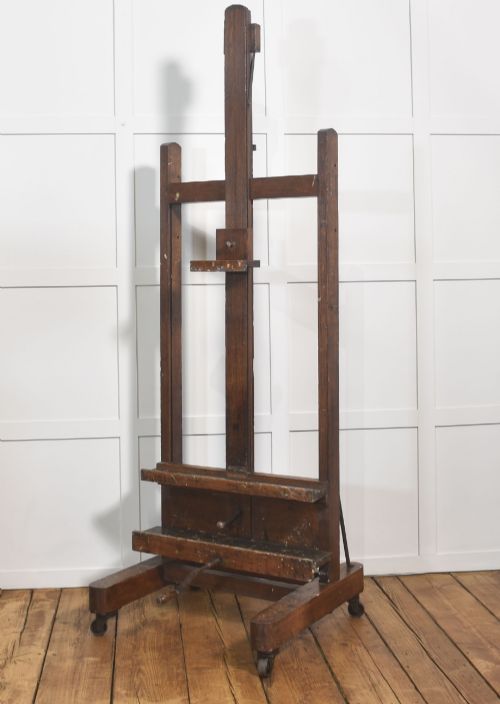
Joinery techniques relied on sturdy framing to accommodate mechanical adjustments like winder handles, sliding brackets, and peg supports. These moving parts allowed artists to raise, lower, and tilt canvases with precision.
Studio Easel Stand Retail Price Guide 2026
Typical asking prices for studio easel stand among the pieces listed under this phrase on Sellingantiques today, from the lower quarter to the upper quarter. They describe what is for sale here now, not the wider market.
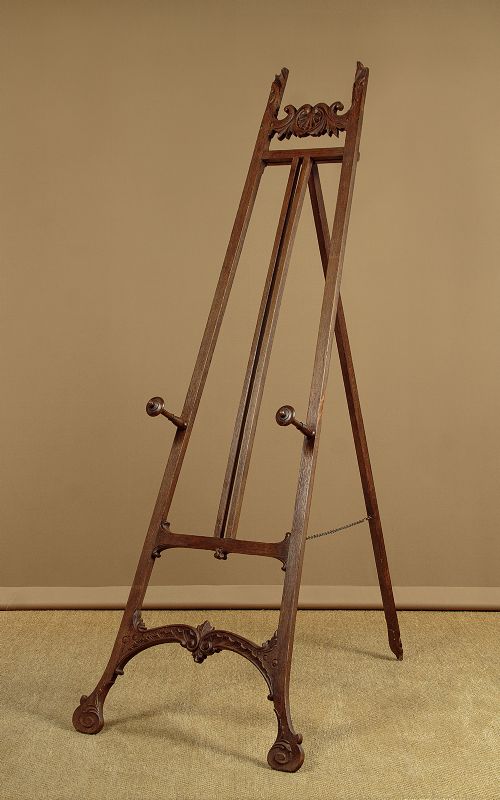
Design styles represented include Victorian, Edwardian, Rococo Revival, Aesthetic Movement, and French Provincial.
What varies in quality
The distinction between standard utility items and superior examples lies in the complexity of the adjustment mechanisms and the grade of timber selected. Fully adjustable designs with brass winding gear and elaborate carved details represent the upper tier of production.
The integrity of the frame and the smoothness of the moving parts dictate the overall standard. Pieces retain greater appeal when original brass fittings, winding handles, and castors survive intact.
Windsor and Newton
The Studio Easel Stand Glossary
- Chevalet
- French term for an easel. It frequently appears in descriptions of nineteenth-century continental artists' stands.
- Gallery easel
- A heavy-duty stand designed to display multiple framed pictures simultaneously. These often feature double-sided boards for exhibition use.
- Ebonised wood
- Timber treated with a dark stain or chemical finish to resemble ebony. This treatment was particularly popular during the Victorian and Aesthetic periods.
- Pitch pine
- A durable softwood with prominent grain patterns utilised in French stands. It offered strong structural support for floor-standing frames.
- Rococo Revival
- A nineteenth-century design style characterised by ornate, asymmetrical scrollwork and carved ornamentation. It surfaces on decorative display stands from the era.
Studio Easel Stand: Frequently Asked Questions
How do I adjust the height?
Most floor-standing models use a system of wooden pegs, notches, or brass winding handles connected to a carriage. Turning the handle or shifting the peg moves the central bracket up or down.
Heavier nineteenth-century frames require you to support the weight of the canvas carrier while releasing the locking mechanism to prevent sudden slipping.
Can I use these for display?
Many of these pieces function well for displaying framed paintings, mirrors, or large photographs in a domestic setting. Gallery and display variations are specifically configured for presentation rather than active painting.
Floor-standing and tabletop formats both accommodate finished artworks securely, provided the ledge depth matches the frame thickness.
How do I date an easel?
Dating relies on timber selection, mechanical fittings, and stylistic ornamentation. Pieces from the early nineteenth century often feature dense mahogany, while later Victorian and Edwardian examples frequently utilise oak with cast iron or brass hardware.
Mouldings and carved details corresponding to periods like the Aesthetic Movement or Rococo Revival further narrow the date of manufacture.
Are these suitable for modern canvases?
Sturdy floor-standing models easily accommodate standard modern canvas sizes and heavy framed works. The adjustable brackets provide enough travel to hold various heights securely.
Tabletop versions suit smaller canvases, sketches, and photographs, offering a compact footprint for domestic display.