


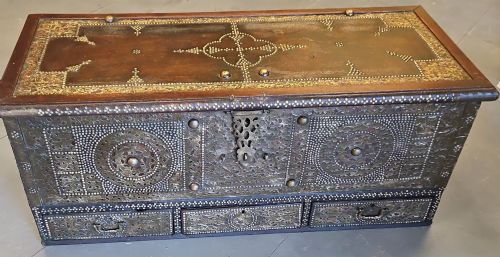


Studded Wooden Chest
A studded wooden chest brings together heavy timber and metalwork, offering robust storage with centuries of global craftsmanship behind it.
Studded Wooden Chest
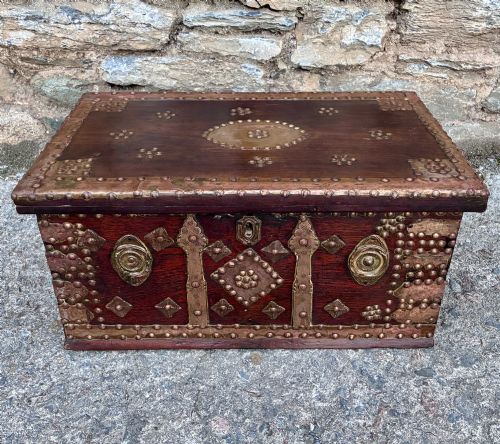
A studded wooden chest is a utilitarian storage container reinforced with metal fastenings and decorative studs, designed for security and transport. These pieces range from domestic blanket boxes to merchant coffers and travelling trunks.
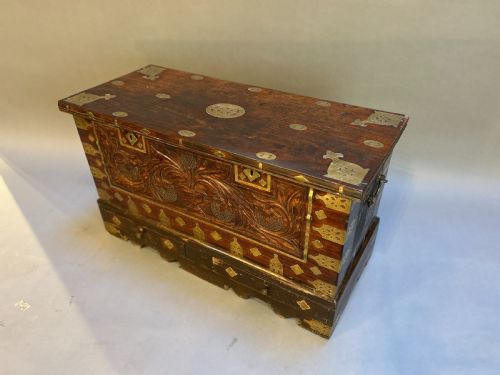
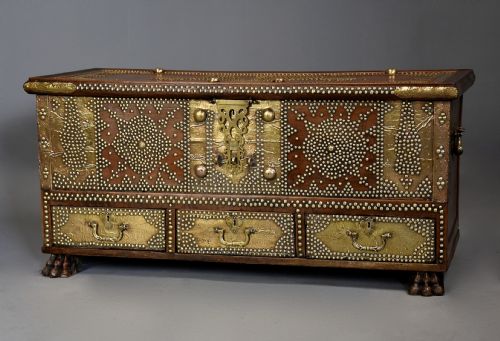
The versions most commonly met on this page are Zanzibar chests and colonial trunks originating from trade routes, alongside British pine, oak, and hardwood blanket boxes. They span the seventeenth century through to the early twentieth century.
Makers utilised resilient timbers such as teak, padouk, camphorwood, oak, and pine, often enhancing the timber body with elaborate brass or iron stud work, banding, and carrying handles.
How they were made
Construction relies on solid hardwoods and softwoods joined to withstand heavy use and long journeys. Woods like teak, padouk, rosewood, oak, and pine form the primary structure of these boxes.
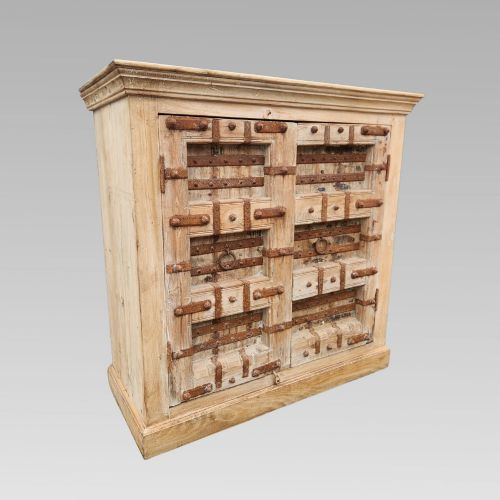
Metal reinforcement defines the group, utilising brass studs, iron bindings, and capped corners secured directly into the wood. Leather, hide, and paint also appear as surface coverings on specific regional travelling trunks.
Joinery methods vary from traditional dovetailing in domestic blanket boxes to pegged framing in heavier coffers, complemented by applied metalwork for structural rigidity.
Studded Wooden Chest Retail Price Guide 2026
Typical asking prices for studded wooden chest among the pieces listed under this phrase on Sellingantiques today, from the lower quarter to the upper quarter. They describe what is for sale here now, not the wider market.
A Japanese zenibako brought heavy coinage security into the mix, proving that even money boxes appreciated a sturdy wooden shell.
What varies in quality
Quality separates through the integrity of the timber and the complexity of the metal ornamentation. Dense tropical hardwoods or well-figured English oaks represent a higher standard than basic utility pine.
The execution of the brass stud work and iron binding dictates refinement, where dense, hand-punched patterns and substantial corner caps elevate a piece beyond plain functional storage.
Originality of surface finish and hardware preservation distinguish superior survivals from pieces that have undergone extensive timber replacement or later metal additions.
Seabrook of St Pauls
The Studded Wooden Chest Glossary
- Zanzibar chest
- A distinct type of heavy hardwood trunk featuring intricate brass studding, strapwork, and often central drawer configurations, historically associated with East African trade. These chests served as valuable repositories for merchants.
- Cofer
- A large timber chest, often leather-bound or iron-banded, traditionally used for storing valuables and textiles. They typically feature heavy lids and robust carrying handles.
- Padouk
- A heavy, durable tropical hardwood with a distinctive reddish-brown hue, frequently utilised in nineteenth-century colonial furniture and trade chests. It resists decay and polishes to a fine lustre.
- Camphorwood
- An aromatic timber prized in trunk making for its insect-repellent properties. It was extensively used in maritime and colonial contexts to protect stored garments.
- Kist
- A traditional regional term for a heavy wooden storage chest or box, commonly constructed from pine or oak. They formed staple household furniture in British and Scandinavian vernacular interiors.
Studded Wooden Chest: Frequently Asked Questions
What is a Zanzibar chest?
A Zanzibar chest is a specific form of hardwood trunk decorated with brass studs, geometric patterns, and metal strapwork.
Originally built for maritime trade and domestic use in East Africa and the Indian Ocean, these chests are typically fashioned from dense timbers like padouk or teak.
How were these chests used?
These pieces served primarily for the secure storage and transport of valuables, documents, and textiles during travel.
In domestic settings, they functioned as blanket boxes, dowry chests, or general storage furniture within the home.
How do I care for a wooden chest?
Keep wooden chests away from direct heat sources and sudden humidity changes to prevent the timber from splitting.
Apply a traditional wax polish occasionally to nourish the wood surface without damaging the original metal studs and bindings.
How do I date a studded chest?
Dating relies on examining the construction methods, timber types, and the style of the metal studwork and hinges.
Earlier examples from the seventeenth and eighteenth centuries show hand-forged ironwork, while nineteenth-century pieces often display mass-produced brass studs and exotic colonial hardwoods.