
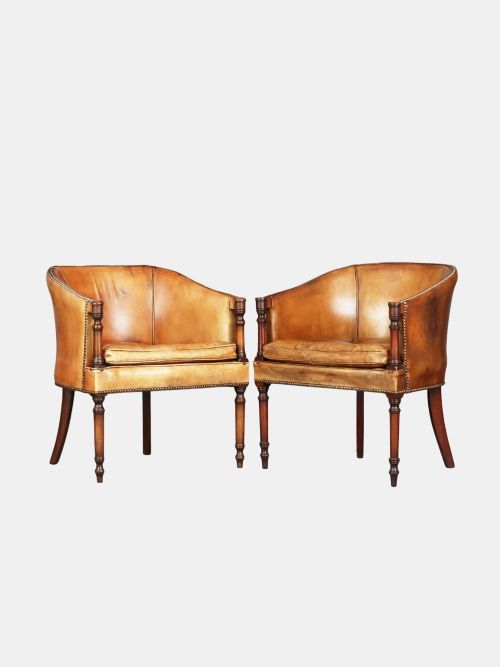


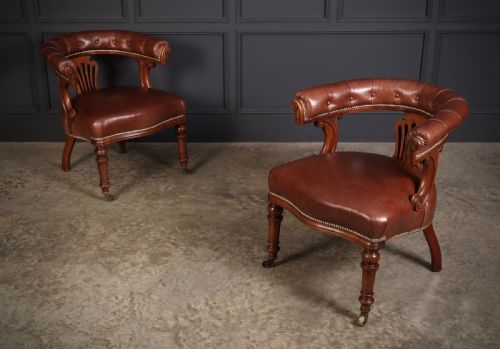


Studded Leather Tub Chair
A studded leather tub chair offers deep, curved comfort and sturdy support, grounding a study or library with character and warmth.
Studded Leather Tub Chair
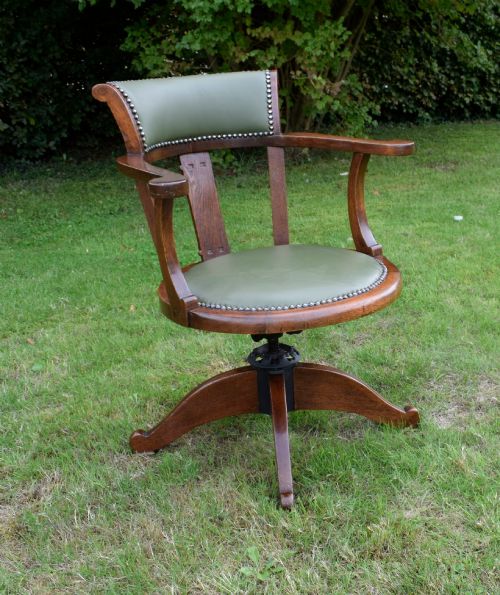
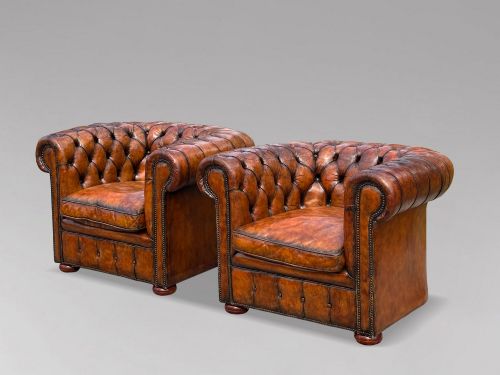
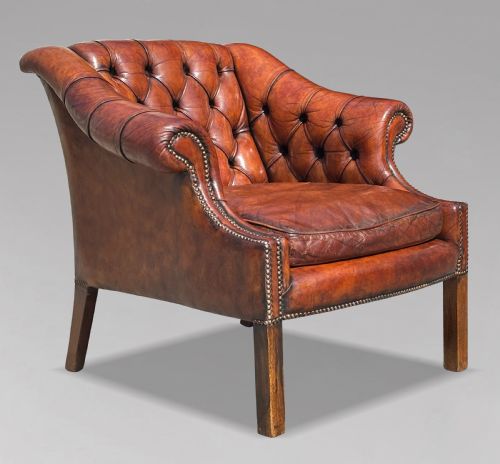
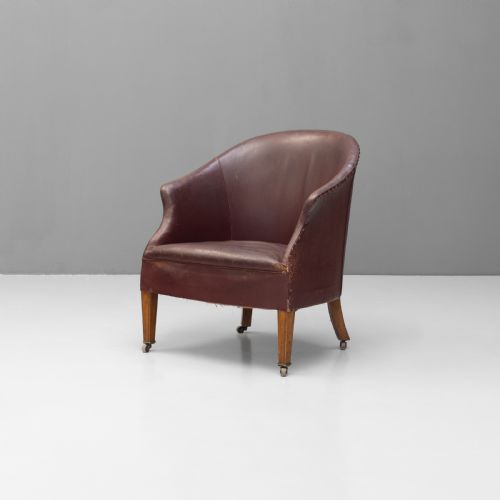
When you search for a studded leather tub chair, you encounter a variety of forms designed for comfort and utility in libraries, offices, and studies. The selection spans armchairs, desk chairs, and library chairs shaped by Victorian, Edwardian, and Art Deco traditions. Most examples you meet on this page date from the nineteenth and early twentieth centuries, reflecting the robust seating demands of those eras.
The silhouettes range from compact tub shapes and horseshoe frames to swivel desk chairs and low club armchairs. These pieces often feature continuous curved backs that cradle the sitter, resting on timber frames of mahogany, oak, walnut, or beech. The origins lean toward traditional British and European seating forms, utilising rich patinated hides secured with metal fastening.
While some pieces serve as executive desk chairs with swivelling mechanisms, others function as low library chairs meant for quiet reading. You will find both single occasional chairs and paired club armchairs bearing the characteristic brass nail trim along the seams. Each variation demonstrates how nineteenth and twentieth-century makers adapted the basic tub form for different domestic and professional rooms.
Materials and construction
Makers constructed the primary frames of these chairs using durable hardwoods such as mahogany, oak, walnut, and beech. These timbers provided the necessary structural integrity to support the deep curves of a tub or horseshoe back. Joinery was executed with traditional methods to ensure stability under daily use.
Upholstery involved stretching cattle hide over supportive interior padding, finished by securing the edges with individual brass studs. These metal tacks not only held the leather firmly to the wooden frame but also provided a decorative border. Over decades of use, the combination of dense timber and dyed leather developed a distinctive surface wear and patina.
Materials span mahogany, oak, walnut, and beech paired with brown, tan, and burgundy leather.
Judging quality and character
Quality in these chairs rests upon the integrity of the timber frame and the depth of character in the leather. Superior examples display substantial hardwood construction that remains rigid at the joints, avoiding the looseness found in lesser pieces. The grain and natural ageing of the hide reveal whether a chair has acquired its patina through honest decades of use.
Attention to detail in the upholstery work distinguishes finer specimens from standard utility seating. Evenly spaced brass studs, well-proportioned curved backs, and balanced swivel or castor mechanisms indicate superior craftsmanship. The best pieces combine comfort with a coherent aesthetic that holds its presence in a room.
The Studded Leather Tub Chair Glossary
- Tub chair
- An armchair with a low, continuous curved back and arms forming a single enclosing unit. This design provides enclosed comfort and support.
- Hide
- The natural leather pelt used to upholster the seat and back. It develops a rich patina over time.
- Captain's chair
- A sturdy wooden armchair, often featuring a low spindle or solid curved back and a leather upholstered seat. They are frequently adapted for desk use.
- Patina
- The surface sheen and softening of colour acquired by wood and leather through age and handling. It is a key indicator of authenticity.
- Fauteuil
- An open-armed upholstered armchair originating in France. These pieces feature exposed wooden frames and refined styling.
Studded Leather Tub Chair: Frequently Asked Questions
What is a tub chair?
A tub chair is an upholstered seat featuring a low, curved back that wraps around to form integrated arms, resembling the shape of an open tub. This design offers a cradling effect that supports the sitter from multiple angles.
Historically utilised in studies, smoking rooms, and libraries, these chairs prioritize enclosed comfort. Their compact footprint allows them to fit neatly into corners or around desks.
How do I date an antique leather chair?
Dating involves examining the framing timber, the style of the legs, the type of leather, and the method of upholstery construction. Victorian and Edwardian pieces often display distinct turning on the wooden legs or specific joinery techniques beneath the seat.
Comparing the hardware, such as brass castors or iron swivel mechanisms, also helps narrow the period of manufacture. Subtle shifts in silhouette from heavy Victorian proportions to lighter Edwardian or geometric Art Deco lines provide further clues.
Are these chairs suitable for modern desks?
Many of these pieces, particularly those designated as desk chairs or captain's chairs, function exceptionally well at modern working heights. Versions with swivel bases or compact tub proportions slide easily beneath standard desktop surfaces.
Checking the seat height and clearance beneath the arms ensures compatibility with your specific desk. Their padded construction provides ergonomic support for daily computer work or writing.
How should I care for vintage leather?
Vintage leather requires gentle cleaning with a soft, dry cloth and occasional treatment with a quality leather conditioner to prevent drying and cracking. Avoiding direct sunlight and strong heat sources protects the hide from fading and premature wear.
Preserving the existing patina means embracing minor scuffs as part of the piece's history rather than attempting harsh restoration. Regular, minimal maintenance keeps the leather supple for daily use.