




Stud Buttoned Armchair
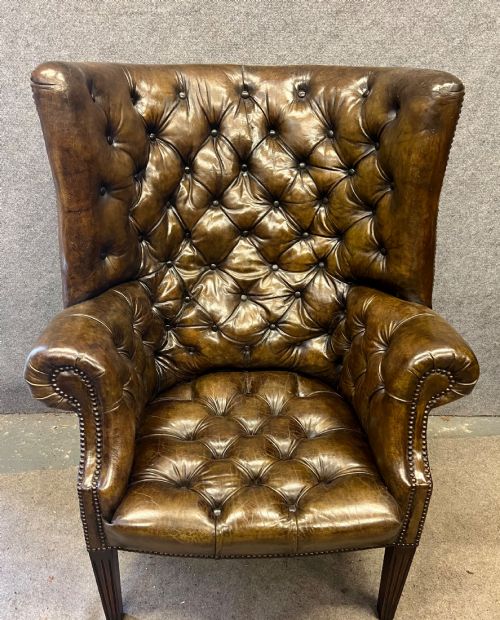
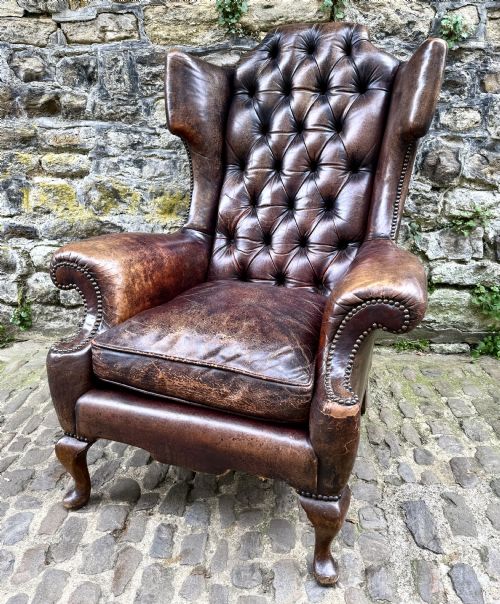
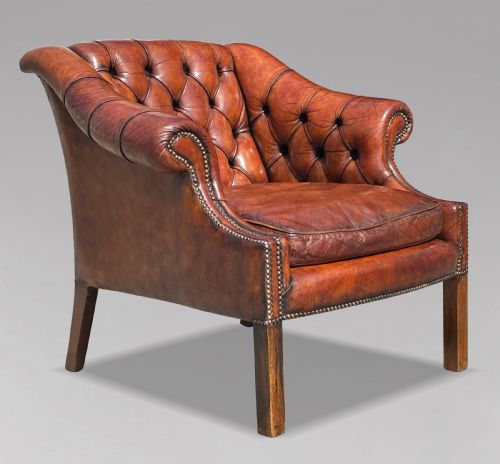
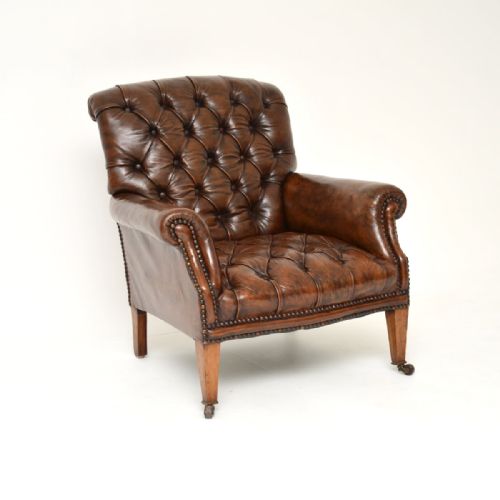
A stud buttoned armchair brings deep buttoned leather and substantial timber frames into a study or library, offering both robust support and traditional seating.
Stud Buttoned Armchair
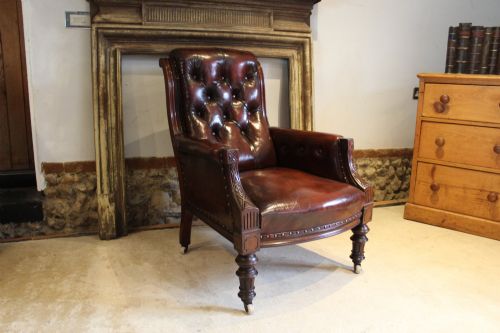
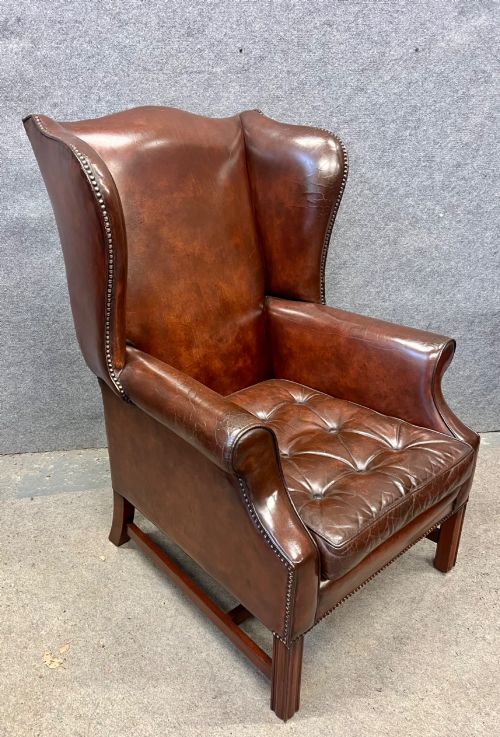
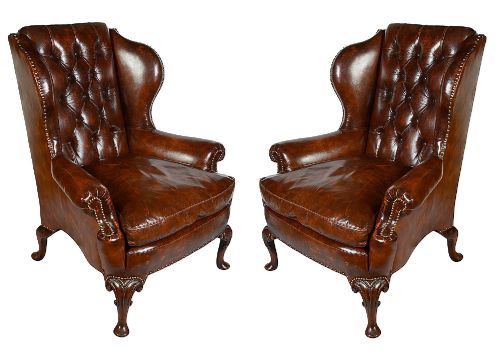
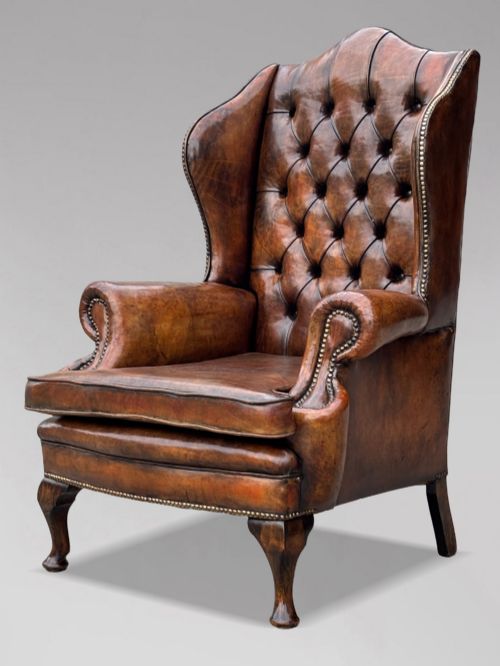
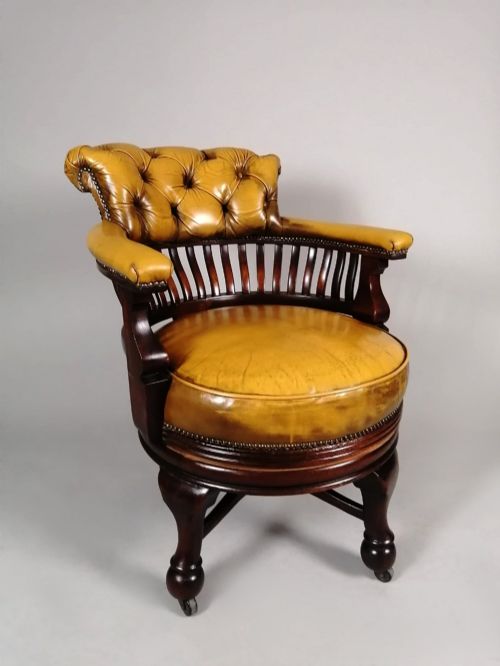
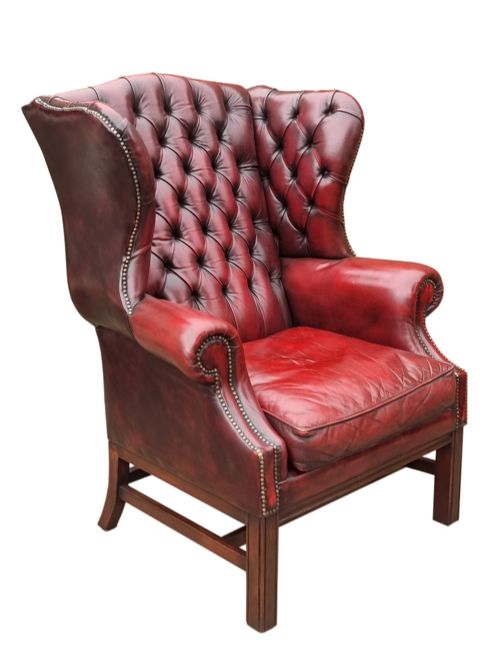
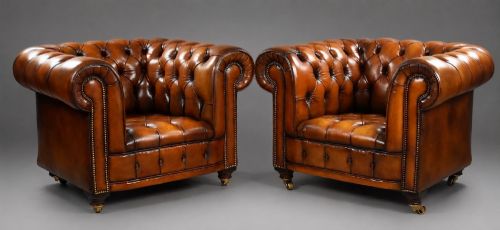
A stud buttoned armchair is a heavy seating form designed for libraries, studies, and offices, often seen in forms such as wing armchairs, club chairs, and desk chairs. The listings show that these pieces appear frequently in nineteenth-century and early twentieth-century iterations, spanning Victorian, Edwardian, and Georgian revival styles.
Buyers encounter versions ranging from low-slung club chairs to revolving desk armchairs and high-backed wing chairs. These pieces combine substantial timber frames in mahogany, oak, and hardwood with generous leather upholstery fastened by brass tacks.
How they were made
Construction relies on sturdy timber frames built from hardwoods such as mahogany and oak, which provide the structural core for heavy daily use. Upholsterers then fit these frames with leather coverings, securing the hides with individual brass studs or tacks around the borders.
Deep buttoning techniques create the characteristic dimpled surface across the backrests and arms, pulling the leather tight against internal padding. Revolving and tilting desk variants integrate functional metal swivel mechanisms into the timber bases.
Stud Buttoned Armchair Retail Price Guide 2026
Typical asking prices for stud buttoned armchair among the pieces listed under this phrase on Sellingantiques today, from the lower quarter to the upper quarter. They describe what is for sale here now, not the wider market.
At least one cockpit-style oak cockfighting chair waits to bring an unusual posture to your modern study.
What varies in quality
The standard of timber framing sets the baseline for durability, with dense hardwoods like mahogany offering superior stability compared to lighter secondary timbers. Carved details on the arms and legs show the hand of a more skilled cabinetmaker.
The grade of the leather and the regularity of the individual brass stud placement indicate the original investment in the piece. Well-executed deep buttoning maintains even tension across every fold, ensuring the upholstery retains its shape over decades of sitting.
The Stud Buttoned Armchair Glossary
- Chesterfield
- A traditional style of upholstered seating characterised by deep buttoning and uniform low back and arm heights. This term frequently applies to club chairs and wing chairs covered in leather.
- Wing armchair
- An upholstered seat featuring projecting side panels designed to shield the sitter from draughts. These high-backed forms often incorporate deep buttoned leather upholstery and brass studding.
- Captain's chair
- A sturdy timber armchair designed for office or desk use, usually featuring a rounded spindle back and a upholstered leather seat. Versions in the evidence often combine mahogany or oak with swivelling mechanisms.
- Gainsborough chair
- An eighteenth-century style of open-framed armchair with padded armrests and a wide seat, typically upholstered in leather. Later revivals replicate this formal library seating form.
- Brass tacks
- Small decorative metal nails used to secure the edges of leather upholstery to the wooden frame. They provide a neat finished border around the padded sections.
Stud Buttoned Armchair: Frequently Asked Questions
Where should I place a stud buttoned armchair?
These substantial chairs suit studies, home libraries, and living rooms where their heavy timber frames and leather upholstery can anchor the room. They function well as reading seats or desk chairs.
Ensure there is enough floor space around the chair, particularly for revolving or rocking variants that require clearance to move freely.
How do I care for the leather?
Leather upholstery requires regular dusting and occasional conditioning to prevent the hide from drying out. Keep the chairs away from direct heat sources and strong sunlight.
Avoid harsh chemical cleaners, using instead a soft damp cloth for routine maintenance and specialist leather balms to preserve the finish.
How can I tell a Victorian chair from a revival piece?
Victorian examples display the tool marks, timber ageing, and wear patterns consistent with nineteenth-century cabinetmaking and daily use. Revival pieces from the early twentieth century often mimic Georgian or Victorian proportions.
Examining the construction methods underneath the seat and the type of secondary wood used inside the frame helps clarify the period of manufacture.