


Stuart Era Female Portrait
A stuart era female portrait captures seventeenth-century aristocracy in oil on canvas and wood panel, offering collectors intimate visual records of noblewomen.
Stuart Era Female Portrait
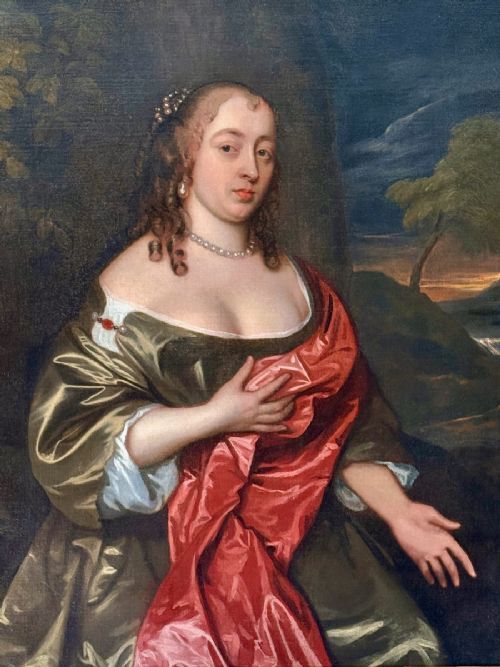
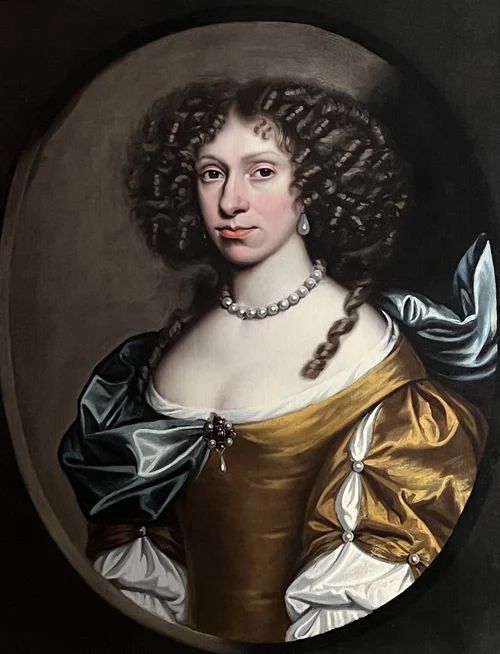
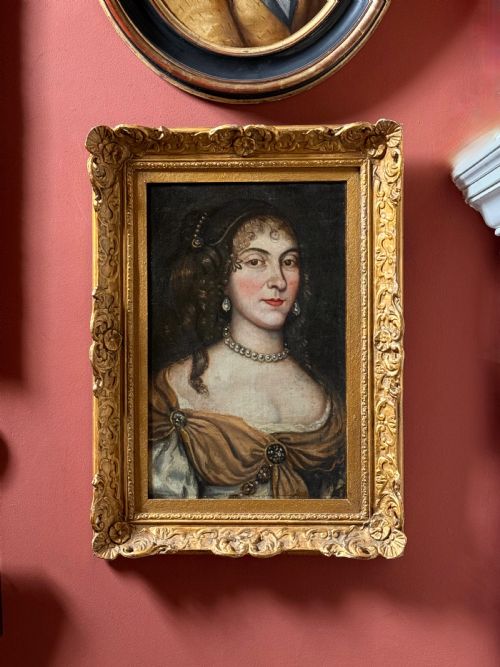
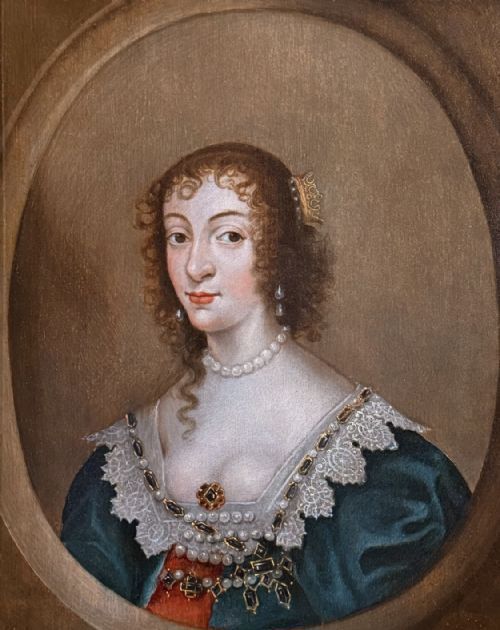
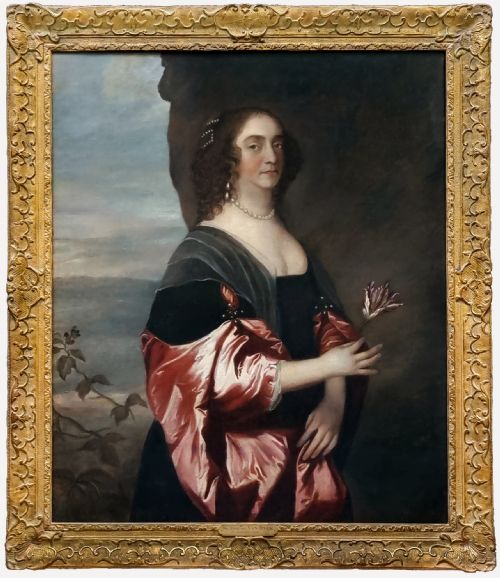
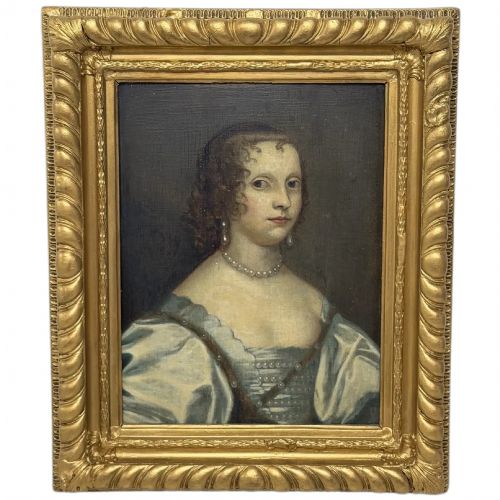
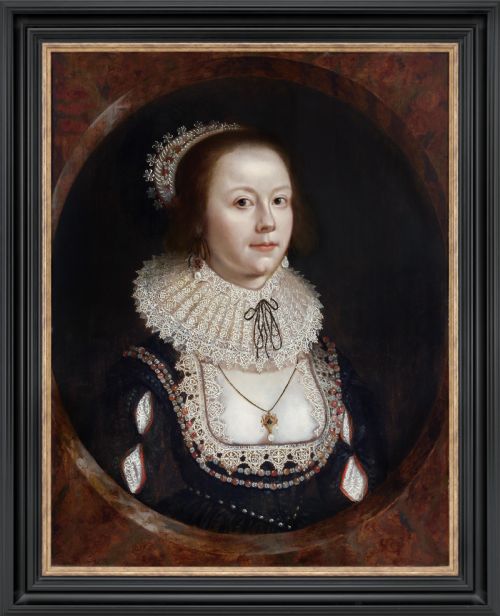
When you search for a stuart era female portrait, you encounter seventeenth-century oils depicting named noblewomen and anonymous ladies. These works capture sitters in sumptuous attire, jewels, lace, and extensive landscapes characteristic of the period.
The versions most likely to appear on this page originate from seventeenth-century English and British schools. They include works associated with circles of prominent portraitists such as Sir Peter Lely and Cornelius Johnson, alongside pieces by named masters like John Hayls and David Scougall.
Subjects range from royal figures like Queen Henrietta Maria to noblewomen such as Philadelphia Parker and Mary Hammond. Each oil painting reflects the distinct aesthetic shifts across Jacobean, Baroque, and Restoration Stuart movements.
How they were made
Artists executed these works using oil paint applied to prepared canvas or sturdy wood panels, including oak. The medium allowed for rich rendering of red satin sleeves, black dresses, and intricate lace collars.
Painters mounted finished canvases and panels into period-appropriate frames, often utilising gilt wood and giltwood to complement the opulence of the sitter's garments and jewellery.
Several ladies gaze out wearing remarkably stiff lace collars that surely made turning the head an aristocratic hazard.
What varies in quality
Condition of the canvas or wood panel and the integrity of the original paint layers determine the visual power of each piece. Surviving works retaining their original or period-appropriate giltwood frames hold greater historical coherence.
John Hayls·David Scougall·Pierre Mignard·Sir Peter Lely·Cornelius Johnson·John Greenhill
The Stuart Era Female Portrait Glossary
- Oil on canvas
- A painting technique where pigment mixed with drying oil is applied to stretched woven fabric. This method became dominant for large-scale seventeenth-century portraiture.
- Wood panel
- A rigid support base constructed from timber, such as oak, used frequently for earlier seventeenth-century works before canvas predominated. Panels provide a stable surface for detailed portrait execution.
- Baroque
- The dominant artistic style of the seventeenth century characterised by drama, rich colour, and grand scale. In portraiture, it manifests through opulent dress and dynamic background elements.
- Giltwood
- Wood carved and covered with a thin layer of gold leaf or gold paint. Frames utilising this material frame seventeenth-century paintings with period elegance.
- Circle of
- A designation indicating an artist worked closely within the immediate sphere or influence of a master painter. These works share technical and stylistic traits with the named master.
Stuart Era Female Portrait: Frequently Asked Questions
How do I identify a seventeenth century portrait?
Examine the sitter's costume, hair styling, and ruffs or lace collars, which follow specific seventeenth-century fashions. Material supports like oak panels and early canvas types also point directly to this era.
Compare the brushwork and background motifs with known examples from British and English schools of the period. Stylistic markers from Jacobean, Baroque, and Restoration phases help narrow the date.
What subjects appear in these paintings?
Sitters include named aristocratic women, noblewomen, and royal figures such as Queen Henrietta Maria. Many portraits record specific individuals alongside their familial titles and dates.
Some canvases depict sitters within extensive landscapes or elaborate interiors. These settings communicate the social standing and wealth of the portrayed lady.
How should I care for an antique oil painting?
Keep the artwork away from direct sunlight, high humidity, and rapid temperature fluctuations to protect the oil paint and canvas. Stable environmental conditions prevent the wood panel or canvas from warping.
Dust the surface gently with a soft, dry brush and avoid using liquid cleaners or solvents. Professional conservators should handle any structural repairs or varnish removal.
What is the difference between canvas and wood panels?
Wood panels provide a rigid, solid support structure common in earlier seventeenth-century British painting. They require careful humidity control to prevent splitting across the grain.
Canvas offers a flexible woven textile base stretched over a wooden frame, allowing for larger formats. Most later seventeenth-century portraits utilise this lighter, adaptable support medium.