
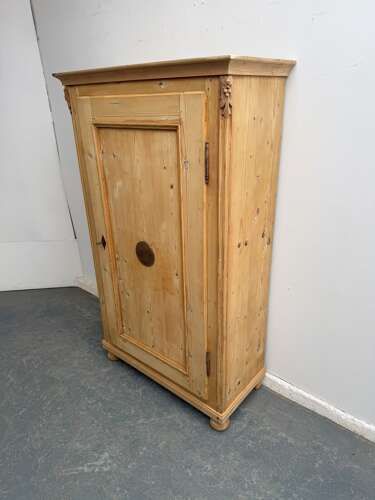
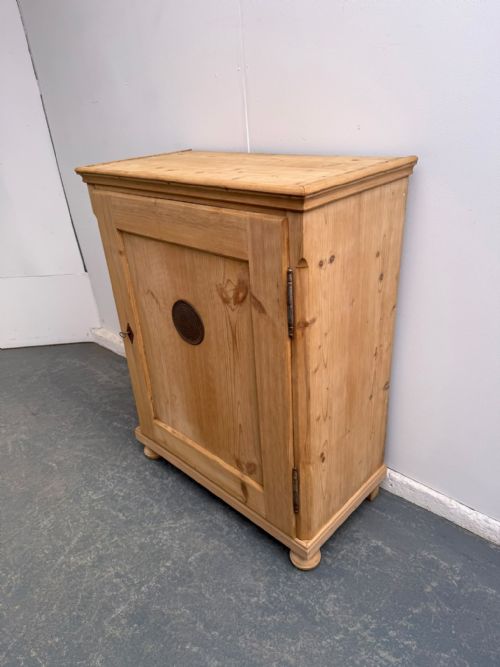
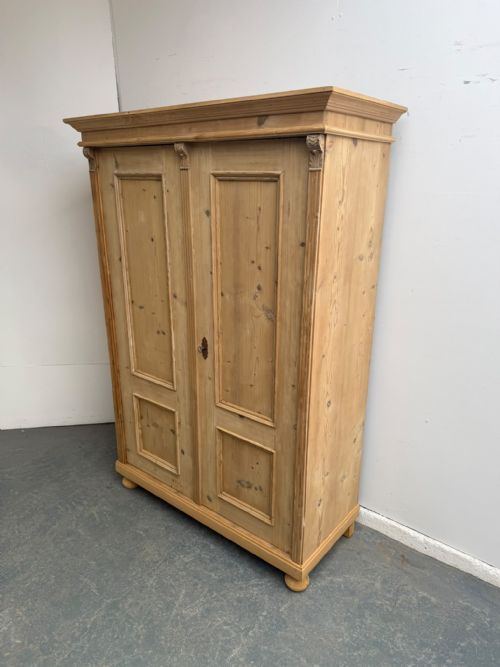

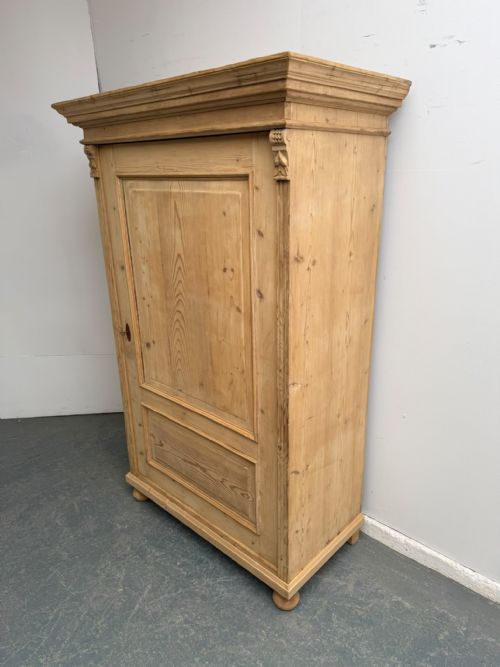
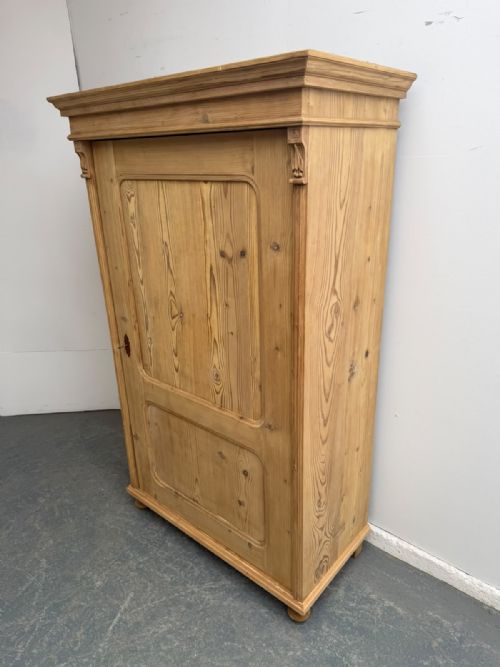
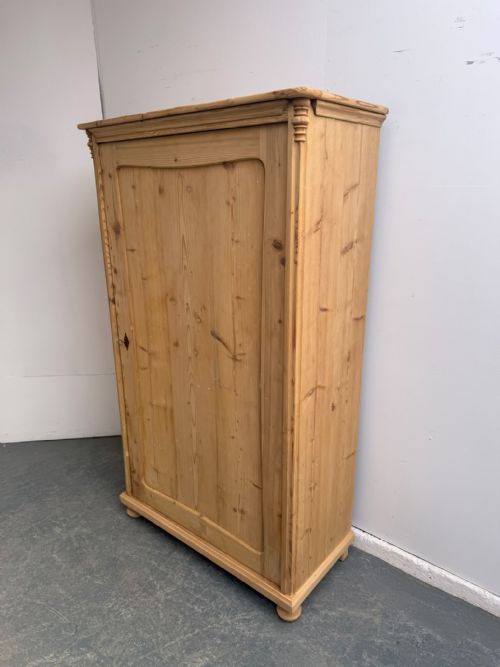
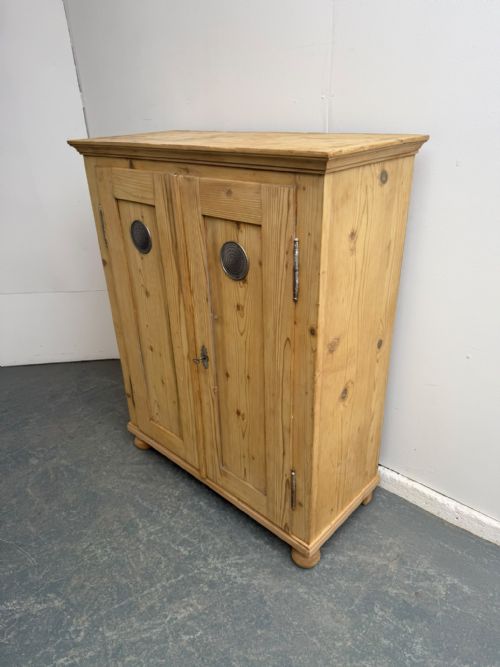


Stripped Pine Pantry Cabinet
A stripped pine pantry cabinet brings practical kitchen storage and honest rural charm into a modern home.
Stripped Pine Pantry Cabinet
A stripped pine pantry cabinet provides robust utility for domestic storage, appearing primarily in Victorian and Georgian periods with country and rustic farmhouse styles. These pieces function as kitchen cupboards, armoires, and storage units designed to hold food, utensils, and household provisions.
The inventory on this page consists mainly of Victorian examples, supplemented by Georgian and nineteen-ten pieces. Formats range from low, wide single-door storage cupboards to tall four-door configurations featuring beaded panels and vented doors.
How they were made
Construction relies primarily on pine timber, often prepared for waxing or painting by the stripping of later finishes to reveal the grain beneath. Carpenters utilised solid timber planks for doors and frames, building robust carcases designed for everyday use in domestic settings.
Hardware details involve iron, metal, and brass fittings such as hinges, latches, and drawer pulls that secure doors and accommodate daily handling. Joinery incorporates simple panel construction, including fielded panels and vented sections intended to circulate air within the cabinet.
Listings span the Georgian period, the Victorian era, and nineteen-ten, utilising pine with iron, metal, and brass hardware.
What varies in quality
Quality differences emerge in the scale and proportion of the timber framework, separating simple utilitarian boxes from more ambitious architectural layouts with multiple doors and drawers. The presence of original hardware like brass handles or iron latches elevates the integrity of an individual piece.
The execution of joinery, from basic single-door builds to complex four-door one-piece beaded assemblies, dictates the sophistication of the cabinet. Timber selection also plays a role, distinguishing straightforward farmhouse construction from more refined Georgian country examples.
The Stripped Pine Pantry Cabinet Glossary
- Pine
- A softwood commonly used in British country furniture for its workability and strength. It takes wax and paint finishes readily after stripping.
- Fielded panel
- A wooden panel with bevelled edges that fit into a grooved frame. This technique allows the timber to expand and contract with humidity changes.
- Vented cupboard
- A storage piece featuring pierced or mesh panels in the doors. This design permits airflow, which was essential for preserving food before refrigeration.
- Georgian
- The architectural and decorative period spanning the reigns of the first four Georges. Pieces from this era often display more refined proportions than later country furniture.
- Victorian
- The period of Queen Victoria's reign. Furniture from this era ranges from heavy utilitarian items to decorative domestic pieces.
Stripped Pine Pantry Cabinet: Frequently Asked Questions
What is a stripped pine pantry cabinet?
A stripped pine pantry cabinet is a utilitarian storage unit made from pine timber with its paint or dark varnish removed. These pieces date across Georgian, Victorian, and early twentieth-century periods.
They serve as practical kitchen cupboards, offering shelving and drawer space behind one, two, or four doors. The removal of surface finishes highlights the natural grain of the wood.
How were these cupboards used historically?
Historically, these cabinets functioned as food storage units in pantries, sculleries, and kitchens before fitted units became common. Vented versions helped keep perishables fresh by allowing air circulation.
They also stored tableware, dry goods, and household linens. Their sturdy construction made them reliable pieces for daily domestic labour.
How do I fit one into a modern kitchen?
These cabinets provide generous freestanding storage that complements contemporary or traditional kitchen schemes. They work well as larders for food storage or as standalone cupboards for crockery.
Ensure you measure your ceiling height and floor space carefully before placing a large multi-door cabinet. Their neutral wood tones pair easily with various wall colours and work surfaces.
How can I tell a Georgian piece from a Victorian one?
Georgian country pieces typically display lighter proportions and earlier cabinet-making traditions. Victorian examples often feature heavier frames, bead detailing, and varying door configurations.
Examining the construction methods, such as drawer dovetails and backboards, helps determine the age of the timber frame. Hardware styles also offer clues to the period of manufacture.