


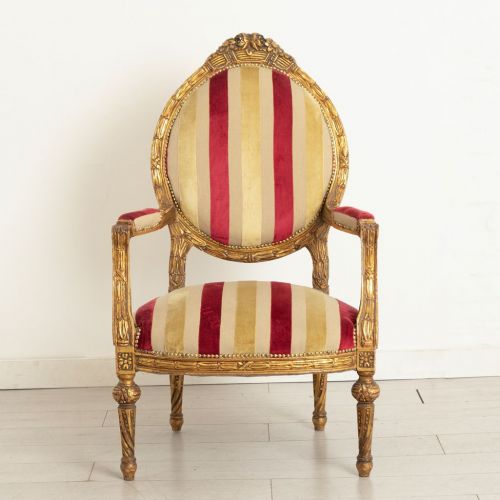


Striped Seat Armchairs
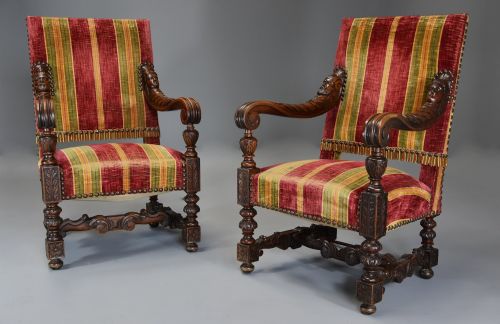
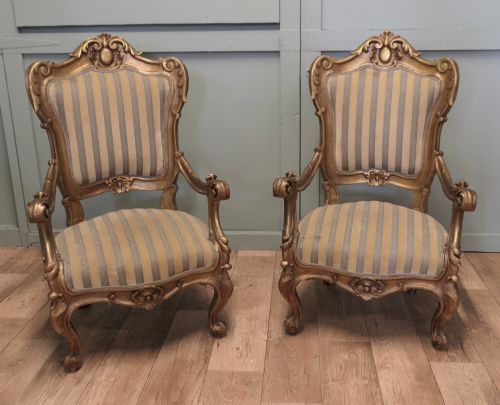
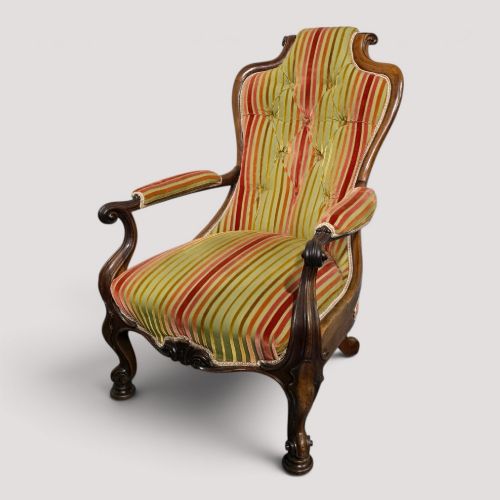
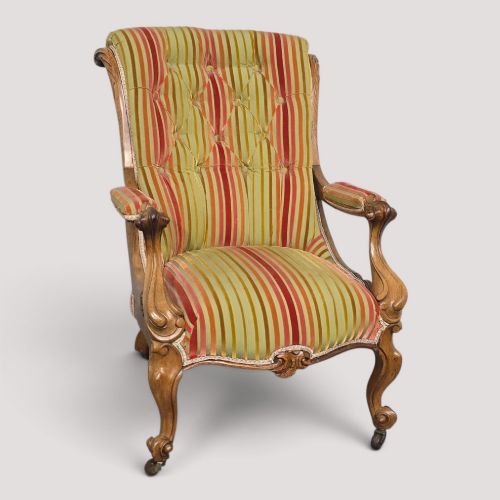
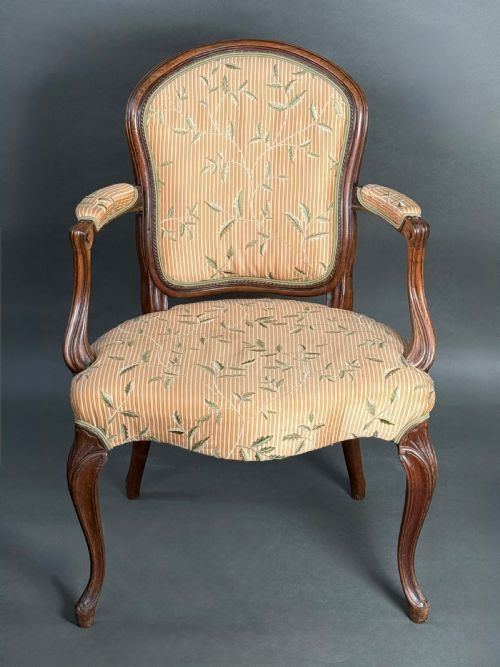
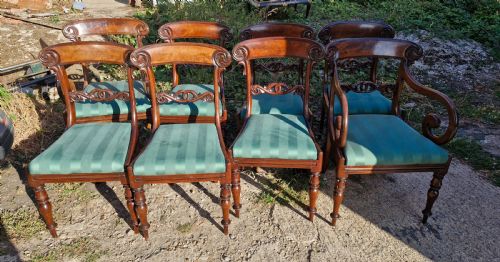
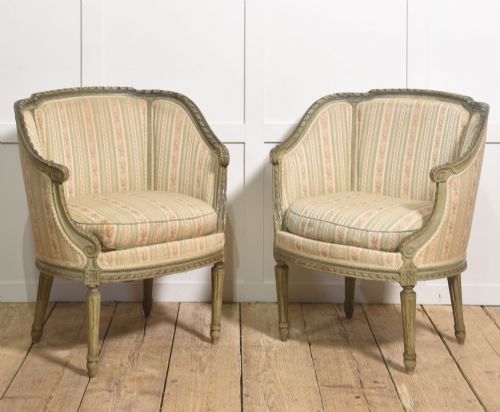
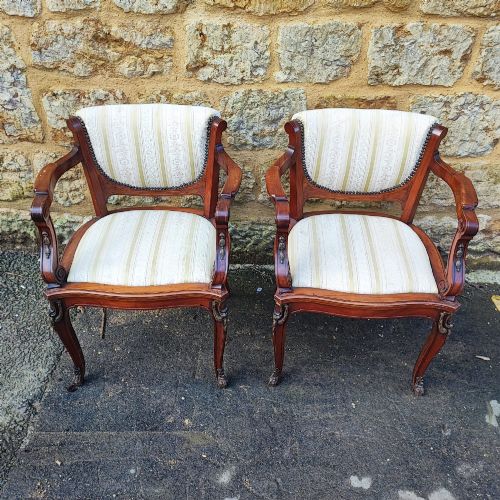
Striped seat armchairs bring pattern and comfortable seating together, spanning periods from the Georgian era through to the twentieth century.
Striped Seat Armchairs
Striped seat armchairs encompass a wide variety of seating forms, including library armchairs, bergères, wingbacks, and salon chairs. When exploring striped seat armchairs, buyers encounter pieces originating from the eighteenth, nineteenth, and early twentieth centuries.
Upholstery treatments utilise fabrics, velvet, silk, and ticking alongside exposed wood frameworks. Many pieces appear in pairs or sets, while others stand as individual library or salon seats.
How they were made
Frame construction relies on cabinet timbers including mahogany, walnut, and oak, shaped into square sides, curved backs, and open arms. Carpenters joined these elements using traditional joinery methods suited to each period style.
Upholstery involves textiles such as silk, velvet, fabric, and ticking applied over padded seat foundations. Decorative details include brass elements, giltwood finishes, string inlay, and original paint.
Striped Seat Armchairs Retail Price Guide 2026
Typical asking prices for striped seat armchairs among the pieces listed under this phrase on Sellingantiques today, from the lower quarter to the upper quarter. They describe what is for sale here now, not the wider market.
The listings feature wood types including mahogany, walnut, oak, satinwood, and giltwood across nineteenth and twentieth-century pieces.
What varies in quality
The refinement of the carved wood frame and the quality of the timber grain distinguish different examples. Finer pieces demonstrate precise joinery, sculptural shaping, and intact original decorative surfaces like paint, giltwood, or polished mahogany and walnut.
Upholstery selection and execution contribute significantly to the character of each chair. Superior examples feature period-appropriate textiles, such as silk or ticking, applied with attention to line and pattern alignment.
Colefax and Fowler·Howard and Sons
The Striped Seat Armchairs Glossary
- Bergère
- An enclosed upholstered armchair with wooden framing around the sides and back. These seats often feature cane panels or fully upholstered sides.
- Fauteuil
- An open-framed upholstered armchair originating in France, characterised by exposed wooden arms and carved rails. The style spans Louis periods and later revivals.
- Giltwood
- Wood coated with gold leaf or gilt preparation. This finish appears frequently on decorative nineteenth-century frames.
- Library armchair
- A sturdy, comfortable seat designed for reading rooms and studies. These chairs often utilise mahogany or walnut frameworks with upholstered seats and backs.
- Wingback
- An armchair featuring protective side panels attached to the backrest. The design shields the sitter from draughts near fireplaces.
Striped Seat Armchairs: Frequently Asked Questions
What periods do these armchairs come from?
The pieces span multiple centuries, including eighteenth-century Georgian designs, nineteenth-century Regency and Victorian examples, and early twentieth-century Edwardian works.
Stylistic revivals also appear, referencing French Rococo, Louis XV, and Baroque aesthetics alongside English cabinet-making traditions.
How do I identify different furniture styles?
Styles reveal themselves through timber choice, carved detail, and frame silhouette. Regency and Georgian pieces emphasise mahogany and classical proportions, while Victorian works often employ carved walnut and heavier proportions.
French revival pieces display giltwood, painted surfaces, and curved cabriole elements.
Where were these armchairs used historically?
These seats served primary functions in libraries, drawing rooms, boudoirs, and grand salons. Library armchairs provided comfort for reading, while salon chairs furnished formal entertaining spaces.
Pair arrangements typically flanked fireplaces or windows in country houses and town residences.
How should I care for antique upholstered chairs?
Protect the exposed wood frames with appropriate furniture wax and keep textiles clean using gentle vacuum attachments. Direct sunlight should be avoided to prevent fabric and timber fading.
Periodic inspection of joints helps maintain the structural stability of older frames.