





Striking Desk Clock
A striking desk clock brings audible timekeeping and mechanical presence to a room, combining brass, marble, and rich woods into a functional centrepiece.
Striking Desk Clock
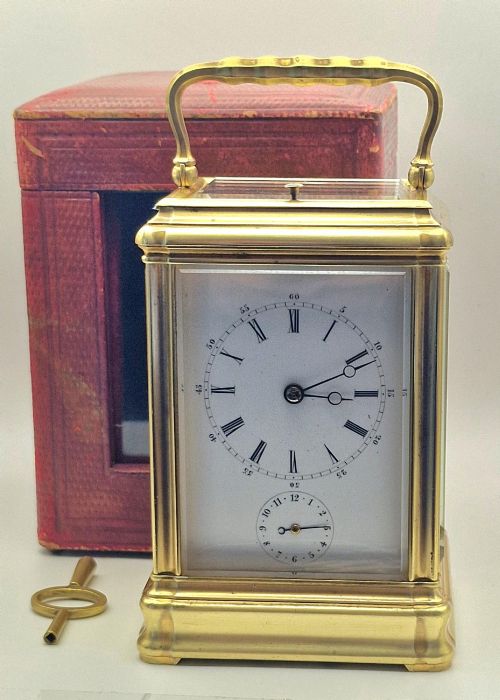
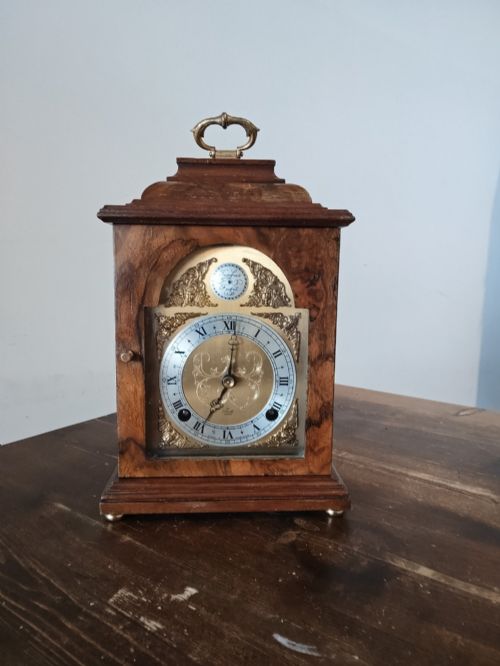
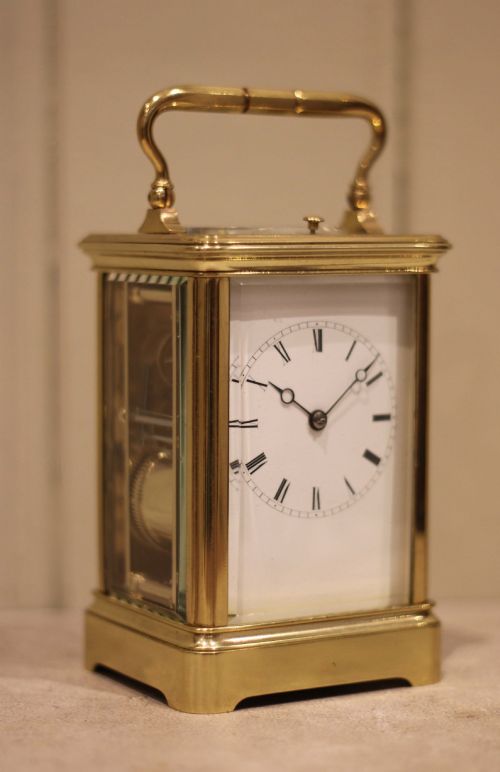
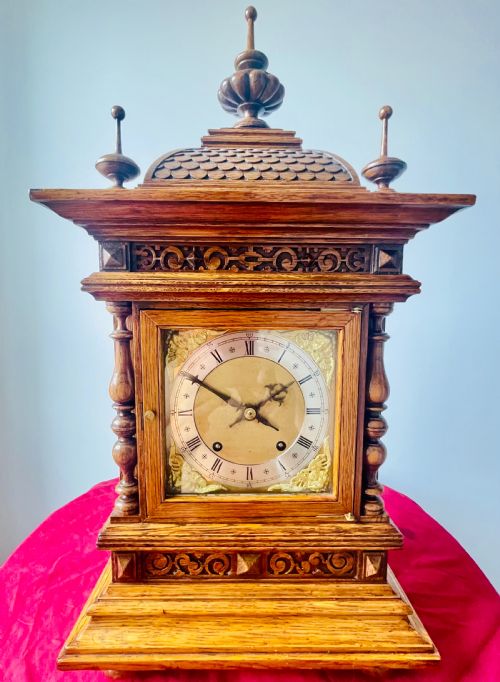
A striking desk clock is an interior timepiece designed to sit upon furniture while sounding the hours or quarters on bells or gongs. These pieces range from substantial bracket clocks housed in mahogany or walnut to portable brass carriage clocks meant for travel.
The selections encountered here span from the nineteenth century into the mid-twentieth century, encompassing both French travel timepieces and English domestic clockmaking. Mantel clocks and lantern clocks also populate this group, reflecting diverse periods from the Georgian era to the mid-twentieth century.
French carriage clocks dominate many groupings, often featuring glass panels and repeating mechanisms within gilt brass cases. Bracket clocks in burr walnut or mahogany provide an alternative focus, typically driven by fusee movements originating in British workshops.
Factors of Quality
Quality rests in the complexity of the movement and the precision of the striking work, distinguishing simple hour-strikers from those with quarter-strike, petite sonnerie, or alarm functions. The inclusion of repeat mechanisms and fusee gear trains elevates a piece above standard spring-driven alternatives.
Case execution separates ordinary examples from finer works, seen in the crispness of gilt ormolu chasing, the selection of figured burr walnut veneers, and the integration of porcelain or enamel panels. Original components and signed movements by known makers add substantial weight to an object's standing.
Striking Desk Clock Retail Price Guide 2026
Typical asking prices for striking desk clock among the pieces listed under this phrase on Sellingantiques today, from the lower quarter to the upper quarter. They describe what is for sale here now, not the wider market.
Listings feature materials spanning glass, brass, gilt brass, mahogany, marble, ormolu, and walnut across the nineteenth and twentieth centuries.
Drocourt·Mappin & Webb·Winterhalder·Henry Jacob·J. F. Bautte Et Cie·Mathias Bauerle·J.W.Benson·E White·Henry Marc
The Striking Desk Clock Glossary
- Striking movement
- A mechanism that sounds the hours or fractions thereof automatically using bells, gongs, or a series of small hammers. This function differentiates these pieces from silent timepieces.
- Carriage clock
- A small, portable spring-driven timepiece developed for travel, typically fitted with a carrying handle and glass sides. Many include striking and repeating functions.
- Fusee
- A conical pulley used in mechanical clocks to maintain an even pull as the mainspring unwinds. This device improves timekeeping accuracy across the power reserve.
- Bracket clock
- A portable table clock traditionally placed on a matching wall bracket or shelf. English examples frequently utilise wooden cases and twin fusee movements.
- Repeating mechanism
- A complication operated by pressing a button or cord that causes the clock to repeat the last struck hour or quarter on demand. It is frequently found in French carriage clocks.
Striking Desk Clock: Frequently Asked Questions
How do I wind a striking desk clock?
Winding requires inserting the appropriate key into the designated winding squares on the dial or back plate, turning gently until resistance increases. Care must be taken not to overwind the mainsprings.
For clocks with striking trains, winding both the time side and the strike side ensures the audible mechanism functions correctly alongside the timekeeping.
What is the difference between a mantel clock and a carriage clock?
Mantel clocks are generally larger stationary pieces housed in wood, marble, or bronze, designed to rest permanently on a mantelpiece or shelf. They often feature fusee or heavy spring movements.
Carriage clocks are smaller, portable brass and glass timepieces originally intended for travel, possessing a distinctive carrying handle and visible escapements.
How often should these clocks be serviced?
Mechanical clocks generally require professional cleaning and lubrication every five to seven years to prevent wear on the brass pivots and gears. Regular maintenance ensures the striking train operates without jamming.
Environmental stability also matters, so keeping the clock away from direct heat sources and drafts helps preserve the movement and case materials.
How can I tell the period of a French carriage clock?
Dating often relies on case design, escapement type, and maker marks stamped on the back plate. Early nineteenth-century examples tend to feature different escapements and simpler brass framing compared to later Victorian models.
Signatures or serial numbers can often be cross-referenced with known working periods of the makers inscribed on the movement.