


Street Scene Art
Street scene art captures the bustle, architecture and daily life of urban thoroughfares across past centuries through paintings, watercolours and prints.
Street Scene Art
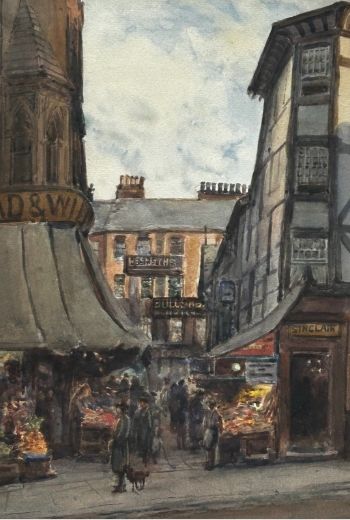
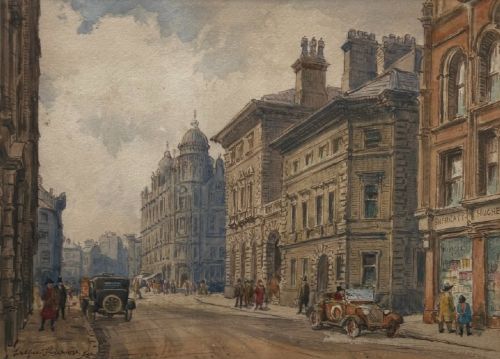
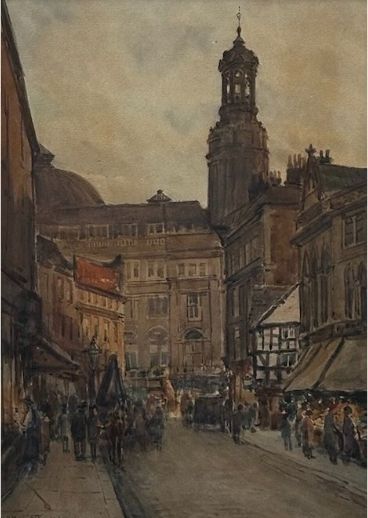
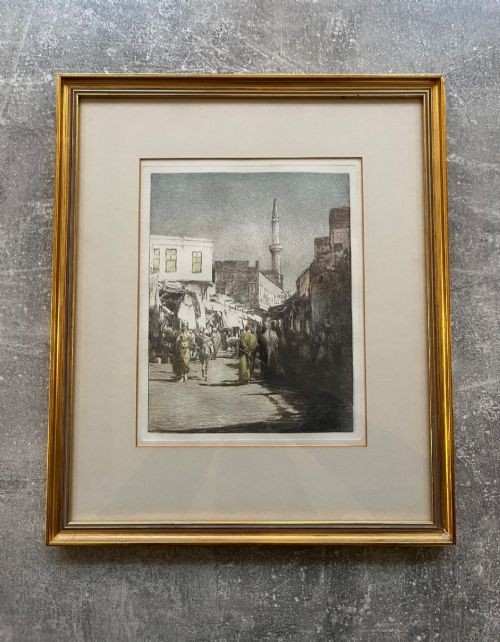
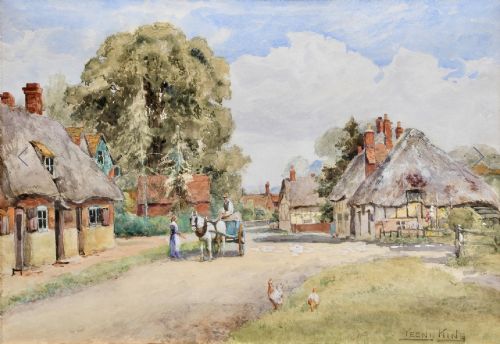
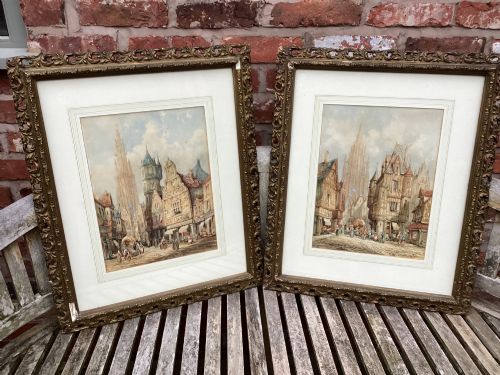
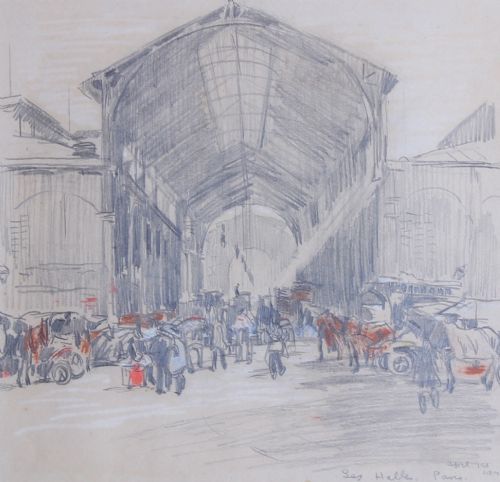
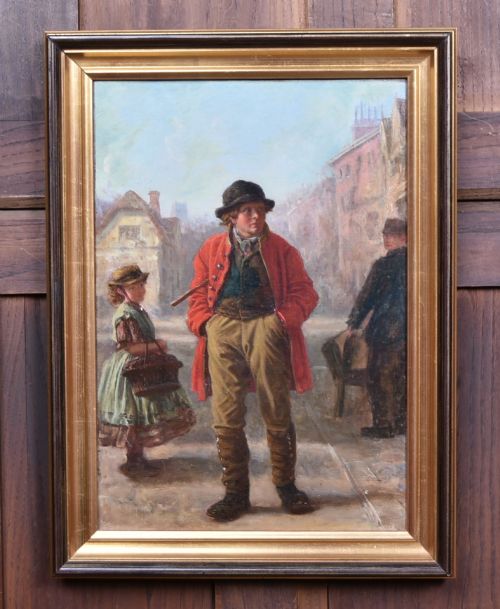
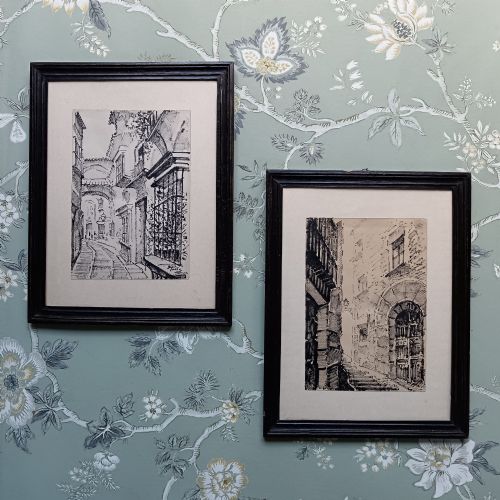
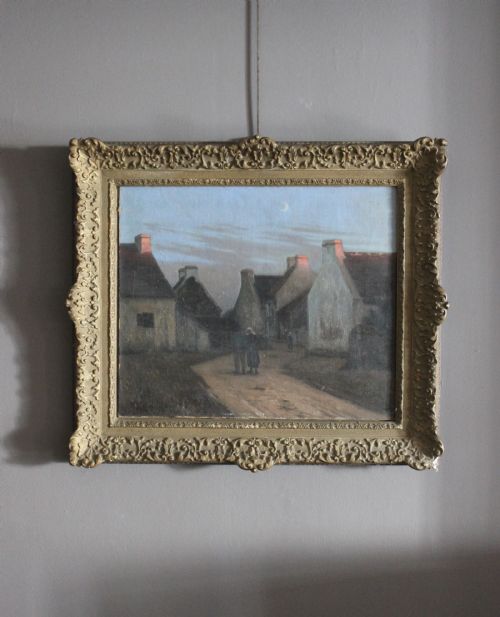
Street scene art encompasses paintings, watercolours, drawings and prints depicting urban thoroughfares, townscapes and city life. When exploring street scene art, you encounter everything from bustling Victorian markets and Edwardian townscapes to mid-century Parisian boulevards.
The selections span various periods including Georgian, Victorian, Edwardian and mid-century modern eras. British, French, Spanish and Latin American locations appear frequently in the available formats.
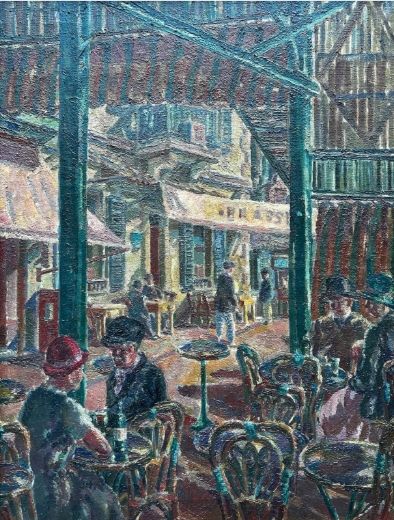
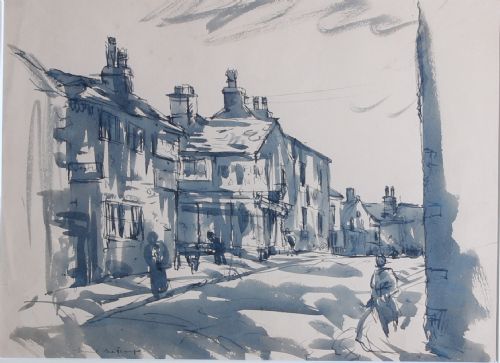
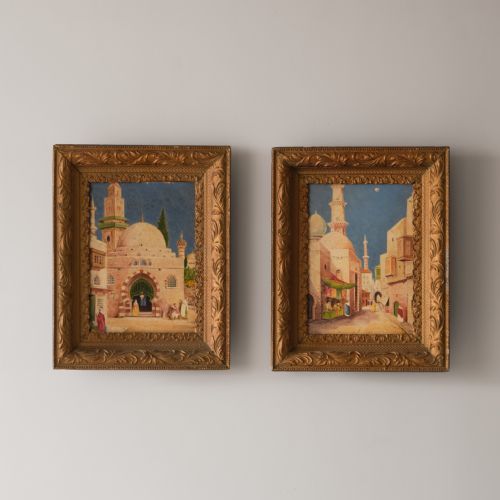
Works range from detailed architectural ink drawings to vibrant impressionist oil paintings on canvas and board. Figures, carriages, markets and cafes populate these urban views, providing a record of past communities.
Materials and Techniques
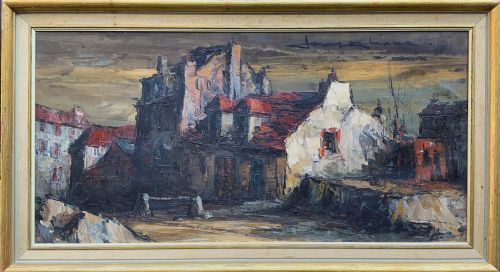
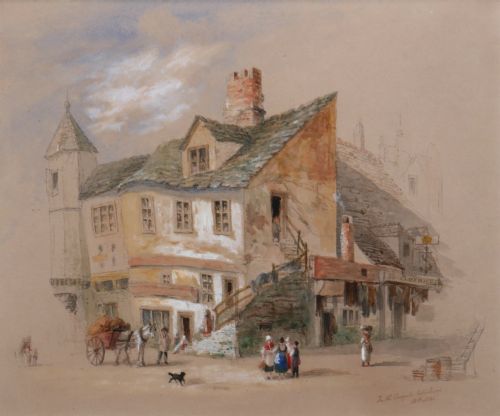
Artists utilise oil paint on canvas and board to build textured surfaces, often applying thick impasto to capture the energy of city light. Watercolours on paper provide a more fluid, translucent medium favoured for detailed townscapes and atmospheric weather effects.
Framing materials such as giltwood enhance the presentation of mid-century and nineteenth-century oils. Pastels, lithographs and ink drawings on paper represent alternative graphic techniques applied to urban subjects.
Street Scene Art Retail Price Guide 2026
Typical asking prices for street scene art among the pieces listed under this phrase on Sellingantiques today, from the lower quarter to the upper quarter. They describe what is for sale here now, not the wider market.
Listings include works executed in oil paint, watercolour, pastel, ink and lithography across paper, canvas and wood.
Evaluating Quality
Quality rests on the artist's ability to handle perspective, light and atmosphere within a complex urban composition. Stronger works demonstrate confident brushwork and a convincing sense of depth, whether executed in oil or watercolour.
The integration of human figures within the architectural setting distinguishes accomplished pieces from mechanical topographical views. Original period frames and documented provenance further elevate the standing of individual works.
Muriel Metcalfe·Thomas Fenwick·Jean Corbeau·Cuthbert Crossley·Thomas Ellison·Augusto Alberici·Lucy Pratt·Joseph H Barnes·Francisco Sancha·Herbert Ashwin Budd·Brian Shields Braaq·Albert Ludovici Jnr·Caroline Burnett·William Greaves·Victor Gabriel Gilbert·William Manners·Cecil Rochfort D'Oyly-John·Charles James Lauder·Merio Ameglio·Léon Joseph Voirin·Cornelis Christian Dommersen·Louie Stanley Maurice Prince·William George Meadows
The Street Scene Art Glossary
- Impasto
- Paint applied thickly to a canvas or board, creating a textured surface that stands out from the plane. This technique allows artists to catch light and convey physical depth in urban views.
- Townscape
- A painting, drawing or print depicting a city street, square or architectural grouping. These works focus on urban topography rather than rural landscapes.
- Impressionism
- A style of painting emphasising light and its changing qualities rather than precise detail. Practitioners often use visible brushstrokes to capture the immediate visual impression of a scene.
- Lithograph
- A print made from a flat stone or metal plate treated so that ink adheres only to the design. This method allowed multiple impressions of urban scenes to be produced.
- Genre painting
- Artwork depicting scenes from everyday life, typically involving ordinary people in domestic or public settings. Many urban views incorporate genre elements through market traders and pedestrians.
Street Scene Art: Frequently Asked Questions
What periods do these artworks come from?
The selections span multiple eras from the late Georgian and nineteenth century through the Edwardian period to mid-century modern works.
Artists across these generations recorded changing urban environments using the prevailing techniques of their time.
How do I care for antique watercolours?
Watercolours on paper require protection from direct sunlight to prevent fading of the pigments. Displaying them behind UV-filtering glass helps preserve the paper and the integrity of the medium.
Keep them away from damp environments to avoid foxing and mould growth on the paper support.
What is the difference between oil on canvas and oil on board?
Oil on canvas involves pigment suspended in oil applied to a stretched woven fabric support, offering slight elasticity. Oil on board uses a rigid wooden or composite panel as the base for the paint.
Both materials provide durability, but boards tend to have a firmer, completely flat painting surface.
Are these works original or prints?
The listings contain a mix of original unique paintings in oil and watercolour, alongside original period prints and lithographs. Each listing specifies the exact medium used to create the piece.
Checking the material details ensures you know whether you are acquiring a one-off painted canvas or a multi-plate print.