




Streamlined Walnut Side Table
These streamlined walnut side table designs bring clean geometry and rich grain to interiors, offering both surface utility and period character.
Streamlined Walnut Side Table
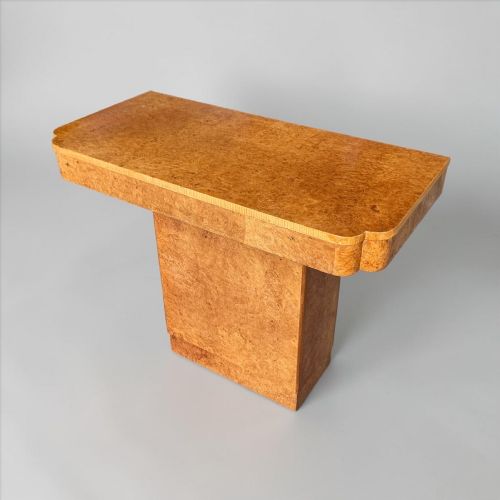
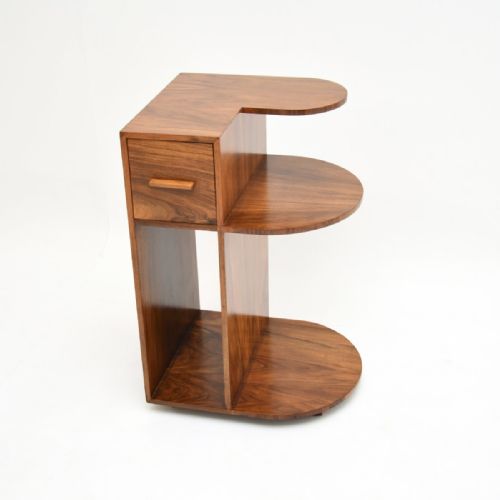
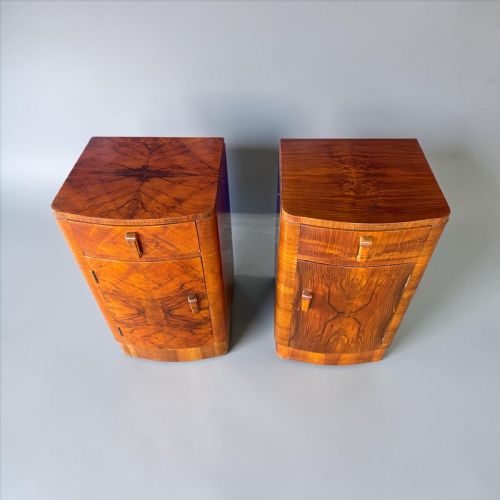
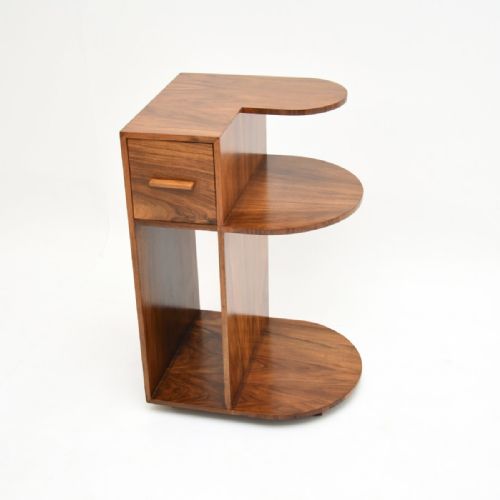
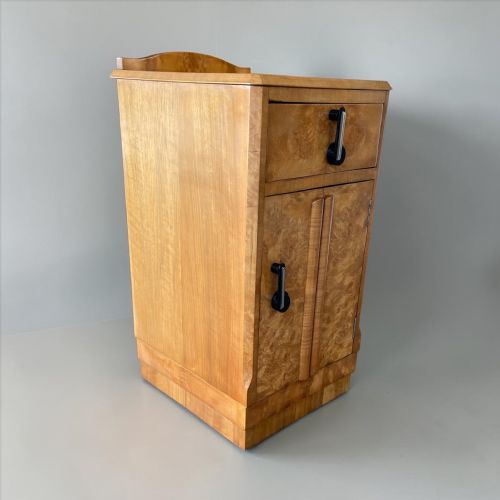
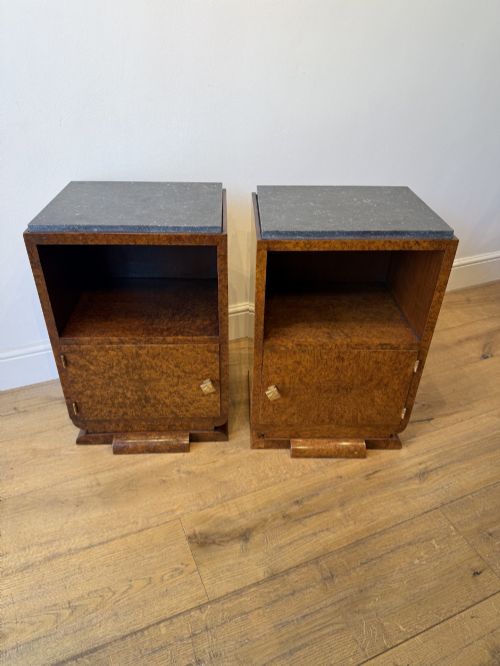
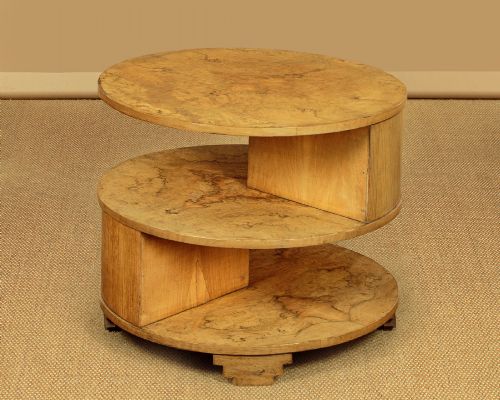
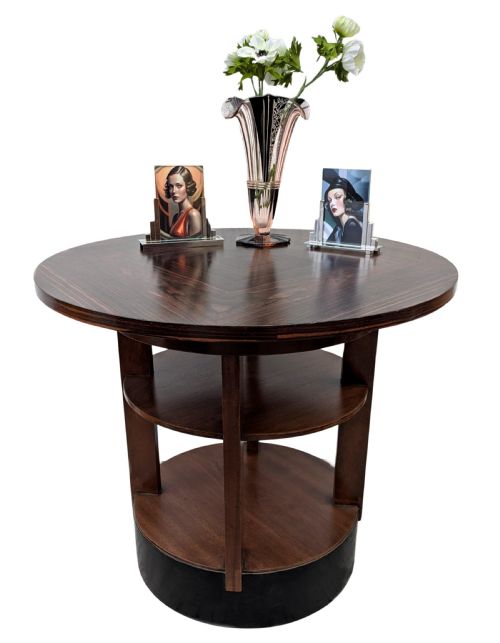
A streamlined walnut side table takes the form of compact occasional furniture, most commonly appearing as side tables, bedside cabinets, and coffee tables from the Art Deco period. These pieces originate from the 1920 and 1930 decades, reflecting modernist principles of functional utility and clean horizontal lines.
The dominant material signature across these items is walnut, frequently highlighted by figured grain patterns, burr walnut, and contrasting touches of satinwood or burr birch. Forms range from simple single-tier surfaces to multi-tiered centre tables fitted with original casters.
Buyers encountering this category will find a strong representation of Art Deco side tables alongside related forms such as console tables, lamp tables, and desks. The focus remains on geometric clarity, unadorned surfaces, and the natural decorative warmth of wood veneer.
How they were made
Cabinet makers constructed these pieces using solid wood frames overlaid with carefully selected wood veneer, particularly figured walnut and burr walnut to create striking visual patterns on the top surfaces. Secondary woods and lighter accents like satinwood or burr birch were employed for contrast.
Metal components such as chrome and brass appear on specific items, utilised for structural trim, handles, or fitted casters that facilitate movement. Joinery techniques prioritised smooth contours and continuous lines in keeping with the modernist aesthetic of the era.
Some tables come equipped with original casters, ready to roll across the floor just as they did in nineteen-thirty.
What varies in quality
The visual impact of a streamlined walnut side table rests primarily on the selection and matching of the veneer. Pieces featuring book-matched burr walnut or harmonious grain alignments command greater visual authority than simpler uniform surfaces.
Construction integrity and the integration of secondary materials dictate the calibre of each piece. Well-executed examples balance the warmth of wood veneer with crisp metal details like brass or chrome, maintaining proportion across multi-tiered or mobile formats.
Heals of London·Gilbert Rohde
The Streamlined Walnut Side Table Glossary
- Walnut
- A dense, dark hardwood prized for its rich colour and smooth finishing qualities. It serves as the primary medium for these modernist pieces.
- Veneer
- A thin slice of superior wood applied over a stable base timber to display decorative grain patterns without excessive weight. Burr walnut and standard walnut veneers define the visual surface of these tables.
- Art Deco
- A design style dominant in the 1920s and 1930s characterised by sleek geometric shapes, streamlined forms, and modern materials. It provides the overarching stylistic framework for the listings.
- Casters
- Small wheel attachments fitted to the base of furniture to allow easy repositioning. They appear on mobile modernist tables designed for flexible domestic spaces.
Streamlined Walnut Side Table: Frequently Asked Questions
What defines a streamlined walnut side table?
These pieces are defined by their geometric Art Deco silhouettes, horizontal emphasis, and smooth unadorned surfaces dating from the 1920 and 1930 decades.
They rely on the natural figure of walnut and burr walnut rather than applied carved ornamentation to create visual interest.
How do I style a side table in a modern room?
A streamlined walnut side table integrates easily into contemporary spaces by anchoring minimalist seating arrangements or serving as a functional bedside surface.
The rich grain patterns of the wood provide natural warmth against neutral walls or metallic accents.
How do I care for walnut veneer furniture?
Maintenance involves dusting with a soft dry cloth and protecting the surface from direct sunlight and excessive moisture to preserve the delicate wood veneer.
Avoiding harsh chemical polishes ensures the original finish remains stable over time.
What is the difference between side tables and coffee tables here?
Side tables and bedside cabinets are proportioned for placement beside seating or beds, offering compact surface areas and sometimes multiple tiers or storage.
Coffee tables are lower in height and designed to sit centrally in front of a sofa or lounge seating.