

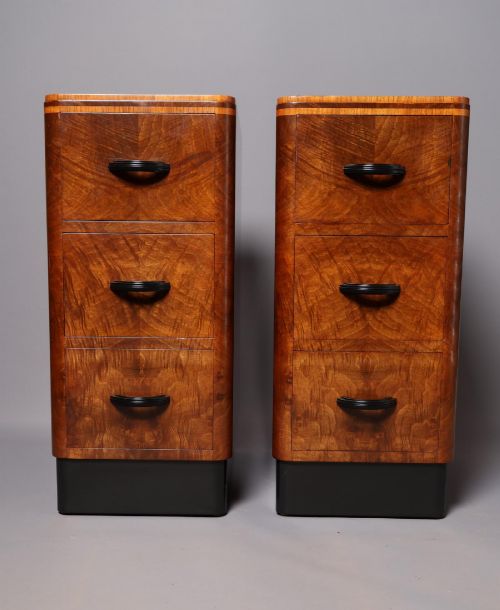


Streamline Bedside Table
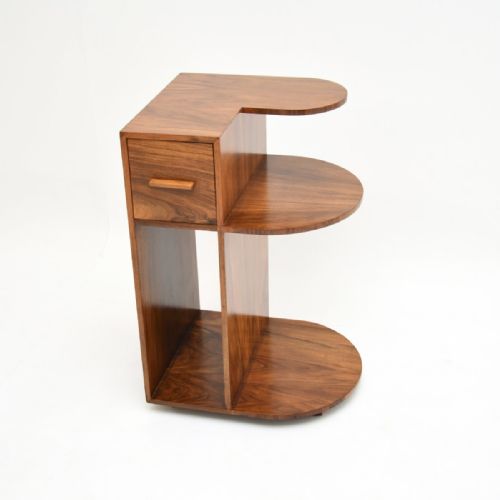
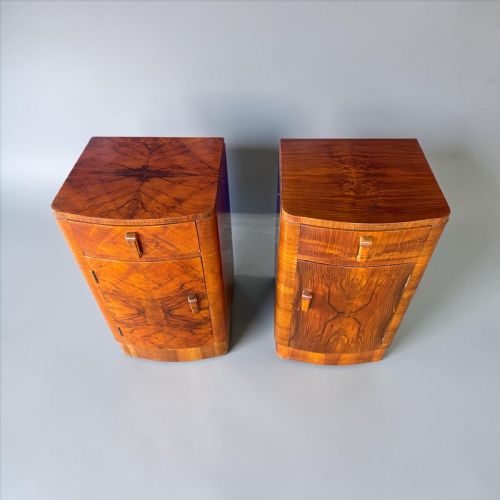
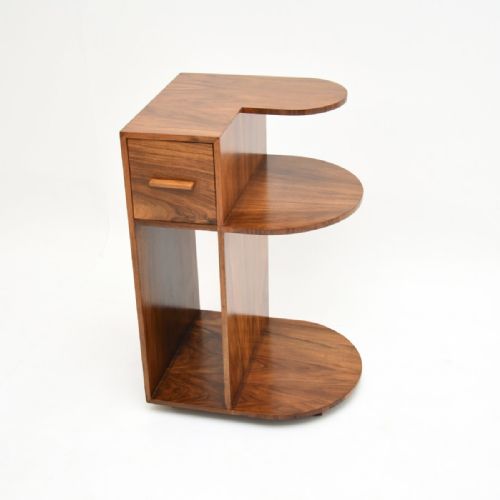
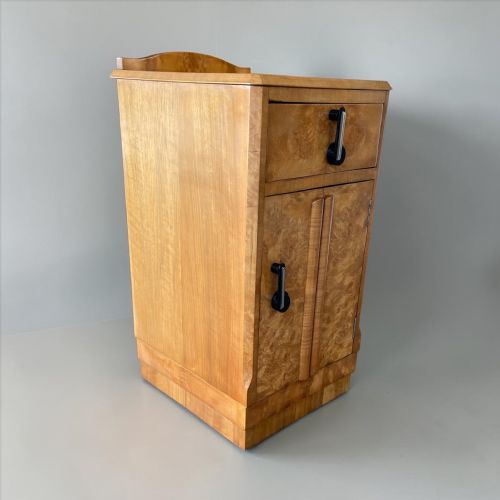
A streamline bedside table brings compact Art Deco form and geometric presence to the bedroom.
Streamline Bedside Table
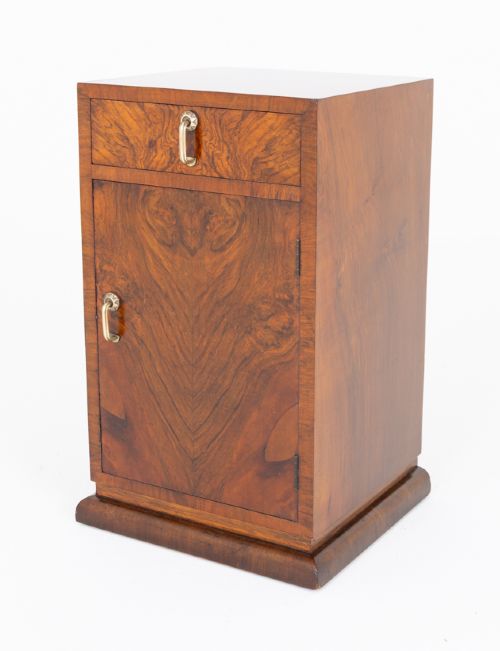
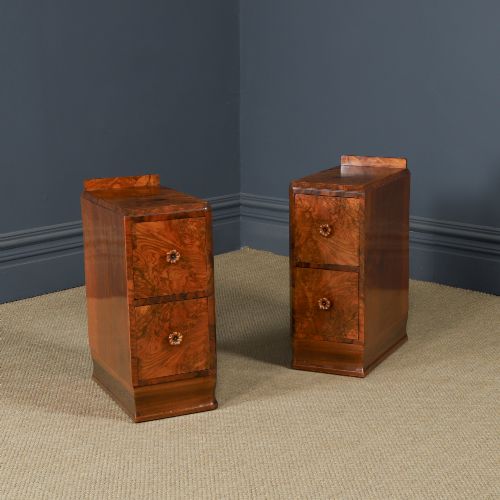
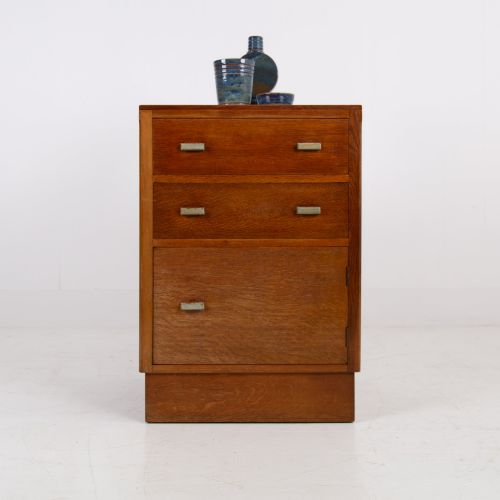
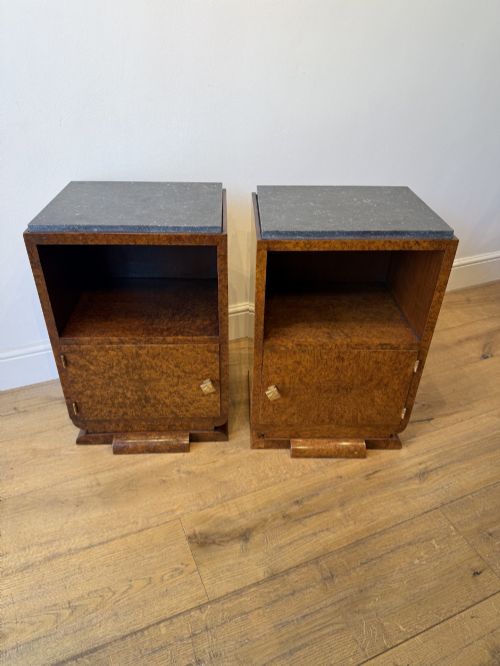
A streamline bedside table takes the form of a low cabinet, nightstand or compact chest designed during the Art Deco period. These pieces provide surface space and enclosed storage beside a bed while establishing a strong architectural silhouette.
Most examples originate from the 1930s, though pieces appear from the 1920s and 1940s. The selection spans single tables and matched pairs configured as cupboards, cabinets with drawers, and open side tables.
How they were made
Construction relies on wood frameworks finished with decorative veneers including walnut, burr walnut, birds eye maple, satinwood and burr elm. These figured woods create striking grain patterns across flat surfaces and curved drawer fronts.
Detailing incorporates contrasting timbers, brass hardware, bakelite elements and metal components. Joinery is paired with smooth lacquered or polished finishes characteristic of the modernist aesthetic.
Materials recorded across the inventory include walnut, burr walnut, brass, walnut veneer, bakelite, metal, wood, and wood veneer.
What varies in quality
Quality rests upon the selection and matching of wood veneers across the top and drawer fronts. Grain placement that flows symmetrically across the piece distinguishes finer examples from simpler constructions.
The sophistication of the silhouette and the integration of hardware determine the distinction between standard production items and pieces designed by notable makers or workshops.
Gomme·Betty Joel
The Streamline Bedside Table Glossary
- Art Deco
- A design style spanning the 1920s and 1930s characterised by streamlined forms, geometric symmetry and modern materials. It prioritised sleek lines and functional elegance.
- Burr Walnut
- A timber harvested from the growth warts of walnut trees, yielding complex, swirling grain patterns. Cabinetmakers prize it for decorative veneering.
- Birds Eye Maple
- A figure in maple wood resembling tiny swirling eyes caused by local pattern distortion. It appears frequently in light-toned modernist bedroom furniture.
- Nightstand
- A small low table or cabinet placed beside a bed for lamps and personal items. Period examples often feature paired drawers or enclosed cupboards.
- Veneer
- A thin layer of superior wood adhered to a base timber surface. This technique allowed makers to display rich decorative grains economically.
Streamline Bedside Table: Frequently Asked Questions
What is a streamline bedside table?
A streamline bedside table is a compact Art Deco cabinet or nightstand designed to sit beside a bed. These pieces utilise curved silhouettes and striking wood veneers to provide both surface space and enclosed storage.
Most date from the 1930s and reflect the modernist aesthetics of the period through geometric forms and minimal ornamentation.
How do I identify Art Deco bedside tables?
Art Deco bedside tables are identified by geometric shapes, stepped outlines, and smooth polished surfaces. They frequently feature rounded corners and waterfall edges.
The materials typically include walnut, burr walnut, or birds eye maple veneers paired with subtle brass handles or bakelite details.
Are these bedside cabinets sold as pairs?
Many bedside cabinets from this era survive as matched pairs, though single tables also appear. Pairs offer symmetry on either side of a bed.
Listings specify whether an item is a single table or a matched pair of cabinets.
What woods were used for these tables?
Cabinetmakers utilised walnut and burr walnut extensively, alongside exotic timbers like birds eye maple, satinwood, and burr elm. Oak also appears in modernist designs.
These figured woods were sliced into thin veneers to create decorative patterns across the cabinet doors and drawer fronts.
How do I fit one in a modern bedroom?
A streamline bedside table functions effectively as a focal point in a contemporary bedroom due to its compact footprint and strong geometric presence. The warm wood tones complement neutral colour schemes.
Use the surface for a table lamp and place books or essentials inside the drawer or cupboard.