


Vintage Burr Veneer Cabinet
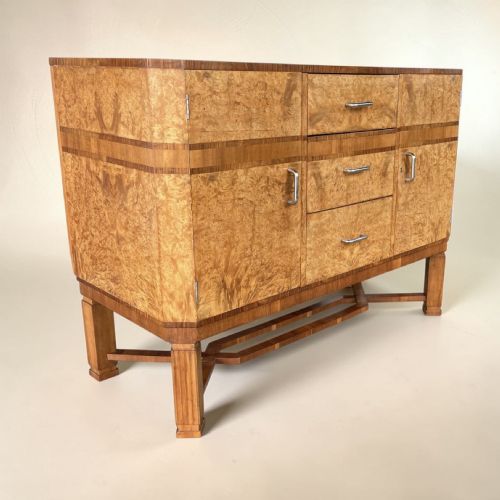
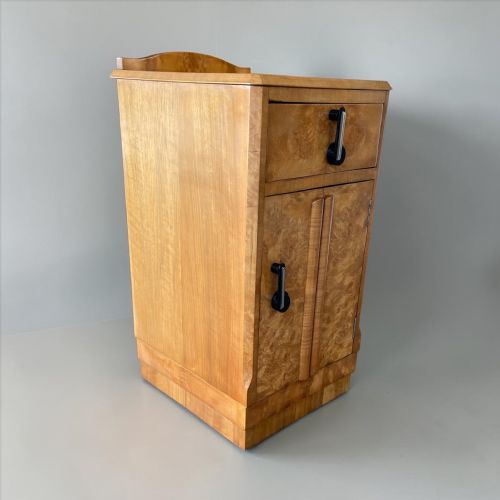
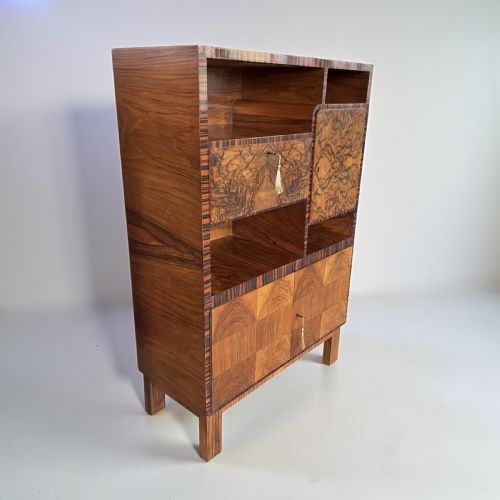
These vintage burr veneer cabinet pieces bring striking natural grain patterns and rich warmth into a room.
Vintage Burr Veneer Cabinet
When you search for a vintage burr veneer cabinet, you encounter storage furniture defined by swirling, highly figured wood patterns across the exterior surfaces. The selection leans heavily towards 1930s Art Deco designs, featuring geometric forms and streamlined silhouettes executed in walnut.
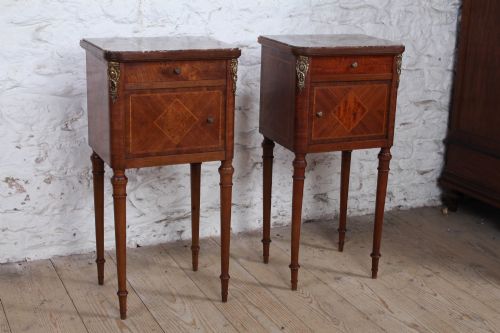
Alongside cocktail cabinets and sideboards from the interwar period, the range extends across older aesthetic revivals. Examples include Queen Anne style cupboards in walnut, French Louis XVI style bedside tables with marble tops, and 17th century mulberry bureaus.
The practical forms vary from tallboys and chests of drawers to compact bedside tables and side cabinets. Walnut and burr walnut veneer dominate the materials, paired occasionally with fruitwood, oak, and hardwood.
How they were made
Cabinet makers applied thin slices of burr walnut or mulberry veneer over solid wood carcases to display the intricate knot and grain patterns of the tree growth. This technique required precision sawing and careful matching of the wooden leaves to create symmetrical geometric designs across the drawer fronts and doors.
Metal elements such as brass handles and hinges, alongside chrome and bakelite details on Art Deco pieces, provided functional contrast to the dark polished wood surfaces.
Listings feature periods spanning from the 17th century through the 19th century and up to 1930, utilising walnut, burr walnut, oak, and hardwood.
What varies in quality
The visual impact of a piece rests largely on the symmetry and boldness of the grain matching across the doors and drawers. Finer examples display continuous, book-matched patterns that demonstrate the maker's skill in handling unruly burr timber.
Construction standards appear in the crispness of the geometric veneers and the integration of secondary materials like marble tops, brass mounts, and specialised interior fittings such as cocktail compartments.
Maurice Adams·Coxed & Woster
The Vintage Burr Veneer Cabinet Glossary
- Burr veneer
- A thin slice of wood cut from a tree growth or burl, prized for its swirling, knotted grain patterns. It provides a highly decorative surface for cabinet exteriors.
- Art Deco
- A design style from the 1920s and 1930s characterised by geometric shapes, streamlined forms, and modern materials. Pieces from this era often utilise bold walnut veneers.
- Cocktail cabinet
- A specialised storage piece designed for entertaining, featuring mirrored interiors and glass shelves behind drop-down or cabinet doors. They are frequently found in 1930s designs.
- Tallboy
- A tall chest of drawers, often combining a set of drawers with an upper cupboard section. They maximise vertical storage while displaying decorative wood grains.
Vintage Burr Veneer Cabinet: Frequently Asked Questions
What periods do these cabinets come from?
The pieces span several centuries, with a strong concentration of Art Deco items from 1930. Earlier examples include 19th century Queen Anne style pieces and 17th century bureaus.
Materials and construction techniques shift subtly across these periods, moving from early mulberry craftsmanship to the geometric walnut and chrome of the twentieth century.
How do I style a burr walnut cabinet?
The rich, swirling grain patterns serve as a strong focal point in a room, working well against neutral walls. They pair naturally with period interiors as well as modern minimalist spaces.
Ensure the piece has adequate clearance around it to let the veneered surfaces catch the light without competing with surrounding furniture.
What is the difference between a sideboard and a cocktail cabinet?
Sideboards provide general storage with cupboards and drawers, traditionally used for dining room service. Cocktail cabinets are specifically fitted for entertaining with drop-down mixing surfaces and specialised glass storage.
Both forms frequently showcase decorative burr walnut veneers, particularly in 1930s designs.
Are these cabinets made of solid wood?
The main structure utilises solid hardwoods like oak or walnut, but the exterior decorative surfaces consist of thin wood veneers. This method allows makers to display intricate burr grain patterns that would be unstable if cut as solid timber.
Skillful veneering creates durable surfaces with striking visual symmetry across doors and drawers.