

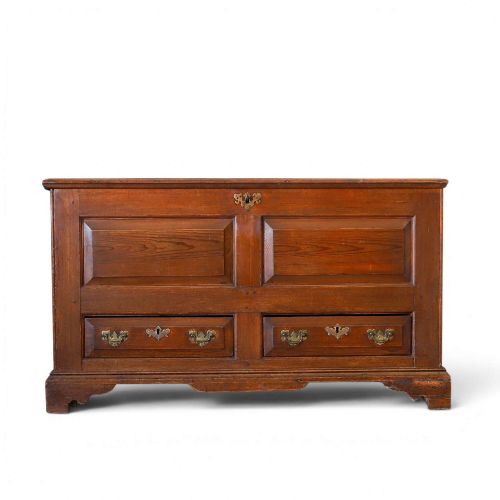
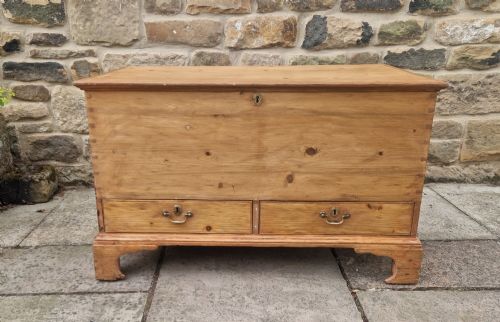


Storage Trunk Drawers
Storage trunk drawers combine lift-top box storage with lower compartments, offering robust utility and heritage character for modern rooms.
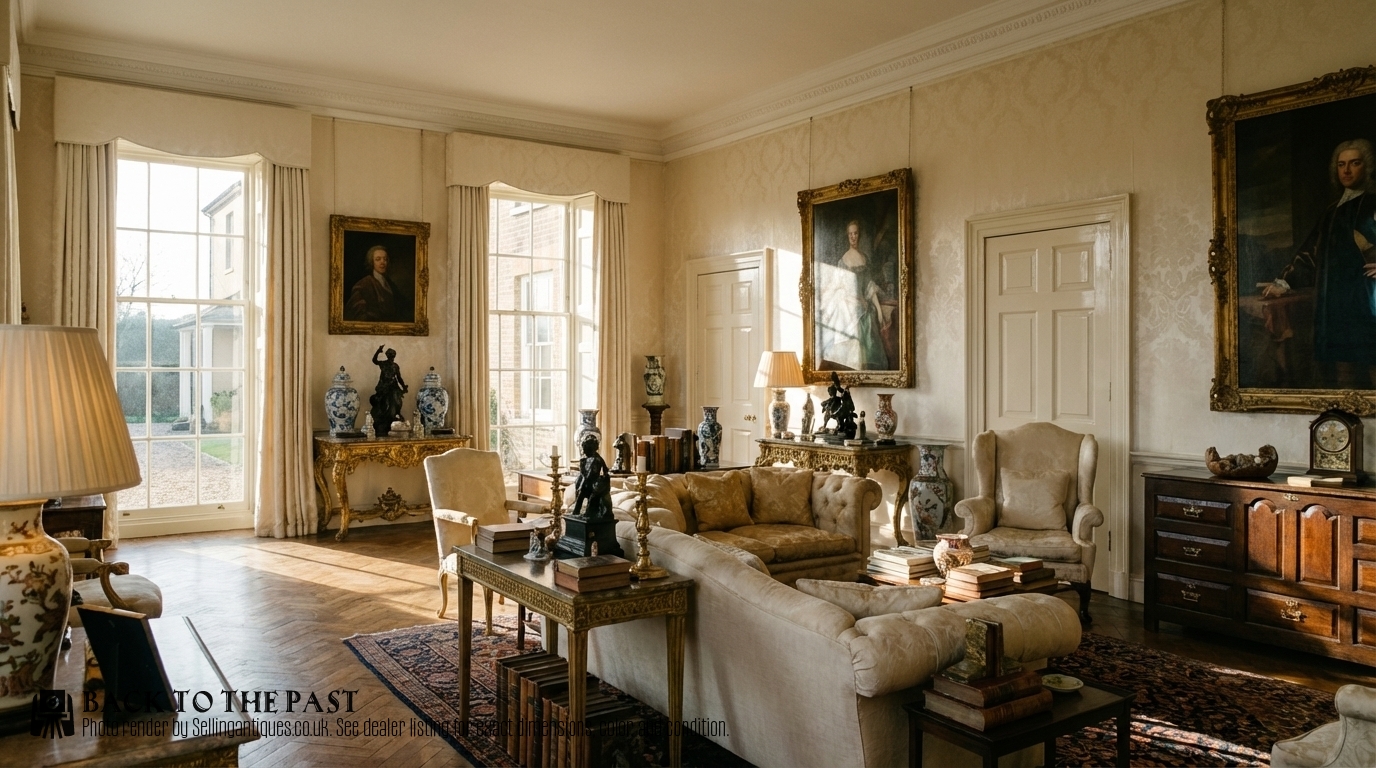
Storage Trunk Drawers
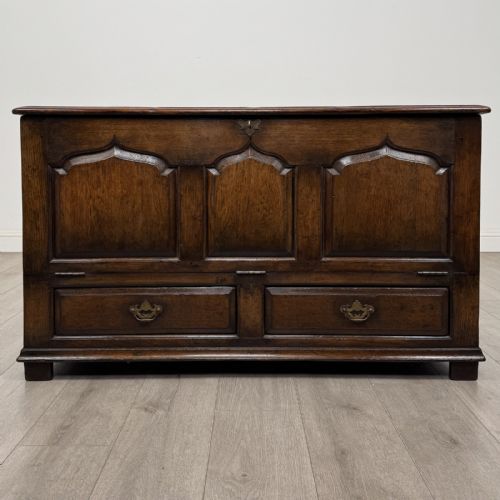
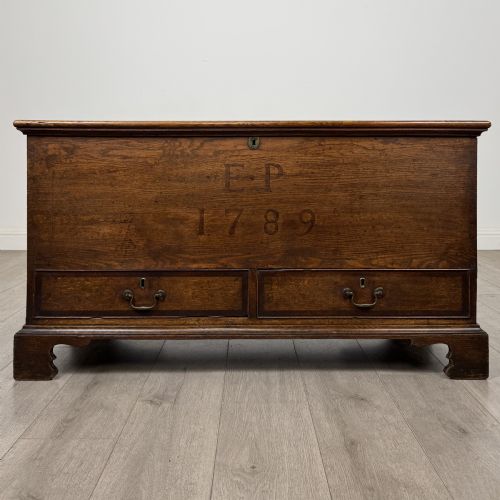
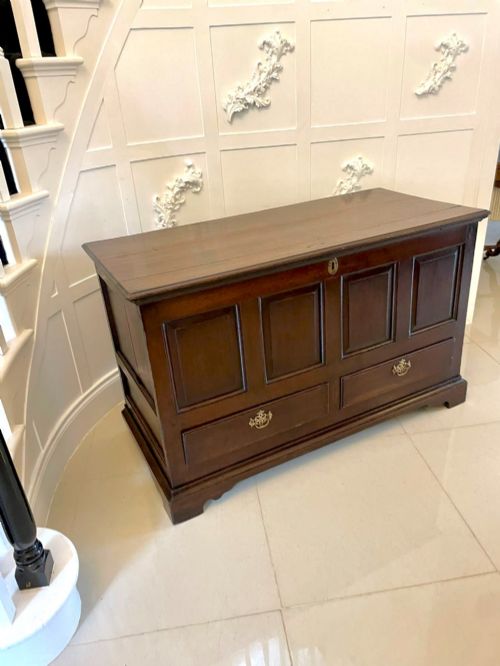
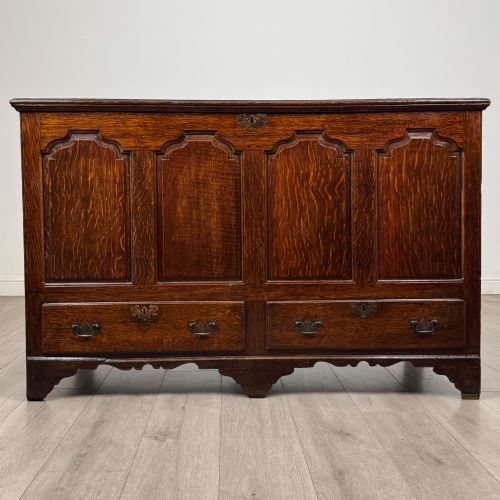
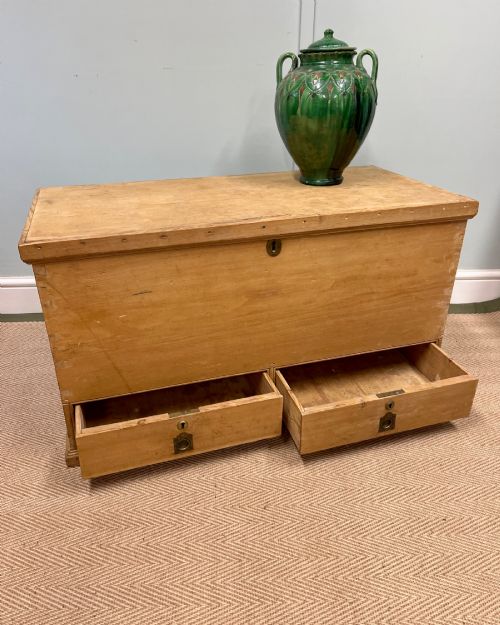
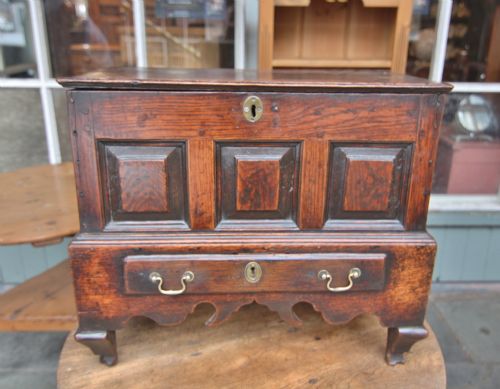
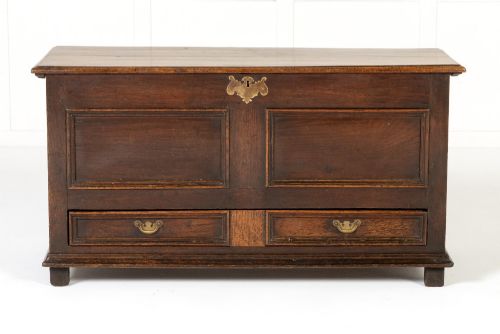
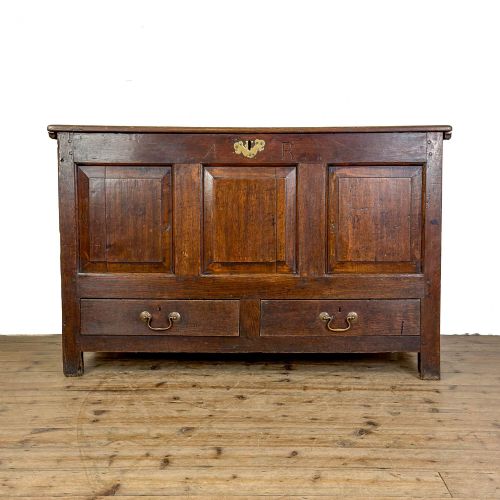
Storage trunk drawers describe combination pieces that unite a lidded top compartment with one or more lower drawers, commonly known as mule chests, coffer baches, or fitted trunks. These hybrid forms evolved to store blankets, linen, and clothing while providing separate access to smaller items without lifting the primary lid.
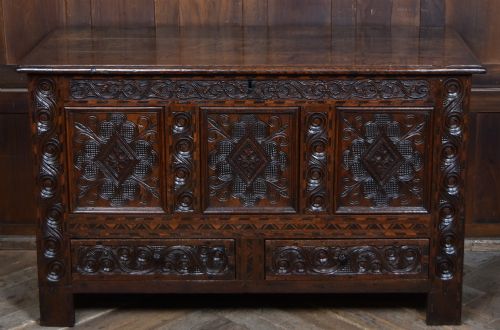
The versions met most frequently on this page date from the seventeenth, eighteenth, and nineteenth centuries, constructed predominantly in oak, pine, and mahogany. Regional British workshops, particularly in Wales and English country districts, produced many of these utilitarian domestic containers alongside occasional campaign and overseas iterations.
How they were made
Cabinet makers utilised solid timber construction, employing oak and pine joined by hand-cut joints and panelled frames to withstand heavy daily use. Iron, brass, and metal hinges, lock plates, and carrying handles reinforced the structure and secured the contents.
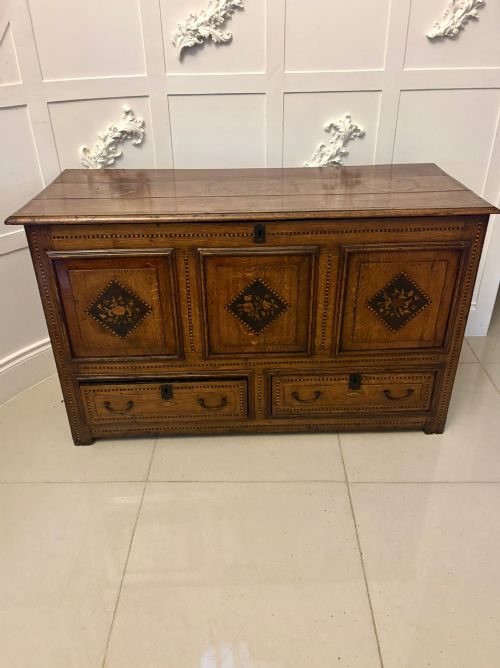
Surfaces received various treatments ranging from plain waxed finishes and burr elm panel veneers to painted pine and marquetry inlay. Internal arrangements often included small till boxes or multiple fitted drawers constructed with simpler secondary timbers.
Storage Trunk Drawers Retail Price Guide 2026
Typical asking prices for storage trunk drawers among the pieces listed under this phrase on Sellingantiques today, from the lower quarter to the upper quarter. They describe what is for sale here now, not the wider market.
Listings span four centuries of cabinet-making, featuring seventeenth-century Jacobean oak, eighteenth-century Georgian pine, and nineteenth-century campaign forms.
What varies in quality
The grade of timber selection and the precision of the joinery set finer examples apart from standard utility items. Superior pieces display carefully chosen grain, such as burr elm panels or well-figured oak, combined with robust internal framing that keeps drawers running smoothly.
Originality of hardware and surface finish determines historical integrity. Examples retaining their early brass drop handles, working locks, and authentic waxed or painted surfaces command greater appreciation than heavily restored or altered equivalents.
The Storage Trunk Drawers Glossary
- Mule chest
- A traditional storage chest featuring one or more drawers built beneath the main lift-top compartment. This form bridged the transition between the simple coffer and the chest of drawers.
- Coffer bach
- A Welsh term translating to little coffer, denoting a miniature or small-scale chest with drawers often mounted on a stand or low feet. These compact pieces served for linen storage in modest rural homes.
- Campaign chest
- Portable furniture made in sections with recessed brass handles and corner brackets, designed for easy dismantling and transport by military officers on active service.
- Marquetry
- Decorative veneer work formed by fitted pieces of various woods or other materials assembled into pictorial or geometric patterns on panel surfaces.
- Pitch pine
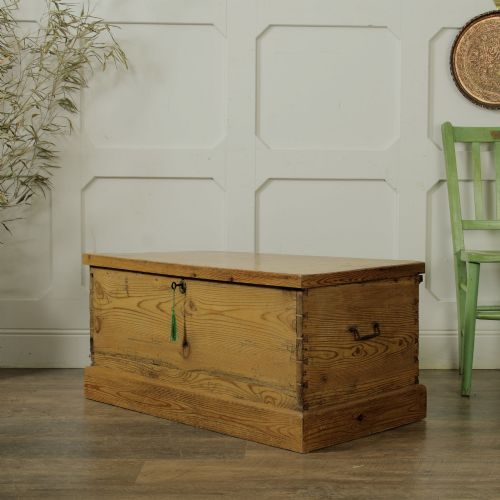
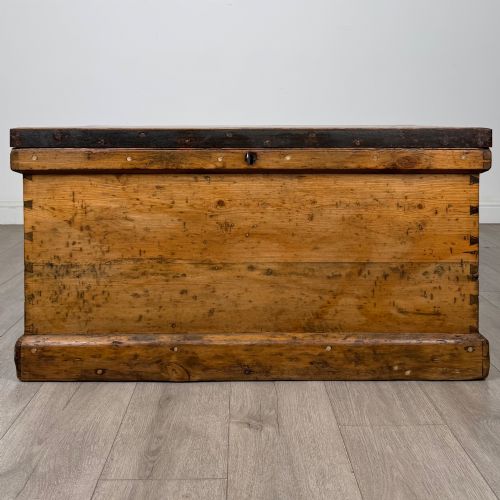
- A resinous pine timber imported largely from North America, noted for its strong grain pattern and durable qualities in nineteenth-century utilitarian furniture.
Storage Trunk Drawers: Frequently Asked Questions
What is a mule chest?
A mule chest is a traditional storage box that combines a hinged top lid for bulky blankets with one or more drawers fitted beneath.
This hybrid design emerged when makers realised adding drawers improved daily access to smaller garments without disturbing items stacked above.
How do I date an oak trunk?
Dating relies on observing construction methods, tool marks, timber selection, and hardware styles across the panels and internal drawers.
Earlier seventeenth and eighteenth-century examples display hand-split boards and pegged joints, whereas nineteenth-century pieces show more uniform machine-sawn components.
Where were coffer baches made?
Coffer baches originate primarily from Welsh domestic workshops during the eighteenth century, serving as compact storage for family linens.
Their smaller proportions made them suitable for cottage interiors where space remained at a premium.
Can I use a trunk as a coffee table?
These sturdy wooden boxes provide a practical surface for living rooms while concealing interior storage for books or extra throws.
Flat-topped examples in waxed pine or oak suit this purpose well, provided the height aligns with surrounding seating.